

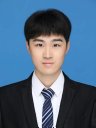
 Jiazheng Wang
· 2 previous affiliations
- Hunan UniversitySince 2021
- Postdoc · Since 2026
- PhD student · 2021–2025
- University of Edinburgh2019–2020
- MS student · 2019–2020
Research Overview
Jiazheng Wang focuses on medical image analysis, multimodal image registration, and surgical scene segmentation. His trajectory spans early applications of machine learning in industrial systems to advanced deep learning architectures for robotic-assisted surgery. Currently, he investigates unsupervised anomaly detection in preoperative imaging and robust surface mesh reconstruction from medical data.
Research Trajectory
Jiazheng Wang’s early research explored resource allocation and applied machine learning across diverse domains before concentrating on medical image analysis. His initial work investigated remote state estimation, specifically focusing on Efficient resource allocation for networked estimation systems (2019) to manage data transmission under wireless communication uncertainty. He subsequently participated in developing convolutional neural network architectures for industrial applications, such as A Novel Automatic Classification Method Based on the Hybrid Lightweight Shunt Network for Sintered Surfaces (2022), which addressed real-time temperature control in iron ore synthesis. Expanding his application of machine learning to materials science, he also explored predictive modeling for device architecture in Advancing vapor-deposited perovskite solar cells via machine learning (2023). Concurrently, Wang began his transition into the medical domain, contributing to Branch Aggregation Attention Network for Robotic Surgical Instrument Segmentation (2023), which introduced modules for feature localization and denoising to handle reflection and motion blur during robot-assisted surgery.
By 2024, Wang’s focus had firmly shifted toward complex challenges in medical image segmentation and multimodal registration. He helped develop SwinPA-Net: Swin Transformer-Based Multiscale Feature Pyramid Aggregation Network for Medical Image Segmentation, an architecture designed to differentiate lesions from surrounding tissues with similar shapes and colors. In the context of robotic surgery, he co-developed CFANet: Context fusing attentional network for preoperative CT image segmentation in robotic surgery, which improved the segmentation of fuzzy boundaries and small targets like liver tumors.
A major focus of his 2024 research involved aligning disparate medical imaging modalities. He introduced Unsupervised Multimodal 3D Medical Image Registration with Multilevel Correlation Balanced Optimization, tackling the difficult problem of matching high-resolution preoperative MRI scans to noisy, deformed intraoperative ultrasound data. This work advances several broader research areas, including Multi-Modal Image Registration via Contrast-Invariant Representations, Structural Invariance for Multi Modal Sensor Alignment, Coarse to Fine Hierarchical Image Registration, and Non-Rigid Registration for Deformable Soft Tissue Navigation. In a related collaborative effort, he participated in the Learn2Reg 2024 challenge, co-authoring a Large Scale Unsupervised Brain MRI Image Registration Solution for Learn2Reg 2024. This solution utilized large kernels and post-prediction bilateral filtering, touching upon the area of Bridging the Scale Gap in Neural Architecture Search. Outside of strictly medical domains, he also worked on mitigating label noise in general vision tasks through Robust object recognition via context-driven reliability assessment.
Moving into 2025, Wang continued to refine architectures for robotic surgical scene analysis. He participated in the design of the Multiview Integration Network for Multitask Robotic Surgical Scene Analysis, which integrates global, local, dynamic, and static views to simultaneously perform semantic segmentation and detect instrument-tissue interactions. He also contributed to LSKANet: Long Strip Kernel Attention Network for Robotic Surgical Scene Segmentation, addressing intraoperative artifacts and indistinguishable boundaries using specialized strip convolutions. Concurrently, Wang expanded his methodological scope to generative models, proposing EPDiff: Erasure Perception Diffusion Model for Unsupervised Anomaly Detection in Preoperative Multimodal Images. This work utilizes multimodal complementary information to prevent structural deformations in sub-healthy tissue from being misidentified as anomalies.
Most recently, in 2026, Wang has investigated 3D reconstruction and dynamic scene optimization. He introduced Surface Mesh Reconstruction From Medical Images via Enrichment Feature Learning and Mesh Contour Loss, developing a robust feature extraction network to tackle indistinct tissue boundaries and improve the accuracy of direct surface reconstruction from medical images. Additionally, he collaborated on Improving Explicit Dynamic Gaussian Splatting Optimization via Update Mixture, which addresses performance degradation in high-motion scenes by blending adaptive and non-adaptive optimization steps, contributing to the broader research direction of Parameter-Free Optimization via Adaptive Step Sizes.
Current Directions
Wang’s most recent work investigates the intersection of 3D medical image analysis, generative modeling, and dynamic scene representation. A primary focus is unsupervised anomaly detection in preoperative imaging, where he utilizes diffusion models to better distinguish genuine anomalies from normative structural deformations using multimodal data. He is also actively developing deep learning methods for surface mesh reconstruction, designing networks that extract robust spatial representations to accurately model complex anatomical boundaries directly from medical images. Furthermore, his recent collaborative efforts extend into the optimization of dynamic 3D Gaussian Splatting, exploring adaptive update strategies to improve reconstruction quality and generalization in high-motion environments.
Profile updated
Loading new papers…
Other researchers whose papers cluster into the same research directions — a proxy for overlapping technical interests and shared intellectual neighborhoods.
See something wrong? Report a mistake