

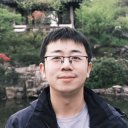
 Jiazhao Zhang
· 2 previous affiliations
- Peking UniversitySince 2022
- PhD student · Since 2022
- MS student · 2019–2022
Research Overview
Jiazhao Zhang focuses on embodied artificial intelligence, 3D scene understanding, and vision-language models for robotic navigation. His trajectory bridges early work in real-time dense reconstruction and semantic segmentation with recent advances in generalist foundation models for autonomous agents. Currently, he investigates scalable vision-language-action architectures that enable cross-embodiment navigation and predictive manipulation in complex, unseen environments.
Research Trajectory
The early phase of Jiazhao Zhang's research focused on geometric computer vision and real-time spatial perception. His initial work addressed the complexities of processing progressively fused 3D geometric data. In Fusion-Aware Point Convolution for Online Semantic 3D Scene Segmentation, he introduced a dynamic data structure utilizing local-global trees to perform 3D convolutions directly on reconstructed surfaces. This work advanced the broader area of Real-Time Incremental 3D Scene Understanding by enabling high-quality feature learning alongside real-time RGB-D reconstruction. He continued to explore robust reconstruction techniques in ROSEFusion: random optimization for online dense reconstruction under fast camera motion, which tackled the challenges of maintaining dense 3D models during rapid sensor movement.
Building on his expertise in spatial tracking and optimization, Zhang investigated high-dimensional state estimation for inertial-aided navigation systems. He developed an efficient active subspace method to handle large interframe transformations in ASRO-DIO: Active Subspace Random Optimization Based Depth Inertial Odometry. Concurrently, he expanded into neural rendering with FG-NeRF: Flow-GAN based Probabilistic Neural Radiance Field for Independence-Assumption-Free Uncertainty Estimation. By modeling density-radiance distributions through patch-based adversarial learning, this framework bypassed restrictive independence assumptions to improve uncertainty estimation and rendering quality in complex environments.
Zhang subsequently applied his background in 3D perception to embodied artificial intelligence, focusing on how autonomous agents navigate and interact with unseen environments. In 3D-Aware Object Goal Navigation via Simultaneous Exploration and Identification, he proposed a dual-policy approach that leveraged online-fused 3D point clouds to decouple the exploration of spaces from the identification of target objects. This interest in mobile agents naturally extended to physical interaction; in GAMMA: Graspability-Aware Mobile MAnipulation Policy Learning based on Online Grasping Pose Fusion, he designed an online grasping pose fusion framework that filters redundant outliers to provide temporally consistent observations for reinforcement learning.
As large language models and vision-language models emerged as powerful tools for reasoning, Zhang began integrating them into robotic control systems. He explored human-like cognitive state transitions for navigation in CogNav: Cognitive Process Modeling for Object Goal Navigation with LLMs, demonstrating how contextual reasoning could improve success rates in unfamiliar settings. To address the generalization gap in vision-and-language navigation without relying on maps or depth sensors, he developed NaVid: Video-based VLM Plans the Next Step for Vision-and-Language Navigation, which processes on-the-fly monocular video streams to follow human instructions.
A major theme in Zhang's recent trajectory is the synthesis of 2D foundation models with 3D spatial data to achieve category-agnostic understanding. He contributed significantly to the research direction of Lifting Vision Language Embeddings for 3D Scene Understanding. In MaskClustering: View Consensus Based Mask Graph Clustering for Open-Vocabulary 3D Instance Segmentation, he introduced a view consensus rate metric to merge 2D open-vocabulary masks into cohesive 3D instances across multiple frames. He further accelerated this paradigm in OnlineAnySeg: Online Zero-Shot 3D Segmentation by Visual Foundation Model Guided 2D Mask Merging. By utilizing an efficient voxel-hashing data structure, this framework merges 2D masks into a consistent 3D world model in real time. This work advanced several critical areas, including Open-Vocabulary 3D Perception via 2D Foundation Models and the broader challenge of Scaling 3D Representations Beyond the Memory Wall.
Most recently, Zhang's research has scaled toward predictive world models and unified architectures for diverse robotic hardware. He participated in developing physically responsive simulations for robots in AdaPower: Specializing World Foundation Models for Predictive Manipulation. Building on this concept, he introduced LaDi-WM: A Latent Diffusion-based World Model for Predictive Manipulation, which predicts the outcomes of robot-object interactions within a specialized latent space rather than raw pixels, allowing agents to iteratively refine their plans. These efforts align with the research direction of Scaling Robotic Control to Long-Horizon Multi-Stage Tasks. His work culminated in the Embodied Navigation Foundation Model, a generalist system trained on millions of samples to control quadrupeds, drones, and wheeled vehicles across diverse tasks. This cross-embodiment approach contributes to the emerging area of Unified Multimodal Prompting for Generalist Embodied Navigation. Finally, he continued to refine foundational spatial representations with RemixFusion: Residual-based Mixed Representation for Large-scale Online RGB-D Reconstruction, bridging his latest foundation model research with his enduring focus on robust 3D geometry.
Current Directions
The most recent papers in the evidence indicate a strong focus on scaling embodied artificial intelligence through world foundation models and cross-embodiment architectures. Zhang is currently investigating how latent diffusion processes and visual foundation models can be synthesized to create predictive world models, enabling robots to simulate and refine complex manipulation plans before execution. Additionally, his recent work addresses the challenge of unifying navigation tasks across diverse hardware platforms—such as drones, quadrupeds, and autonomous vehicles—by training generalist models on large-scale, multi-domain datasets. Alongside these high-level cognitive and planning systems, he continues to advance the underlying spatial representations required for autonomy, focusing on real-time, zero-shot 3D scene segmentation and large-scale online reconstruction.
Profile updated
Loading new papers…
Other researchers whose papers cluster into the same research directions — a proxy for overlapping technical interests and shared intellectual neighborhoods.
See something wrong? Report a mistake