

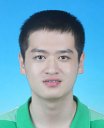
 Jiayun Wang
· 6 previous affiliations
- California Institute of TechnologySince 2023
- Postdoctoral Researcher · Since 2023
- Accenture (United States)Since 2025
- Researcher · Since 2025
- Aizip2020–2023
- Research Scientist · 2020–2023
- University of California, Berkeley2017–2023
- Doctor of Philosophy - PhD, Computer Vision · 2018–2023
- Computer Science · 2017–2018
- PhD student · 2018–2023
- Intern · 2022
Research Overview
Jiayun Wang focuses on computer vision, 3D representation learning, and the application of neural operators to scientific computing and medical imaging. His trajectory spans early work in feature learning for visual recognition to the development of resolution-agnostic architectures for complex physical systems. Most recently, his research investigates neural operators for time-series analysis, satellite pose estimation, and inference-time optimization in large language models.
Research Trajectory
Early work between 2017 and 2019 focused on foundational challenges in visual recognition and feature learning. Wang participated in research addressing severe appearance variations in person re-identification—such as changes in view angle, background clutter, and illumination—through deep feature learning in Point to Set Similarity Based Deep Feature Learning for Person Re-Identification. This interest in robust recognition extended to naturally distributed data, where he contributed to Large-Scale Long-Tailed Recognition in an Open World. This project defined the Open Long-Tailed Recognition (OLTR) task, integrating imbalanced classification, few-shot learning, and open-set recognition into a unified algorithm designed to optimize accuracy across head, tail, and open classes.
Moving into 3D vision and architectural design in 2021 and 2022, Wang introduced dynamic local neighborhood adaptation for unstructured point clouds. In Spatial Transformer for 3D Point Clouds, he developed a module that transforms input point clouds to enable more flexible, semantically aware feature extraction at each layer of a neural network, improving performance across segmentation, classification, and detection tasks. He also explored highly efficient neural network architectures, presenting Recurrent Parameter Generators. This method recurrently generates parameters for multiple convolution layers from a single generator, allowing for the construction of deep convolutional neural networks with significantly reduced parameter counts while maintaining competitive performance on various applications.
By 2024, his focus expanded to self-supervised learning and the application of neural operators to scientific and medical domains. Addressing the semantic-spatial trade-off in deep vision models, he developed Pose-Aware Self-Supervised Learning with Viewpoint Trajectory Regularization. This work leverages a novel dataset of adjacent image triplets to learn visual features that capture both semantic categorization and viewpoint reasoning without manual labels. Concurrently, Wang began significant work in the broader research direction of Neural Operators for Resolution Independent Scientific Computing. In the medical imaging domain, he helped develop a unified model for compressed sensing MRI in Unifying Subsampling Pattern Variations for Compressed Sensing MRI with Neural Operators. This approach addresses a major practical limitation in clinical settings by enabling high-quality image reconstruction across varying undersampling patterns and resolutions without the need for retraining. He also contributed to integrating physical laws into machine learning architectures with Beyond Closure Models: Learning Chaotic-Systems via Physics-Informed Neural Operators, demonstrating how physics-informed neural operators can predict the long-term behavior of chaotic systems, achieving substantial speedups over full-resolution simulations with minimal relative error.
In 2025, Wang continued to advance neural operator architectures. He collaborated on Coarse-to-Fine 3D MRI Reconstruction via 3D Neural Operators, which introduced a framework backed by 3D discrete-continuous convolutions (DISCO). This architecture overcomes the tendency of standard networks to overfit to training discretizations, mitigating GPU memory limits and allowing generalization to higher-resolution volumes. Extending neural operators to new data modalities, he also contributed to Flow-Guided Neural Operator for Self-Supervised Learning on Time Series Data. This framework treats data corruption levels as tunable parameters, extracting versatile, task-specific representations that outperform existing masked autoencoder methods on biomedical and neural decoding tasks.
His most recent work in 2026 spans aerospace applications, 3D object detection, and large language model reasoning. He led the development of a benchmark for non-cooperative space operations in Sequential Dataset for Satellite Pose Estimation and a Frequency-Space Neural Operator for HIL-Free Generalization Benchmarking, introducing the large-scale ASTRA-HST dataset and a frequency-space neural operator to bridge the sim-to-real domain gap in six-degree-of-freedom satellite tracking. Returning to 3D vision, he participated in Open Vocabulary Monocular 3D Object Detection, which proposed novel methods to detect arbitrary objects in 3D space from single RGB images, overcoming the constraints of fixed object categories and scarce 3D annotations. Additionally, he contributed to the area of internal probabilistic signals for LLM calibration in Inference Time Optimization with Confidence Dynamics, leveraging a "confidence signature" during model reasoning to improve answer selection in complex tasks without requiring further model training.
Current Directions
The most recent papers in the evidence indicate a dual focus on extending neural operators to novel domains and improving inference-time reasoning in complex models. In the realm of neural operators, recent work investigates their application to time-series data for self-supervised representation learning and to frequency-space modeling for satellite pose estimation in aerospace environments. Additionally, current research addresses open-vocabulary challenges in monocular 3D object detection, aiming to identify arbitrary objects from single images without relying on expensive sensors or fixed semantic categories. Finally, Wang is exploring inference-time optimization for large language models, specifically utilizing confidence dynamics and internal probabilistic signals to enhance reasoning accuracy on complex tasks.
Profile updated
Loading new papers…
Other researchers whose papers cluster into the same research directions — a proxy for overlapping technical interests and shared intellectual neighborhoods.
See something wrong? Report a mistake