

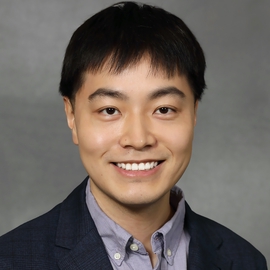
 Jiayue Wan
· 5 previous affiliations
- Quantitative Researcher · Since 2024
- Quantitative Research Intern · 2023
- Cornell TechSince 2018
- PhD student · Since 2018
- Cornell University2018–2024
- Research Assistant · 2019–2024
- Data Scientist, COVID-19 Pandemic Response · 2020–2022
- Teaching Assistant · 2018–2019
- Doctor of Philosophy - PhD, Operations Research
- Meta (United States)2022–2023
- Student Researcher · 2022–2023
- Research Engineering Intern · 2022
- Stanford University2017–2018
- Research Assistant · 2017–2018
- Master of Science - MS, Management Science & Engineering
Research Overview
Jiayue Wan focuses on the intersection of operations research and statistical learning, with a primary emphasis on Bayesian optimization, stochastic modeling, and experimental design. Her work involves the development of grey-box optimization algorithms for complex systems and the application of mathematical modeling to high-stakes decision-making in public health. Currently a quantitative researcher at Susquehanna International Group, Wan’s research trajectory transitioned from large-scale epidemiological modeling and the optimization of diagnostic testing protocols during the COVID-19 pandemic to the design of cost-aware acquisition functions for function networks.
Research Trajectory
Wan’s early research contributions were defined by the urgent requirements of the COVID-19 pandemic, specifically in the domain of infectious disease modeling and resource optimization. Working within a mathematical modeling team at Cornell University, she focused on the feasibility and optimization of group testing (pooling) as a mechanism for asymptomatic screening. This work addressed the "dilution effect"—the reduction in test sensitivity that occurs when a positive sample is mixed with many negative ones—and sought to identify optimal pool sizes to maximize detection rates under resource constraints.
A significant evolution in this area was the shift from assuming independent samples to modeling correlated samples. Wan demonstrated that when samples are collected from individuals with social or geographical proximity (such as households), the resulting correlation can be leveraged to improve the efficiency of group testing. This research provided a theoretical framework for understanding how Cost-Normalized Acquisition for Multi-Fidelity Optimization and other statistical methods could be adapted to real-world biological constraints, directly influencing reopening policies at academic institutions.
Following the acute phase of the pandemic, Wan’s focus shifted toward more generalized problems in Bayesian optimization (BO). Her work moved into the realm of "grey-box" optimization, where the objective function is not a simple black box but a known network of intermediate functions. This research addresses the computational inefficiency of traditional BO when evaluating an entire system pipeline is prohibitively expensive. By developing methods for partial evaluations, Wan contributed to the ability of researchers to strategically query individual nodes within a function network based on their specific costs and potential for information gain. This trajectory reflects a broader interest in Parallelizing Sequential Computation for Modern Hardware and improving the scalability of statistical learning algorithms.
Current Directions
Wan’s current work continues to explore the boundaries of Bayesian optimization, particularly in scenarios where evaluations are resource-constrained or involve complex dependencies. The development of the p-KGFN (partial Knowledge Gradient for Function Networks) framework represents her recent focus on cost-aware acquisition functions. This approach allows for the optimization of systems where the final output is the result of a multi-stage pipeline, such as deep learning training workflows or multi-fidelity engineering simulations. By selecting which node in a network to evaluate, the framework minimizes the total cost required to reach an optimal solution.
In her professional capacity as a quantitative researcher, she applies these principles of stochastic modeling and optimization to financial contexts, though her academic output remains centered on the fundamental challenges of experimental design and statistical learning. Her work maintains a consistent focus on bridging theoretical operations research with practical implementation, whether in public health surveillance or algorithmic efficiency.
Representative Work
In Correlation Improves Group Testing: Modeling Concentration-Dependent Test Errors, Wan serves as the lead author in an analysis of how sample correlation affects the efficacy of pooled testing. The paper challenges traditional models that assume independent samples, proving that positive correlation—often found in household or community clusters—actually enhances the probability of detecting infections even when accounting for the dilution effect. This work provided a rigorous mathematical justification for targeted pooling strategies in epidemic control.
Wan also led the study Booster vaccination protection against SARS-CoV-2 infections in young adults during an Omicron BA.1-predominant period: a retrospective cohort study. Utilizing data from mandatory university testing programs, the research quantified the protective effect of booster doses against asymptomatic and mild infections in a young, healthy population. By capturing "invisible" spread that traditional public health reporting often misses, the study offered critical data for community spread control during viral surges.
The transition to algorithmic optimization is exemplified in Bayesian Optimization of Function Networks with Partial Evaluations, where Wan is the first author. This paper introduces p-KGFN, a framework for optimizing complex systems structured as function networks. The core contribution is a cost-aware acquisition function that enables partial evaluations of the network. Unlike standard Bayesian optimization, which requires a full evaluation of the objective, p-KGFN identifies which specific component of the system should be queried to provide the most valuable information relative to its computational cost.
In the collaborative work Modeling for COVID-19 college reopening decisions: Cornell, a case study, Wan participated in the development of epidemiological models used to guide university administration. The research addressed the high uncertainty of parameters such as viral variants and vaccination efficacy within the unique social context of a university campus. This work demonstrated the practical application of stochastic modeling in designing behavioral and testing interventions.
Earlier contributions to the pandemic response include Group Testing Enables Asymptomatic Screening for COVID-19 Mitigation: Feasibility and Optimal Pool Size Selection with Dilution Effects. As a co-author, Wan contributed to the mathematical framework for large-scale screening. The paper modeled viral load distributions to determine optimal pool sizes, showing that effective population-level screening could be achieved with significantly fewer tests than individual testing would require, provided the dilution effects were properly managed.
Profile updated
Loading new papers…
Other researchers whose papers cluster into the same research directions — a proxy for overlapping technical interests and shared intellectual neighborhoods.
See something wrong? Report a mistake