

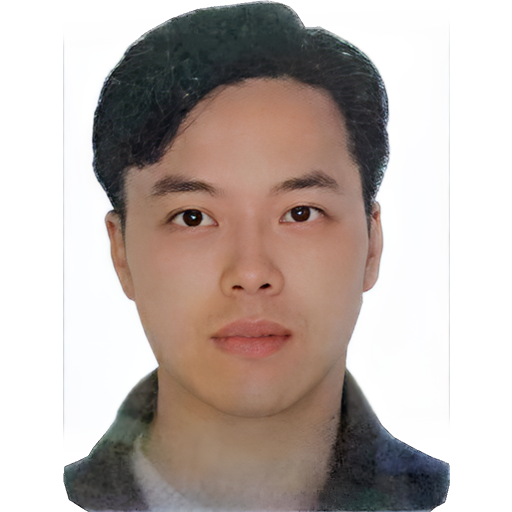
 Jiaxing Huang
· 3 previous affiliations
- Hong Kong Polytechnic UniversitySince 2025
- Assistant Professor · Since 2025
- Current
- Nanyang Technological University2018–2025
- Postdoc · 2023–2025
- PhD student · 2019–2023
- MS student · 2018–2019
- University of Glasgow2014–2018
- Undergrad student · 2014–2018
2 other authors named Jiaxing Huang: Jiaxing Huang (Institute of Automation · Chinese Academy of Sciences · 5 papers), Jiaxing Huang (Xi'an Jiaotong University · 1 paper)
Research Overview
Jiaxing Huang focuses on multimodal artificial intelligence, vision-language foundation models, and robust visual representation learning. His early work explored unsupervised domain adaptation and frequency-domain techniques for computer vision in adverse conditions. More recently, his research centers on enhancing the reasoning capabilities of multimodal large language models through reinforcement learning, search-based verification, and agentic systems.
Research Trajectory
Jiaxing Huang’s early research concentrated on improving the robustness and generalization of computer vision models, particularly through domain adaptation. He introduced Contextual-Relation Consistent Domain Adaptation for Semantic Segmentation, a method that ensures local contextual logic—such as the spatial relationship between a pole and a sidewalk—remains consistent when transferring models from synthetic to real-world images. This work contributed to the broader area of Stable Distribution Alignment for Unsupervised Domain Adaptation. He subsequently explored frequency-domain techniques to further decouple domain-specific noise from semantic content. In FSDR: Frequency Space Domain Randomization for Domain Generalization, he demonstrated that randomizing images in the frequency space rather than the spatial domain allows models to learn highly robust features. This advanced the research direction of Frequency Domain Disentanglement for Robust Visual Representations and aligned with work in the area of Spatial Frequency Localization for Visual Representation and Editing. Building on these spectral methods, he developed RDA: Robust Domain Adaptation via Fourier Adversarial Attacking, which injects large-magnitude noise into non-semantic frequency components to force the model into a flatter loss landscape, a technique relevant to the area of Spectral Parameter Efficient Fine-Tuning. Continuing his work on adaptation, he also proposed Category Contrast for Unsupervised Domain Adaptation in Visual Tasks, which introduces semantic priors to construct a semantics-aware dictionary for instance contrastive learning.
Expanding his focus on robust perception, Huang applied domain randomization to 3D environments. He introduced the SemanticSTF dataset and the PointDR framework in 3D Semantic Segmentation in the Wild: Learning Generalized Models for Adverse-Condition Point Clouds, utilizing geometry-style augmentation to maintain LiDAR perception accuracy in fog, snow, and rain. As his research shifted toward unified architectures, he explored alternatives to standard autoregressive decoding. He introduced Masked AutoDecoder is Effective Multi-Task Vision Generalist, which leverages a parallel generation approach to significantly accelerate multi-task computer vision models. In the domain of object detection, he addressed the limitations of vague training labels with Open-Vocabulary Object Detection via Language Hierarchy, structuring linguistic inputs to better ground open-vocabulary visual concepts.
As multimodal large language models (MLLMs) became central to his research, Huang focused heavily on rigorous evaluation and diagnosing model failures. He authored A Survey on Evaluation of Multimodal Large Language Models, proposing a systematic taxonomy for assessing MLLMs from basic perception to complex agentic behavior. To specifically measure hallucinations in extended contexts, he developed LongHalQA: Long-Context Hallucination Evaluation for MultiModal Large Language Models, utilizing an LLM-free multiple-choice method to evaluate detailed image descriptions and multi-round dialogues. Continuing this focus on evaluation, he introduced MMReason: An Open-Ended Multi-Modal Multi-Step Reasoning Benchmark for MLLMs Toward AGI, which shifted from multiple-choice formats to open-ended questions to expose reasoning shortcuts and prevent memorization in complex visual tasks.
The most recent phase of his trajectory focuses on embedding deep, system-two reasoning capabilities into MLLMs. He introduced Collective Monte Carlo Tree Search in Mulberry: Empowering MLLM with o1-like Reasoning and Reflection via Collective Monte Carlo Tree Search, enabling models to collaboratively verify reasoning paths. This work contributed to the research direction of Difficulty-Adaptive Test-Time Scaling for Reasoning Models. With collaborators, he further explored search-based reasoning in Incentivizing LLM Reasoning via Reinforcement Learning with Functional Monte Carlo Tree Search, which integrates reasoning as a core vocabulary component rather than relying on prompting, aligning with work in the area of Preventing Entropy Collapse in Reinforcement Learning.
Huang has also advanced reinforcement learning frameworks specifically tailored for multimodal reasoning. He developed R1-VL: Learning to Reason with Multimodal Large Language Models via Step-wise Group Relative Policy Optimization, which provides dense, step-wise feedback during training to reward logical structure rather than just final answers. Building on this, his research group introduced R1-ShareVL: Incentivizing Reasoning Capabilities of Multimodal Large Language Models via Share-GRPO, a framework that shares reasoning trajectories across semantic transformations to overcome the sparse reward problems typical in smaller multimodal models. To support the training of these advanced models, his team addressed data scarcity with Collective Adversarial Data Synthesis in R1-SyntheticVL: Is Synthetic Data from Generative Models Ready for Multimodal Large Language Model?. Finally, he expanded MLLMs into active agents with MM-DeepResearch: A Simple and Effective Multimodal Agentic Search Baseline, an open-source framework that equips models for multi-step, multi-tool web searching using a divide-and-conquer trajectory search.
Current Directions
The most recent papers in the evidence indicate a strong focus on embedding deliberate reasoning and agentic capabilities into multimodal large language models. Recent work investigates reinforcement learning frameworks—specifically step-wise and shared Group Relative Policy Optimization (GRPO)—to provide dense rewards for logical reasoning steps rather than relying solely on outcome-based feedback. Additionally, current research addresses the data bottlenecks of multimodal training through adversarial synthetic data generation and explores agentic architectures that enable models to conduct multi-step, tool-augmented web research autonomously.
Profile updated
Loading new papers…
Other researchers whose papers cluster into the same research directions — a proxy for overlapping technical interests and shared intellectual neighborhoods.
See something wrong? Report a mistake