

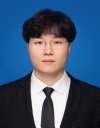
 Jiawei Zhang
· 2 previous affiliations
- Lecturer · Since 2024
- PhD student · 2021–2024
15 other authors named Jiawei Zhang: Jiawei Zhang (IFM Lab · Deloitte (United States) · University of California, Davis · 153 papers), jiawei zhang (Sensetime (China) · 53 papers), Jiawei Zhang (Beihang University · 39 papers), Jiawei Zhang (University of Wisconsin–Madison · 39 papers), Jiawei Zhang (University of Chicago · 20 papers), and 10 more
Research Overview
Jiawei Zhang focuses on the security and robustness of deep neural networks, with a primary emphasis on adversarial machine learning, digital watermarking, and the transferability of adversarial perturbations. His work explores the dual nature of adversarial examples, investigating them both as threats to model reliability and as tools for privacy protection and copyright enforcement. Beyond security, his research trajectory includes contributions to Multi-Manifold Attention for Mixed-Curvature Representations and Graph Representation Learning in Mixed-Curvature Product Manifolds, reflecting a broader interest in how non-Euclidean geometries can better represent complex, heterogeneous data structures.
Research Trajectory
The early phase of Zhang’s recorded research in 2021 was characterized by a dual focus on geometric deep learning and the fundamental mechanics of adversarial attacks. During this period, he investigated Mixed Curvature and Pseudo Riemannian Graph Embeddings, addressing the limitations of Euclidean space in modeling data with simultaneous hierarchical and cyclical structures. Concurrently, he published on the generation of Imperceptible and Reliable Adversarial Attack methods, establishing a foundation in the security of computer vision models.
In 2022, Zhang’s work transitioned toward the optimization challenges inherent in both robotics and adversarial settings. This included participation in research on Proximal Regularization for Robust Optimization and Robotics, which sought to stabilize solvers in the presence of singularities and redundant constraints. Within the adversarial domain, he began addressing the "transferability" problem—the ability of an attack generated for one model to successfully deceive a different, unknown model. This period also saw engagement with Online Resource Allocation under Non-Stationary Demand, suggesting an interest in decision-making under uncertainty.
By 2023, Zhang’s research matured into a comprehensive exploration of adversarial defenses and the constructive use of perturbations. He introduced the concept of "immune defense," a proactive mechanism designed to prevent the very generation of adversarial examples rather than merely detecting them post-hoc. He also began repurposing adversarial techniques for social media privacy, developing self-recoverable examples that protect user images from unauthorized algorithmic analysis. During this time, he also contributed to work on Mitigating the Reasoning Tax in Specialized Language Models, examining the trade-offs between domain expertise and general logic in large language models.
In 2024 and 2025, Zhang’s focus shifted toward the intersection of security and digital rights management. This is evidenced by a series of papers on adversarial watermarking, which utilize robust perturbations to protect intellectual property against removal or tampering. His most recent work also involves collaborative efforts in detecting AI-generated content and enhancing attack transferability through internal feature-space manipulations.
Representative Work
In Imperceptible and Reliable Adversarial Attack, Zhang addressed the trade-off between the visual stealth of a perturbation and its success rate across different viewing conditions. This early work emphasized the need for attacks that remain effective even when subjected to common image transformations, a theme that would persist throughout his subsequent research.
Zhang further refined the effectiveness of black-box attacks in Improving the Transferability of Adversarial Attacks Through Both Front and Rear Vector Method. By manipulating vectors at different stages of the model's inference process, this method improved the likelihood that an attack would generalize to unseen architectures. This line of inquiry was extended in collaborative work such as Improving the Transferability of Adversarial Attacks through Experienced Precise Nesterov Momentum, where Zhang participated in developing "Experienced Momentum" to overcome the slow optimization start typical of conventional momentum-based attacks.
Shifting toward defense, Immune Defense: A Novel Adversarial Defense Mechanism for Preventing the Generation of Adversarial Examples proposed a paradigm shift in model security. Rather than focusing on the robustness of the classifier, this "pre-defense" mechanism applies quasi-imperceptible signals to images to disrupt the gradient-based optimization processes used by attackers, effectively making the images "immune" to being turned into adversarial examples.
In the domain of privacy, Self-Recoverable Adversarial Examples: A New Effective Protection Mechanism in Social Networks introduced a recoverable generative adversarial network (R-GAN). This system allows users to upload protected photos that mislead automated scrapers while retaining the ability for authorized users to recover the original, clean image. This work highlights Zhang's interest in the practical application of adversarial theory to real-world social platform security.
Zhang’s recent focus on copyright is exemplified by Adversarial watermark: A robust and reliable watermark against removal and Invisible Adversarial Watermarking: A Novel Security Mechanism for Enhancing Copyright Protection. These papers detail methods for embedding watermarks that are not only invisible to the human eye but also resistant to common removal attacks, such as compression or cropping, by leveraging the inherent sensitivity of neural networks to adversarial signals.
Current Directions
Zhang’s current research continues to push the boundaries of adversarial transferability and the detection of synthetic media. He participated in the development of the Pixel2Feature Attack (P2FA), which moves the perturbation process from the pixel level to the model's internal feature space, achieving high success rates against advanced defenses and Vision Transformers.
Additionally, Zhang has contributed to the detection of generative AI through MLEP: Multi-granularity Local Entropy Patterns for Generalized AI-generated Image Detection. This research moves away from visual artifact detection, instead focusing on pixel-level randomness and Shannon entropy to identify structural signatures left by GAN and Diffusion models. This trajectory suggests a growing focus on the broader security implications of generative modeling and the need for robust, generalized forensic tools in the era of AI-generated content.
Profile updated
Loading new papers…
Other researchers whose papers cluster into the same research directions — a proxy for overlapping technical interests and shared intellectual neighborhoods.
See something wrong? Report a mistake