

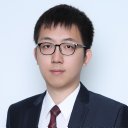
 Jiawei Shao
· 3 previous affiliations
- China TelecomSince 2024
- Research Scientist · Since 2024
- TeleAICurrent
- Current
- PhD student · 2019–2024
Research Overview
Jiawei Shao focuses on edge artificial intelligence, large language models, and communication network optimization. His early work established frameworks for device-edge co-inference and task-oriented communication under bandwidth constraints. Recently, his research has expanded to address efficient multimodal understanding, speculative decoding for accelerated inference, and multi-agent systems in intelligent wireless networks.
Research Trajectory
Shao's early research addressed the challenges of deploying deep learning models on resource-constrained mobile devices. He introduced BottleNet++: An End-to-End Approach for Feature Compression in Device-Edge Co-Inference Systems, which optimizes the splitting point between devices and edge servers to balance computation and communication overhead. This contributed to the broader area of Model Partitioning for Collaborative Edge Inference. Building on this foundation, he developed Learning Task-Oriented Communication for Edge Inference: An Information Bottleneck Approach, a learning-based scheme that jointly optimizes feature extraction, source coding, and channel coding to produce compact representations for low-latency inference.
In 2023, his collaborative work explored distributed and secure machine learning. He participated in a comprehensive analysis of the trade-offs between model utility, privacy, and communication efficiency in A Survey of What to Share in Federated Learning: Perspectives on Model Utility, Privacy Leakage, and Communication Efficiency. Concurrently, he contributed to research on large language model safety, helping to develop a self-reminder technique to mitigate adversarial prompts in Defending ChatGPT against jailbreak attack via self-reminders.
By 2024, after completing his Ph.D. at the Hong Kong University of Science and Technology and joining TeleAI, Shao advanced his focus on robust and privacy-preserving edge systems. He addressed out-of-distribution generalization in the research direction of Task-Oriented Compression via the Information Bottleneck with Tackling Distribution Shifts in Task-Oriented Communication with Information Bottleneck, combining invariant risk minimization with information bottleneck principles. He also proposed a federated distillation framework, Selective knowledge sharing for privacy-preserving federated distillation without a good teacher, which uses a two-tier filtering system to prevent misleading knowledge transfer.
A major conceptual synthesis of this period was AI Flow at the Network Edge, which advocates shifting edge computing from raw data transmission to task-specific "intelligence flow." This work intersects with the areas of Task Oriented Semantic Communication and Overcoming the Cloud-to-Edge Latency Bottleneck. Extending intelligence to network management, he also explored multi-agent systems in WirelessAgent: Large Language Model Agents for Intelligent Wireless Networks.
In 2025, Shao's research expanded significantly into LLM efficiency, multimodal understanding, and theoretical scaling limits. To accelerate inference, he collaborated on CAS-Spec: Cascade Adaptive Self-Speculative Decoding for On-the-Fly Lossless Inference Acceleration of LLMs, a training-free framework that dynamically creates draft models from the target model itself, advancing the fields of Adaptive Speculative Decoding and Speculative Decoding for Autoregressive Models. He also introduced a novel metric for model efficiency in Information Capacity: Evaluating the Efficiency of Large Language Models via Text Compression.
In multimodal domains, he developed What You Have is What You Track: Adaptive and Robust Multimodal Tracking, utilizing a heterogeneous mixture-of-experts to maintain precision during sensor failures. He also directed the development of VideoScan: Enabling Efficient Streaming Video Understanding via Frame-level Semantic Carriers, which compresses video frames into semantic tokens for real-time processing. Additionally, his collaborative work explored 3D scene compression in Feed-Forward 3D Gaussian Splatting Compression with Long-Context Modeling. Finally, he participated in theoretical investigations of model scaling and ensembling, contributing to Theoretical Foundations of Scaling Law in Familial Models and The Law of Multi-Model Collaboration: Scaling Limits of Model Ensembling for Large Language Models, which analyze the performance dynamics of multi-model systems and efficient sub-model deployment.
Current Directions
The most recent papers in the evidence address the efficiency and deployment of large-scale models across diverse modalities. Recent work investigates training-free acceleration techniques for autoregressive generation, utilizing adaptive speculative decoding to reduce latency without sacrificing output quality. In multimodal understanding, current research focuses on maintaining robust tracking performance under sensor failure and enabling real-time streaming video analysis through extreme frame-level compression. Additionally, ongoing collaborative efforts explore the theoretical scaling limits of multi-model ensembles and familial model architectures, aiming to optimize performance across varying hardware constraints.
Profile updated
Loading new papers…
Other researchers whose papers cluster into the same research directions — a proxy for overlapping technical interests and shared intellectual neighborhoods.
See something wrong? Report a mistake