

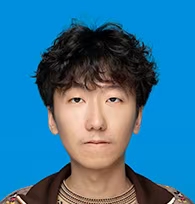
 Jiawei Mao
· 1 previous affiliation
- University of California, Santa CruzSince 2025
- PhD student · Since 2025
- Current
Research Overview
Jiawei Mao focuses on computer vision, medical image analysis, and generative modeling, with an emphasis on improving the data efficiency and architectural robustness of vision transformers. His trajectory spans from self-supervised representation learning for small-scale medical datasets to unified frameworks for complex image restoration. Recently, his work investigates training-free iterative paradigms for long-sequence story visualization and text-guided medical data synthesis.
Research Trajectory
Jiawei Mao’s research trajectory begins with a strong focus on improving the data efficiency and architectural design of neural networks, particularly for domains where annotated data is scarce. In 2022, he addressed the challenges of medical image classification by introducing Pseudo-labeling generative adversarial networks for medical image classification. Recognizing that standard Vision Transformers (ViTs) require massive datasets to outperform traditional convolutional networks, he subsequently developed SDMAE (Small Dataset Masked Autoencoders) in Masked autoencoders are effective solution to transformer data-hungry. By utilizing a weakened decoder alongside auxiliary tasks like location prediction and contrastive learning, this work allowed ViTs to achieve high performance on small-scale datasets. This contribution advanced the research direction of Data Efficient Vision Transformers via Self Supervised Pretraining and the broader area of Asymmetric Autoencoders with Weak Decoders for Representation Learning.
Continuing his work on transformer architectures in 2023, he proposed the Window Token Transformer: Can learnable window token help window-based transformer build better long-range interactions?. This architecture introduced learnable tokens to bridge the gap in long-range dependencies often found in window-based attention mechanisms. During this period, his research also touched upon related architectural optimizations, including work in the area of Hierarchical Token Pruning for Efficient Transformers and the direction of Gating Skip Connections to Prevent Noisy Feature Propagation.
By 2024, his focus expanded to encompass complex image restoration and generative sequence modeling. In the restoration domain, he tackled the problem of "task confusion"—where models struggle to distinguish between different types of image degradation. He developed Restorer: Removing Multi-Degradation with All-Axis Attention and Prompt Guidance, an all-in-one Transformer that uses textual prompts and an All-Axis Attention mechanism to handle de-raining, de-blurring, and low-light enhancement with a single set of parameters. Building on this unified approach, he introduced AllRestorer: All-in-One Transformer for Image Restoration under Composite Degradations, which employs adaptive weights and composite scene descriptors to restore images suffering from simultaneous, overlapping real-world degradations.
Concurrently, he began investigating the generative capabilities of diffusion models for long-form narrative visualization. He introduced Story-Adapter: A Training-free Iterative Framework for Long Story Visualization, an efficient paradigm designed to maintain semantic consistency and fine-grained interactions across sequences of up to 100 frames by leveraging both text prompts and the history of generated images. This line of inquiry matured into Story-Iter: A Training-free Iterative Paradigm for Long Story Visualization in 2026. Story-Iter leverages an external iterative refinement process and a Global Reference Cross-Attention module to preserve character identity and stylistic coherence without the prohibitive memory overhead typical of prior attention-based methods.
Alongside his generative work, he continued to advance medical imaging and facial analysis. In 2025, he returned to masked autoencoders, contributing to the area of Informed Masking for Efficient Self-Supervised Representation Learning by proposing a supervised attention-driven masking strategy (SAM) in Medical supervised masked autoencoder: Crafting a better masking strategy and efficient fine-tuning schedule for medical image classification. To further combat medical data scarcity, he collaborated on MedSegFactory: Text-Guided Generation of Medical Image-Mask Pairs, a dual-stream diffusion framework that utilizes a Joint Cross-Attention mechanism to synthesize perfectly aligned medical images and segmentation masks from text prompts. Additionally, he contributed to the field of Modeling the Temporal Evolution of Facial Expressions by developing POSTER++: A simpler and stronger facial expression recognition network, which significantly reduced parameter count and inference time while maintaining high accuracy on standard datasets.
Most recently, he has extended his unified restoration frameworks to handle severe weather conditions. With collaborators, he developed the All-in-One Transformer for Image Restoration Under Adverse Weather Degradations (2026), which refines how models differentiate between varying proportions of physical impairments like low-light, haze, rain, and snow in practical applications.
Current Directions
The most recent papers in the evidence point toward three primary research directions. First, recent work investigates training-free generative frameworks for long-sequence visualization. By employing iterative refinement and global reference cross-attention mechanisms, these models aim to maintain strict semantic and stylistic consistency across extended image sequences without requiring computationally expensive retraining. Second, he continues to advance unified image restoration, focusing on transformer architectures that can dynamically adapt to composite, overlapping degradations—such as severe weather—using a single set of parameters and refined scene descriptors. Finally, his recent research addresses domain-specific data scarcity through generative synthesis, utilizing text-guided diffusion models to produce high-fidelity, perfectly aligned image and segmentation mask pairs for medical applications.
Profile updated
Loading new papers…
Other researchers whose papers cluster into the same research directions — a proxy for overlapping technical interests and shared intellectual neighborhoods.
See something wrong? Report a mistake