

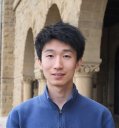
 Jiaqi Han
· 2 previous affiliations
- Stanford UniversitySince 2023
- PhD student · Since 2023
- Tsinghua University2017–2021
- Undergrad student · 2017–2021
1 other author named Jiaqi Han: Jiaqi Han (1 paper)
Research Overview
Jiaqi Han focuses on generative modeling, geometric deep learning, and preference optimization across diverse data modalities. His early work developed equivariant graph neural networks for physical and molecular systems, establishing foundational methods for modeling complex dynamics. More recently, his research centers on advancing diffusion models and language model alignment, with an emphasis on inference acceleration and discrete trajectory optimization.
Research Trajectory
Jiaqi Han’s research began with a strong focus on geometric deep learning, particularly in designing neural architectures capable of understanding the symmetries and dynamics of physical systems. In 2022, he provided a comprehensive overview of this emerging field in Geometrically Equivariant Graph Neural Networks: A Survey, which analyzed and classified methods for processing geometric graphs. Building on these theoretical foundations, he introduced Equivariant Graph Hierarchy-Based Neural Networks, an architecture designed to capture spatial and dynamical hierarchies in multi-body physical systems through generalized equivariant message passing and pooling mechanisms. This work contributed significantly to the broader area of Geometric Equivariance in 3D Molecular Deep Learning.
To address the exponential compositionality and geometric constraints of interacting systems, he collaborated on Equivariant Graph Mechanics Networks with Constraints. This model utilized generalized coordinates and forward kinematics to efficiently simulate constrained physical dynamics. Recognizing that real-world physical laws often exhibit partially broken symmetries—such as the directional bias introduced by gravity—he subsequently developed Learning Physical Dynamics with Subequivariant Graph Neural Networks. By relaxing strict equivariance requirements, this approach improved model generalization in realistic environments, advancing the research direction of Subequivariance for Gravity Aligned Physical Systems.
As his work with graph neural networks (GNNs) progressed, Han also investigated the structural limitations of deep architectures. In 2023, he contributed to Structure-Aware DropEdge Towards Deep Graph Convolutional Networks, which proposed a targeted edge-sampling technique to mitigate the over-smoothing problem that typically degrades the performance of deep GCNs. The following year, he explored methods to scale these architectures to larger and more complex datasets. With collaborators, he developed FastEGNN in Improving Equivariant Graph Neural Networks on Large Geometric Graphs via Virtual Nodes Learning. By introducing global proxy nodes to facilitate long-range message passing, this work achieved faster inference and higher accuracy, contributing to the area of Virtual Nodes for Efficient Global Information Routing. Expanding the application of graph learning beyond physical systems, he also participated in developing a novel framework for enterprise data in Relational Deep Learning: Graph Representation Learning on Relational Databases, which enabled end-to-end learning directly on heterogeneous database graphs, a key advancement in the direction of Relational Deep Learning on Database Graphs.
Around 2024, Han’s focus expanded into generative modeling, specifically adapting diffusion models to capture temporal dynamics rather than static snapshots. He introduced Geometric Trajectory Diffusion Models, which modeled the continuous motion of systems ranging from protein folding to pedestrian navigation. This represented a significant step in the research direction of Equivariant Diffusion for 3D Molecular Generation. He continued this trajectory-focused generative research in 2026 with Align Your Structures: Generating Trajectories with Structure Pretraining for Molecular Dynamics, further refining the generation of molecular movements.
Simultaneously, Han began addressing the broader implications and optimization of diffusion models and large language models (LLMs). In 2025, he led research on the environmental impact of generative AI, publishing Energy Scaling Laws for Diffusion Models: Quantifying Compute and Carbon Emissions in Image Generation, which provided a framework to predict the electricity and carbon costs of diffusion models prior to deployment.
His most recent work heavily emphasizes the alignment and steering of generative models. He introduced a unifying theoretical framework in $f$-PO: Generalizing Preference Optimization with $f$-divergence Minimization, which generalized existing alignment algorithms by minimizing $f$-divergences between optimized and optimal policies. To improve the controllability of text generation, he developed Inference-Time Scaling of Diffusion Language Models with Particle Gibbs Sampling, enabling discrete diffusion language models to be steered toward specific goals at inference time. This focus on discrete diffusion continued with Discrete Diffusion Trajectory Alignment via Stepwise Decomposition, which aligned models generating structured data like DNA and human language. Finally, in Principled RL for Diffusion LLMs Emerges from a Sequence-Level Perspective, he collaborated on ESPO, a reinforcement learning framework that treats sequence generation in diffusion LLMs as a single atomic action, utilizing the Evidence Lower Bound (ELBO) to achieve substantial gains in planning and reasoning tasks.
Current Directions
The most recent papers in the evidence indicate that Han’s current research is primarily focused on the intersection of diffusion models, discrete data generation, and preference alignment. A major ongoing theme is the development of principled reinforcement learning and alignment techniques for Diffusion Large Language Models (dLLMs). Unlike traditional autoregressive models, discrete diffusion models denoise entire sequences iteratively, requiring novel approaches to alignment and steering. Han is actively investigating sequence-level policy optimization and inference-time scaling techniques to make these models more controllable, helpful, and capable of complex reasoning.
Additionally, his recent methodological contributions to preference optimization—such as generalizing alignment through divergence minimization—suggest a continued interest in refining how foundation models are tuned to human preferences. This work naturally extends into the broader area of Process Based Evaluation of Large Language Model Reasoning, as improving the step-by-step reasoning and trajectory generation of these models remains a core challenge. Across both continuous molecular dynamics and discrete language generation, Han’s current efforts aim to build generative models that are not only highly expressive but also precisely aligned with specific structural and behavioral objectives.
Profile updated
Loading new papers…
Other researchers whose papers cluster into the same research directions — a proxy for overlapping technical interests and shared intellectual neighborhoods.
See something wrong? Report a mistake