

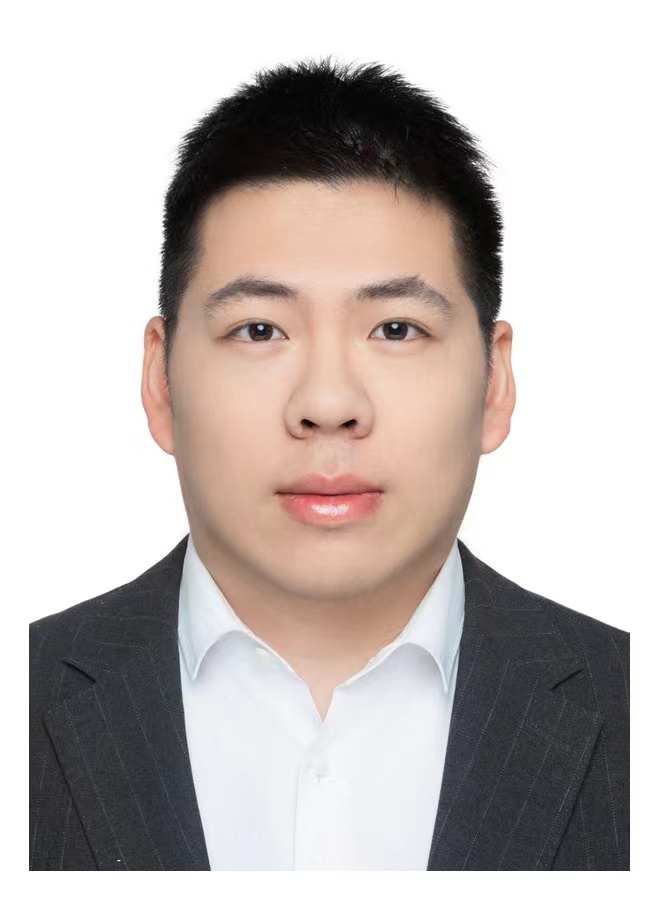
 Jianxiang Yu
· 2 previous affiliations
- East China Normal UniversitySince 2021
- PhD student · Since 2024
- MS student · 2021–2024
- Hangzhou Dianzi University2017–2021
- Undergrad student · 2017–2021
Research Overview
Jianxiang Yu focuses on graph neural networks, heterogeneous information networks, and the integration of large language models with structured graph data. His research trajectory spans from developing robust graph autoencoders and contrastive learning methods to pioneering frameworks for automated peer review analysis. Recently, his work investigates few-shot learning on text-attributed graphs and structural priors for graph foundation models.
Research Trajectory
Beginning in 2023, his early work concentrated on improving the robustness and expressiveness of graph neural networks (GNNs), particularly for heterogeneous information networks (HINs). He contributed to Self-supervised Heterogeneous Graph Variational Autoencoders, which addresses the challenges of missing and inaccurate attributes in HINs using a generative self-supervised model. This work intersects with the research direction of Denoising Objectives for Robust Latent Representations and touches upon the broader area of Latent Diffusion Models for Graph Generation and Prediction. Concurrently, he developed methods to handle extreme label noise, introducing a probabilistic graphical model framework in Resist Label Noise with PGM for Graph Neural Networks to maintain GNN performance on both homophilous and heterophilous graphs even when a large majority of training labels are incorrect. During this period, he also began exploring the intersection of graphs and natural language, proposing few-shot learning approaches in Empower Text-Attributed Graphs Learning with Large Language Models (LLMs). This marked an entry into the area of Hybrid Semantic and Structural Reasoning for Large Graphs.
In 2024, his research expanded into contrastive learning and the structural properties of graph foundation models. He introduced novel techniques for HINs in Heterogeneous Graph Contrastive Learning With Meta-Path Contexts and Adaptively Weighted Negative Samples, utilizing meta-path contexts to construct richer views and intelligently handle negative samples for node classification and clustering. He also participated in a comprehensive survey of heterophilic graphs, Towards Learning from Graphs with Heterophily: Progress and Future, which reviewed hundreds of publications and emerging learning paradigms. Furthering the generalization of graph models, he contributed to the development of structural super-nodes in Boosting Graph Foundation Model from Structural Perspective, advancing the research direction of Learning Universal Topological Vocabularies for Graph Transfer by unifying structural characteristics across different domains.
A distinct thematic branch of his 2024 research applies LLMs and graph structures to the scientific peer review process. He developed SEAGraph: Unveiling the Whole Story of Paper Review Comments, a framework designed to clarify vague reviewer feedback to help authors better understand specific weaknesses in their submissions. This application aligns with the area of Localized Subgraph Extraction for Relational Reasoning. He subsequently expanded this concept into a broader automated pipeline in Automated Peer Reviewing in Paper SEA: Standardization, Evaluation, and Analysis, utilizing LLMs to systematically standardize, evaluate, and analyze scientific papers to address the overwhelming volume of modern academic publishing.
Moving into 2025, his research continues to refine graph autoencoders and LLM-graph integration. He introduced a framework for generating synthetic node data to augment few-shot learning in Leveraging Large Language Models for Node Generation in Few-Shot Learning on Text-Attributed Graphs. He also contributed to advanced autoencoder architectures, exploring vector quantization for capturing graph topology in Hierarchical Vector Quantized Graph Autoencoder with Annealing-Based Code Selection, and extending his earlier work on HINs in Variational Graph Autoencoder for Heterogeneous Information Networks with Missing and Inaccurate Attributes. Additionally, he participated in research on reinforcement learning for graph models, as seen in RELIEF: Reinforcement Learning Empowered Graph Feature Prompt Tuning, which contributes to the research direction of Prompt Learning for Graph Neural Networks.
Current Directions
The most recent papers in the evidence indicate a strong focus on bridging large language models with graph representation learning, particularly to overcome data scarcity. Recent work investigates the use of LLMs for synthetic node generation to improve few-shot classification on text-attributed graphs. Alongside this, there is an ongoing effort to refine graph autoencoder architectures—such as incorporating vector quantization and annealing-based code selection—to better capture complex graph topologies without relying on destructive perturbations. Finally, recent contributions explore reinforcement learning techniques for graph feature prompt tuning, aiming to enhance the adaptability and generalization of graph neural networks across diverse domains.
Profile updated
Loading new papers…
Other researchers whose papers cluster into the same research directions — a proxy for overlapping technical interests and shared intellectual neighborhoods.
See something wrong? Report a mistake