

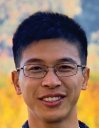
 Jianxiang Feng
· 3 previous affiliations
- Agile Robots SESince 2024
- Researcher · Since 2024
- Technical University of Munich2019–2024
- PhD student · 2019–2024
- Researcher · 2019–2023
Research Overview
Jianxiang Feng focuses on uncertainty estimation, out-of-distribution detection, and probabilistic modeling for reliable robot perception and manipulation. Early work emphasized Bayesian neural networks to bridge the sim-to-real gap and improve introspective perception in autonomous systems. More recently, this research has expanded into generative approaches, utilizing normalizing flows and diffusion policies to enable robust, uncertainty-aware dexterous grasping and generalizable robotic control.
Research Trajectory
Feng’s early research concentrated on equipping robotic perception systems with the ability to introspectively evaluate their own uncertainty, a critical requirement for safe deployment in unstructured environments. In Introspective Robot Perception Using Smoothed Predictions from Bayesian Neural Networks (2019), Feng and collaborators explored practical inference techniques—specifically Concrete Dropout and Kronecker-factored Laplace Approximation—to extract reliable uncertainty estimates from Bayesian Neural Networks (BNNs) for object classification. By integrating these estimates as unary potentials within a Conditional Random Field (CRF), the work demonstrated how contextual information and probabilistic modeling could jointly improve perception. Furthermore, the research showed that these uncertainty metrics could facilitate semi-supervised domain adaptation, reducing the need for exhaustive manual labeling.
This interest in data efficiency and domain adaptation naturally extended to the challenge of transferring models from simulation to the physical world. In Bridging the Last Mile in Sim-to-Real Robot Perception via Bayesian Active Learning (2021), Feng led the development of an autonomous learning paradigm designed to overcome the sim-to-real gap. Recognizing that synthetic data alone is rarely sufficient for complex real-world robotics, the proposed pipeline utilized a BNN object detector to identify the most informative real-world samples for human annotation. This approach aligns with the broader research direction of Active Learning on Imbalanced Datasets, demonstrating how targeted data acquisition can minimize annotation effort while maximizing model performance in target domains. During this period, Feng also co-authored Trust Your Robots! Predictive Uncertainty Estimation of Neural Networks with Sparse Gaussian Processes (2021), which introduced a probabilistic framework utilizing Sparse Gaussian Processes to achieve fast and reliable uncertainty estimates, broadening the methodological toolkit beyond standard BNNs.
As the focus shifted toward ensuring the reliability of learned models in novel environments, Feng’s work advanced into out-of-distribution (OOD) detection using deep generative models. In Topology-Matching Normalizing Flows for Out-of-Distribution Detection in Robot Learning (2023), Feng identified a critical limitation in prior density estimation approaches: the topological mismatch that occurs when complex target distributions are mapped to naïve base distributions in Normalizing Flows. To circumvent this, the research introduced an expressive class-conditional base distribution trained via an information-theoretic objective. This method allowed for more accurate topological matching, improving OOD detection capabilities while maintaining broad compatibility with existing learned models.
Most recently, Feng’s trajectory has moved toward complex robotic manipulation, integrating uncertainty awareness into generative policies for physical interaction. Feng contributed to collaborative efforts in Generalizable Robotic Manipulation: Object-Centric Diffusion Policy with Language Guidance (2024), which explored how 3D object-centric representations and language conditioning could improve a diffusion policy's robustness to visual variations, camera shifts, and novel obstacles. Building on the intersection of generative modeling and physical interaction, Feng co-authored FFHFlow: Diverse and Uncertainty-Aware Dexterous Grasp Generation via Flow Variational Inference (2025). This work tackled the difficulty of synthesizing grasps for multi-fingered hands from partial point clouds—a problem where shape uncertainty often leads to unreliable or overly conservative behavior. By employing a flow-based deep latent variable model, the framework explicitly quantified perceptual uncertainty while learning a hierarchical grasp manifold. This progression reflects a sustained commitment to the broader area of Scaling Robotic Control to Long-Horizon Multi-Stage Tasks, ensuring that as robotic actions become more complex, they remain grounded in rigorous probabilistic reasoning.
Current Directions
The most recent papers in the evidence indicate a strong focus on generative models for complex robotic manipulation, particularly in scenarios characterized by partial observability and high degrees of freedom. Current work investigates how advanced generative architectures—such as diffusion models and normalizing flows—can be adapted to synthesize diverse and robust physical interactions, like dexterous multi-finger grasping.
A central theme in this recent research is the explicit quantification of perceptual uncertainty within the control pipeline. Rather than treating perception and manipulation as entirely separate modules, recent approaches integrate uncertainty directly into the generative process, allowing policies to reason about missing geometric information (e.g., occluded object shapes in partial point clouds). Additionally, there is an emerging emphasis on object-centric 3D representations and language guidance to improve the generalization of learned policies across varying environments, camera viewpoints, and novel obstacle configurations.
Profile updated
Loading new papers…
Other researchers whose papers cluster into the same research directions — a proxy for overlapping technical interests and shared intellectual neighborhoods.
See something wrong? Report a mistake