

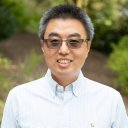
 Jianwu Wang
· 8 previous affiliations
- Editorial Board Member · Since 2016
- iHARPSince 2022
- Co Lead · Since 2022
- University of Maryland, Baltimore CountySince 2015
- Professor of Data Science · Since 2024
- Associate Professor of Data Science · 2021–2024
- Assistant Professor of Data Science · 2015–2021
- University of California San Diego2008–2015
- Associate Project Scientist · 2015
- Assistant Project Scientist · 2010–2015
- Lecturer · 2013
- Postdoc · 2008–2010
- San Diego Supercomputer Center2014–2015
- Assistant Director for Research, Workflows for Data Science Center of Excellence · 2014–2015
- Ph.D., Computer Software. · 2001–2007
- Chinese Academy of Sciences2001–2007
- PhD student · 2001–2007
- Tianjin University1997–2001
- BS, Computer Science and Technology · 1997–2001
Research Overview
Jianwu Wang focuses on representation learning, fairness-aware artificial intelligence, and the development of e-Science infrastructures for large-scale data processing. His trajectory spans foundational collaborative work in cloud computing architectures to advanced machine learning techniques for taxonomy matching and non-stationary data streams. Recently, his thematic focus has expanded to include interdisciplinary applications, addressing complex data challenges across diverse scientific and biomedical domains.
Research Trajectory
Wang’s early collaborative work explored the intersection of distributed systems and scientific research, focusing on the infrastructure required to support modern computational science. As a contributing author to Cloud computing in e-Science: research challenges and opportunities (2014), Wang participated in a comprehensive analysis of how service-oriented architectures, Semantic Web technologies, and Grid computing enable sophisticated e-Science platforms. This research highlighted the limitations of traditional data processing techniques when confronted with the "big data" generated by modern scientific endeavors. The work identified cloud computing as a critical paradigm for future infrastructure development, outlining the necessary informatics techniques required to build scalable and appropriate research platforms.
Transitioning toward core machine learning and knowledge representation, Wang took a senior leadership role in developing novel approaches to semantic alignment. In Representation Learning of Taxonomies for Taxonomy Matching (2019), Wang and colleagues addressed the limitations of traditional taxonomy matching methods, which historically relied heavily on string lexical features and domain-specific heuristics. As the principal investigator on this project, Wang guided the team in proposing a representation learning method that projects categories and their relationships into low-dimensional vector spaces. By leveraging category hierarchies and sibling relationships, this work modeled category relations through translation operations in a semantic space, optimizing the final alignment process via maximum weight matching. This methodological shift aligns with broader challenges in the research direction of Distributional Representations for Multimodal Semantic Ambiguity, where understanding complex relationships requires mapping disparate data points into cohesive mathematical spaces rather than relying on superficial similarities.
Continuing to address complex data environments, Wang contributed to research on algorithmic ethics in dynamic and unpredictable settings. As a co-author of Flexible and Adaptive Fairness-aware Learning in Non-stationary Data Streams (2020), Wang participated in designing decision-making systems that maintain fairness even when underlying data distributions experience drift. This work challenged the common assumption of stationary data in discrimination-conscious AI—an assumption that is often counterfactual in real-world applications. The research proposed adaptive learning algorithms capable of handling the fluid nature of data streams, ensuring that automated, data-driven systems mitigate ethical and legal consequences over time.
Current Directions
While the most recent computational papers in the provided evidence date to 2020, thematic evidence from 2021 indicates a significant expansion into interdisciplinary scientific domains, particularly computational biology and pharmacology. The evidence suggests an application of Wang's data processing and representation learning expertise to complex physiological and therapeutic challenges.
Recent themes in Wang's profile reflect contributions to several biomedical research areas, including the research direction of Potential-Driven Molecular Accumulation in Mitochondria and the broader area of Mitochondrial Dysfunction and the Cellular Bioenergetic Crisis. Additional themes such as Therapeutic Stabilization of the Mitochondrial Membrane and work in the area of Therapeutic Activation of Endogenous Antioxidant Defense Pathways point toward an engagement with cellular bioenergetics and disease mechanisms. Furthermore, involvement in the area of Bridging the Preclinical Translational Gap in Therapeutic Development highlights an overarching focus on translating foundational research into practical, real-world solutions. Because the available evidence is relatively sparse, the precise methodological bridge between his earlier algorithmic work and these recent biomedical themes remains implicit, but the trajectory clearly demonstrates a shift toward applying advanced computational frameworks to high-impact biological systems.
Profile updated
| Title | Venue | Year |
|---|---|---|
| Flexible and Adaptive Fairness-aware Learning in Non-stationary Data Streams | ICTAI | 2020 |
| Representation Learning of Taxonomies for Taxonomy Matching | Iccs | 2019 |
| Cloud computing in e-Science: research challenges and opportunities | Journal of Supercomputing | 2014 |
Loading new papers…
Loading research neighbors…
See something wrong? Report a mistake