

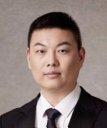
 Jianwu Fang
· 1 previous affiliation
- Xi'an Jiaotong UniversitySince 2023
- Associate Professor · Since 2023
Research Overview
Jianwu Fang focuses on computer vision and intelligent transportation systems, with a particular emphasis on accident prediction, trajectory forecasting, and behavioral intention in autonomous driving. His work integrates multi-modal data—including visual, textual, and driver attention signals—to improve the safety and reliability of autonomous agents in complex, real-world environments. By leveraging human-inspired cognitive models and generative techniques, he addresses the challenges of long-tailed event distributions and noisy sensor data in safety-critical scenarios.
Research Trajectory
Fang’s early research was grounded in fundamental computer vision tasks, specifically the detection of salient objects. In Co-Saliency Detection Within a Single Image, he participated in developing a bottom-up method to identify recurring objects within a single frame, a task aimed at reducing information redundancy and improving object recognition. By 2020, his focus shifted toward the spatial constraints of intelligent vehicle applications, contributing to research on 3D object detection that addressed the gap between evaluation metrics and loss functions. This period aligned with broader efforts in Persistent Object Tracking through 3D Scene Lifting, where the research community began moving beyond 2D pixel matching toward understanding objects within a three-dimensional spatial context.
Starting in 2022, Fang’s trajectory moved decisively toward the challenges of autonomous driving in safety-critical contexts. This period is marked by a focus on Learning from Rare Events in Autonomous Driving. He led the development of the Cognitive Accident Prediction (CAP) framework, which introduced human-inspired cognitive elements—such as textual descriptions and driver attention—into the prediction pipeline. This work addressed the limitations of traditional spatial-temporal models that often fail under the long-tailed data distribution inherent in traffic accidents.
Parallel to accident prediction, Fang explored the problem of Robust Motion Prediction for Imperfect Perception Systems. Recognizing that downstream forecasting often relies on idealized "ground truth" data, he contributed to methods that predict trajectories directly from noisy detection results, bypassing the need for explicit, hand-annotated tracking. This interest in robustness extended to traffic flow prediction, where as a senior author, he proposed the Counterfactual Graph Transformer for Traffic Flow Prediction. This model utilizes instance-level explainers to identify critical subgraphs, addressing the inherent bias and lack of interpretability in existing graph-based attention mechanisms.
His most recent work synthesizes these interests into the study of Intent Aware Trajectory Prediction for Autonomous Agents. Through comprehensive surveys and new datasets, Fang has advocated for "abductive" reasoning in driving scenes—moving beyond simple coordinate forecasting to understanding the cause-effect chains of accidents. This involves Adaptive Reliability Weighting for Multi Modal Perception, where visual data is augmented by temporally aligned text to simulate human-like reasoning. Furthermore, he has contributed to Simulating the Long Tail of Safety-Critical Scenarios through multi-agent goal-directed planning, aiming to bridge the gap between simulated environments and the unpredictable nature of real-world traffic.
Current Directions
Fang's current research is characterized by three primary pillars: multi-modal accident understanding, behavioral intention modeling, and scalable traffic simulation. He is increasingly utilizing generative models, such as video diffusion, to model the "abductive" reasoning process required to understand why accidents occur and how they might be avoided. This involves the creation of large-scale, in-the-wild datasets that pair ego-view video with dense semantic descriptions.
Additionally, he is refining the way autonomous systems interact with other road participants. By viewing road agents as unstructured points in a coordinate system—similar to point cloud data—his collaborative work seeks to apply transformer-based aggregators to process complex social interactions. This approach aims to make trajectory prediction more socially consistent and scalable across diverse urban environments.
Representative Work
Cognitive Accident Prediction in Driving Scenes: A Multimodality Benchmark As the lead author, Fang introduced the Cognitive Accident Prediction (CAP) method to provide early warnings for traffic accidents. The core innovation of this work is the integration of human-inspired cognition, specifically using text descriptions and driver attention to guide model training. By providing dense semantic guidance, the model becomes more resilient to severe environmental changes and better handles the long-tailed distribution of accident data compared to traditional spatial-temporal correlation models.
Abductive Ego-View Accident Video Understanding for Safe Driving Perception In this first-author paper, Fang presented MM-AU, a large-scale dataset of over 11,000 in-the-wild ego-view accident videos. The work introduces an abductive understanding framework (AdVersa-SD) that uses object-centric video diffusion to model cause-effect chains. This represents a shift from reactive detection to proactive reasoning, allowing autonomous systems to "understand" the underlying reasons for collisions through multi-modal alignment.
Behavioral Intention Prediction in Driving Scenes: A Survey Fang led this comprehensive review of Behavioral Intention Prediction (BIP), establishing a taxonomy for how autonomous agents anticipate the goal-oriented decisions of road users. The survey covers pedestrian-centric and vehicle-centric approaches, identifying key challenges in achieving a shared and consistent understanding of the environment for safe movement.
Counterfactual Graph Transformer for Traffic Flow Prediction Serving as the senior author, Fang proposed the Counterfactual Graph Transformer (CGT) to address the lack of interpretability in traffic flow models. The system includes an instance-level explainer that identifies important subgraphs through a perturbation mask generator. This approach helps the model avoid inheriting bias patterns from datasets while providing a clearer understanding of the spatial-temporal dependencies that lead to traffic congestion.
Towards Trajectory Forecasting From Detection In this collaborative work, Fang contributed to a method that performs trajectory forecasting directly from object detection results. This research challenges the standard assumption that forecasting models should be trained on perfect "ground truth" trajectories. By accounting for the noise and identity switches inherent in real-world tracking, the proposed method improves the robustness of autonomous planning in practical, non-idealized situations.
Scalable Traffic Simulation for Autonomous Driving via Multi-Agent Goal Assignment and Autoregressive Goal-Directed Planning Fang participated in the development of a data-driven traffic simulation method designed to bridge the gap between simulation and reality. The approach uses a graph-based scene representation and a two-stage process: Multi-Agent Goal assignment (MAG) and Goal-Directed Planning (GDP). This framework enables the creation of diverse, controllable, and socially consistent traffic scenarios, which are essential for testing autonomous systems against rare, safety-critical events.
Profile updated
Loading new papers…
Other researchers whose papers cluster into the same research directions — a proxy for overlapping technical interests and shared intellectual neighborhoods.
See something wrong? Report a mistake