

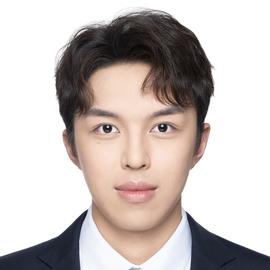
 Jianteng Chen
· 4 previous affiliations
- Nio (China)Since 2024
- Researcher · Since 2025
- Intern · 2024–2025
- Beijing Institute of Technology2021–2025
- Undergrad student · 2021–2025
- Tsinghua University2023–2024
- Intern · 2023–2024
- Undergrad student · 2024
Research Overview
Jianteng Chen focuses on neural rendering, 3D scene reconstruction, and simulation environments for robotics and autonomous systems. Recent collaborative work explores the integration of neural radiance fields and 3D Gaussian splatting to create physically consistent, anti-aliased spatial representations. This trajectory emphasizes bridging the gap between high-fidelity visual synthesis and practical applications in embodied AI.
Research Trajectory
Jianteng Chen’s documented research trajectory begins in 2023, characterized by collaborative contributions to neural rendering and its applications in large-scale simulation. A primary focus during this period was the development of realistic, controllable environments for autonomous systems. Chen participated as a co-author in the development of MARS: An Instance-Aware, Modular and Realistic Simulator for Autonomous Driving. This multi-author project utilized Neural Radiance Fields (NeRFs) to construct a modular simulator capable of separating static background environments from dynamic foreground instances. This decoupling allowed for independent control over the trajectories, sizes, and appearances of objects, addressing the need for realistic sensor simulation in autonomous driving corner cases.
Moving into 2024, Chen’s collaborative efforts shifted toward refining the fundamental visual fidelity and physical accuracy of 3D neural representations. A persistent challenge in neural rendering is the presence of aliasing and blurring artifacts caused by the cone-casting procedure. Chen contributed to addressing this in Rip-NeRF: Anti-aliasing Radiance Fields with Ripmap-Encoded Platonic Solids. This work aligns closely with the research direction of Volumetric Integration for Anti-Aliased Neural Fields. The paper proposed a novel representation that factorizes 3D space onto the faces of Platonic solids, utilizing Ripmap encoding to efficiently featurize anisotropic areas and achieve high-fidelity, anti-aliased renderings.
Concurrently, Chen has been involved in applying advanced spatial representations to embodied AI and robotics. In Robo-GS: A Physics Consistent Spatial-Temporal Model for Robotic Arm with Hybrid Representation, Chen was part of a team that tackled the "Real2Sim2Real" gap critical for robotic arm control and reinforcement learning. The project introduced a hybrid representation model integrating traditional mesh geometry, 3D Gaussian kernels, and physics attributes. By employing a Gaussian-Mesh-Pixel binding technique, the work aimed to create comprehensive digital assets that support accurate physical simulation alongside visual rendering.
Throughout these projects, Chen's collaborative work intersects with several advanced rendering methodologies. The optimization of these complex 3D environments touches upon the broader area of Mitigating the Volumetric Sampling Bottleneck in Neural Rendering, as well as themes such as Tri-Plane Feature Representations for 3D Deep Learning and the research direction of Continuous Level of Detail for Neural Scene Representations, all of which seek to balance computational efficiency with high-resolution structural detail.
Current Directions
The most recent papers in the evidence indicate a continuing focus on bridging high-fidelity neural rendering with physics-based simulation. Recent collaborative work investigates hybrid 3D representations that combine the visual advantages of Gaussian splatting and neural fields with the structural and physical properties of traditional meshes. This approach addresses the critical need for accurate "Real2Sim" pipelines in robotics, ensuring that digital twins of robotic arms and manipulated objects behave consistently with real-world physics. Additionally, ongoing efforts address fundamental rendering challenges, such as mitigating aliasing artifacts in complex volumetric integrations, to produce robust, realistic, and computationally efficient spatial-temporal models for autonomous systems.
Profile updated
| Title | Venue | Year |
|---|---|---|
| Robo-GS: A Physics Consistent Spatial-Temporal Model for Robotic Arm with Hybrid Representation | arXiv | 2024 |
| Rip-NeRF: Anti-aliasing Radiance Fields with Ripmap-Encoded Platonic Solids | Siggraph (conference Paper Track) | 2024 |
| MARS: An Instance-Aware, Modular and Realistic Simulator for Autonomous Driving | Cicai | 2023 |
Loading new papers…
Other researchers whose papers cluster into the same research directions — a proxy for overlapping technical interests and shared intellectual neighborhoods.
See something wrong? Report a mistake