

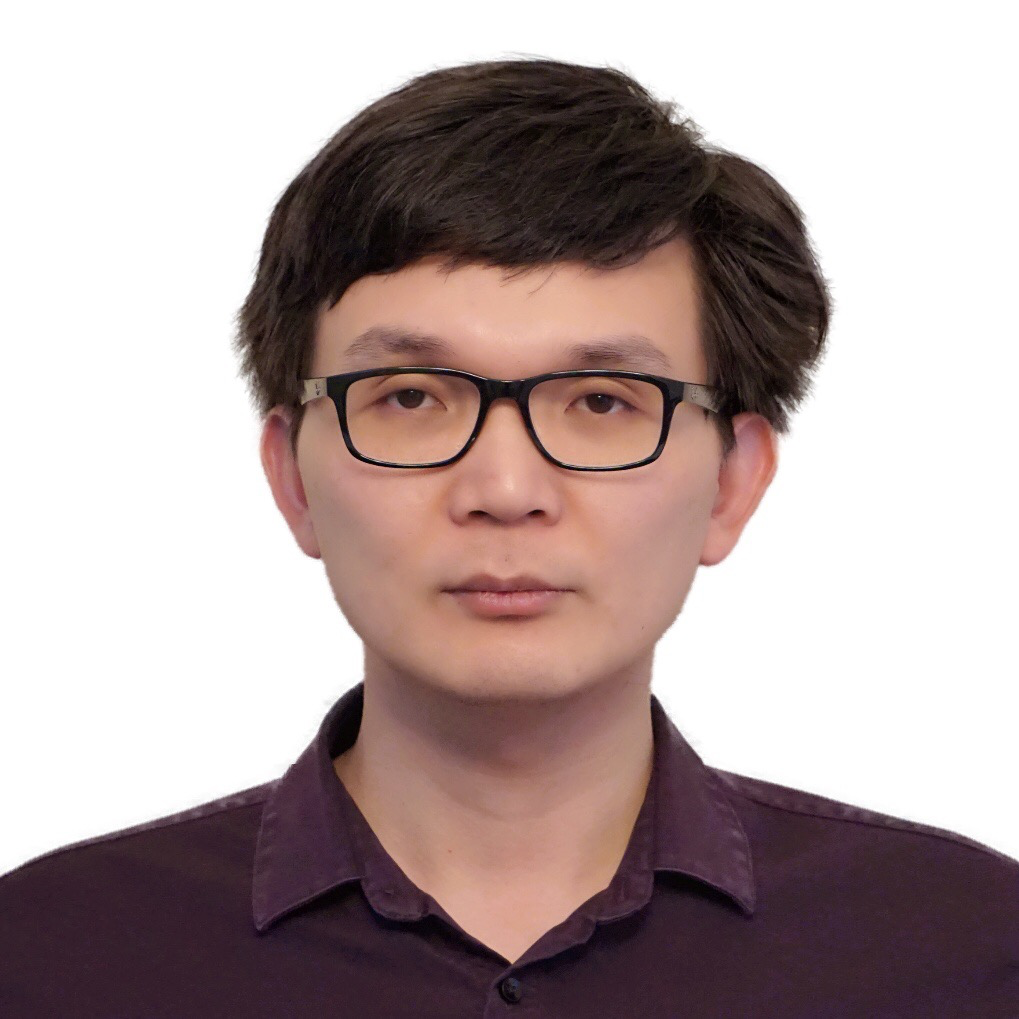
 Jianshu Chen
· 4 previous affiliations
- Amazon (United States)Since 2023
- Principal Scientist · Since 2023
- Tencent (China)2018–2023
- Principal Researcher · 2018–2023
- Microsoft (United States)2014–2018
- Researcher · 2014–2018
- Discover2009–2014
- PhD student · 2009–2014
Research Overview
Jianshu Chen focuses on large language model architectures, natural language processing, and reinforcement learning. His early work addressed distributed optimization and adaptive networks before transitioning to deep reinforcement learning and the integration of logical reasoning into neural representations. His current research centers on developing semi-parametric language models, multi-objective alignment techniques, and efficient context management for agentic systems.
Research Trajectory
Chen’s early research investigated distributed multi-agent systems and optimization over networks. He proposed an adaptive diffusion mechanism to optimize global cost functions across network nodes in Diffusion Adaptation Strategies for Distributed Optimization and Learning Over Networks, demonstrating how real-time information diffusion mitigates stochastic gradient noise. He further explored these dynamics in Diffusion Strategies for Adaptation and Learning over Networks: An Examination of Distributed Strategies and Network Behavior. This line of inquiry culminated in a detailed transient analysis of multi-agent learning processes in On the Learning Behavior of Adaptive Networks - Part I: Transient Analysis, which revealed how network topology and combination policies steer agents toward optimal solutions. This foundational work contributed significantly to the broader area of Constant Step Sizes for Non-Stationary Tracking.
By the mid-2010s, Chen’s focus expanded to deep learning and probabilistic inference. He developed a fully discriminative learning approach for supervised Latent Dirichlet Allocation in End-to-end Learning of LDA by Mirror-Descent Back Propagation over a Deep Architecture, utilizing mirror descent and backpropagation for scalable parameter estimation. Concurrently, he began addressing reinforcement learning (RL) in complex environments. In Deep Reinforcement Learning with a Natural Language Action Space, he introduced the Deep Reinforcement Relevance Network (DRRN), an architecture designed to navigate text-based games by learning separate embedding spaces for natural language descriptions and intents.
Continuing his work in RL optimization, Chen investigated methods to improve policy evaluation and stability. He proposed variance reduction techniques for estimating value functions in Stochastic Variance Reduction Methods for Policy Evaluation. He also participated in collaborative efforts to stabilize reinforcement learning with nonlinear function approximation, as detailed in SBEED: Convergent Reinforcement Learning with Nonlinear Function Approximation. These contributions advanced the research directions of The Non-Linear Function Approximation Gap in Reinforcement Learning and Primal-Dual Reinforcement Learning via Convex Reformulation. Building on these optimization strategies, he later introduced a family of stochastic primal-dual algorithms for nested optimization problems in Stochastic Variance Reduced Primal Dual Algorithms for Empirical Composition Optimization, achieving linear convergence rates for strongly convex problems.
In recent years, including his tenure as a Principal Scientist at Amazon, Chen has concentrated on the architecture, reasoning capabilities, and alignment of large language models (LLMs). A major theme of this work is the integration of formal logic and external knowledge into neural systems. He addressed the tension between broad reasoning capability and task-specific efficiency in PRIMA: Planner-Reasoner Inside a Multi-task Reasoning Agent. To further embed reasoning into model architectures, he developed the First-Order Logic Network (FOLNet) in Learning Language Representations with Logical Inductive Bias, which encodes logical inductive biases by forward-chaining learnable Horn clauses into a differentiable neural architecture. Alongside architectural innovations, he provided statistical insights into NLP pre-training in Blessing of Class Diversity in Pre-training, proving that high class diversity in pre-training tasks significantly improves sample efficiency for downstream applications.
To overcome the limitations of fully parametric models, Chen has explored semi-parametric architectures and adaptive retrieval. He introduced the Knowledge-in-Context (KiC) architecture in Knowledge-in-Context: Towards Knowledgeable Semi-Parametric Language Models, empowering text-to-text models with a structured external memory containing entity, commonsense, and causality knowledge. He also developed a geometry-based metric in Thrust: Adaptively Propels Large Language Models with External Knowledge, allowing LLMs to dynamically determine when to rely on internal knowledge versus external retrieval, thereby reducing computational overhead.
Chen’s recent trajectory also emphasizes instruction tuning and model alignment. He addressed open-world information extraction in PIVOINE: Instruction Tuning for Open-world Entity Profiling, constructing a comprehensive dataset to extract entity profiles beyond predefined ontologies. For model alignment, he proposed an efficient supervised alternative to Reinforcement Learning from Human Feedback (RLHF) in Rewards-in-Context: Multi-objective Alignment of Foundation Models with Dynamic Preference Adjustment, demonstrating that conditioning models on target reward values can achieve Pareto-optimal performance across conflicting goals. Collaborative work has also identified intrinsic predictors of model performance, such as the metric detailed in Soundness-Aware Level: A Microscopic Signature that Predicts LLM Reasoning Potential, which forecasts an LLM's reasoning capabilities prior to specialized training. Most recently, he has contributed to research on context management for agentic models in CoMem: Context Management with A Decoupled Long-Context Model, exploring asynchronous pipelines to mask the latency of iterative summarization.
Current Directions
The most recent papers in the evidence indicate a strong focus on optimizing the deployment, alignment, and evaluation of foundation models for complex, long-horizon tasks. One primary direction involves multi-objective alignment, where recent work investigates supervised, context-driven alternatives to traditional RLHF to balance conflicting human preferences efficiently. Another active area is the evaluation of intrinsic model capabilities; recent research explores microscopic signatures within neural representations that can predict a base model's capacity for logical soundness and reasoning before fine-tuning occurs. Finally, current work addresses the infrastructural challenges of agentic workflows, specifically investigating decoupled memory management frameworks that allow long-context summarization to execute in parallel with primary inference, thereby reducing deployment latency in iterative reasoning tasks.
Profile updated
Loading new papers…
Other researchers whose papers cluster into the same research directions — a proxy for overlapping technical interests and shared intellectual neighborhoods.
See something wrong? Report a mistake