

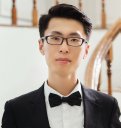
 Jianlong Wu
· 3 previous affiliations
- Harbin Institute of TechnologySince 2022
- Full Professor · Since 2024
- Current
- Associate Professor · 2022–2024
- Shandong University2019–2022
- Assistant Professor · 2019–2022
- Peking University2014–2019
- PhD student · 2014–2019
Research Overview
Jianlong Wu focuses on multi-view learning, deep clustering, and semi-supervised learning for computer vision. His early work developed latent subspace models for cross-modal retrieval and tensor-based methods for multi-view clustering. More recently, he investigates robust adaptive thresholds for semi-supervised classification and fine-grained video understanding, alongside optimizations for deploying vision transformers.
Research Trajectory
Wu’s early research addressed the challenges of integrating multi-modal data for recognition and retrieval tasks. In 2016, he developed a method for Multi-view common space learning for emotion recognition in the wild, which extracted and mapped diverse features—including convolutional neural network outputs, audio signals, and local binary patterns—into a shared projection space. He expanded on this cross-modal alignment in Joint Latent Subspace Learning and Regression for Cross-Modal Retrieval (2017), introducing a spectral regression approach to learn an optimal latent space shared across modalities based on orthogonal constraints.
By 2019, his focus broadened to unsupervised learning, specifically multi-view and deep clustering. To capture high-order correlations among multiple views without the computational bottleneck of self-representation models, he proposed Essential Tensor Learning for Multi-View Spectral Clustering (2019), utilizing Markov chain transition probability matrices. He continued to refine tensor-based representations in Unified Graph and Low-Rank Tensor Learning for Multi-View Clustering (2020). Concurrently, he investigated deep unsupervised methods for image clustering. In Deep Comprehensive Correlation Mining for Image Clustering (2019), he introduced a framework that leveraged pseudo-label supervision to exploit category information beyond simple pair-wise sample correlations. He also continued his work in cross-modal retrieval with Reconstruction regularized low-rank subspace learning for cross-modal retrieval (2021).
In 2022 and 2023, Wu's research heavily emphasized semi-supervised learning (SSL), aiming to overcome the limitations of fixed or highly sensitive thresholds in existing models. He introduced DualMatch: Promoting Semi-Supervised Learning with Hierarchical Label and Contrastive Learning (2022), which learned an adaptive threshold for all classes to perform instance-level prediction matching. This was subsequently refined in CHMATCH: Contrastive Hierarchical Matching and Robust Adaptive Threshold Boosted Semi-Supervised Learning (2023). Recognizing that image-based SSL methods often fail to capture motion dynamics in video, he developed Neighbor-Guided Consistent and Contrastive Learning for Semi-Supervised Action Recognition (2023) to better utilize limited supervised signals in the video domain.
During this period, Wu also applied deep learning to complex spatial and temporal modeling tasks. For cooking video captioning, he proposed Ingredient-enriched Recipe Generation from Cooking Videos (2022), which used ingredient recognition to track fine-grained correlations between consecutive cooking steps. In the autonomous driving domain, he developed Distributed Multi-Attention Generative Adversarial Network for Surrounding Vehicles Trajectories Prediction Based On Comprehensive Social Repulsion (2022), employing spatial and temporal attention heads to model social interactions and physical constraints among vehicles.
Most recently, Wu has sought to bridge the performance gap between deep clustering and semi-supervised classification. In ClusMatch: Improving Deep Clustering by Unified Positive and Negative Pseudo-Label Learning (2025), he formulated a method to transform clustering tasks into a semi-supervised setting using unified pseudo-label learning. As a principal investigator, he also oversaw the creation of FineBadminton: A Multi-Level Dataset for Fine-Grained Badminton Video Understanding (2025), introducing a complex semantic annotation hierarchy and benchmark to advance the broader research area of hybrid human-AI pipelines for scalable reasoning benchmarks. Additionally, he has contributed to collaborative efforts in model deployment, participating in research on Domain aware post training quantization for vision transformers in deployment (2026).
Current Directions
Wu’s most recent work investigates the intersection of unsupervised clustering and semi-supervised learning, exploring how pseudo-labeling strategies can elevate deep clustering performance to match semi-supervised classification baselines. He is also actively engaged in fine-grained video understanding, developing large-scale, multi-level datasets to benchmark complex action recognition and semantic annotation. Furthermore, his recent collaborative projects address the practical deployment of large-scale models, focusing on domain-aware post-training quantization techniques for vision transformers.
Profile updated
Loading new papers…
Other researchers whose papers cluster into the same research directions — a proxy for overlapping technical interests and shared intellectual neighborhoods.
See something wrong? Report a mistake