

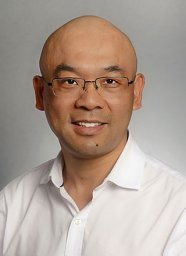
 Jianlin Cheng
· 5 previous affiliations
- University of MissouriSince 2007
- Full Professor · Since 2016
- Associate Professor · 2012–2016
- Assistant Professor · 2007–2012
- University of Central Florida2006–2007
- Assistant Professor · 2006–2007
- University of California, Irvine2002–2006
- Graduate Research Assistant · 2002–2006
- Sony Corporation of America2001–2002
- Software Engineer · 2001–2002
- Utah State University1999–2001
- Graduate Research and Teaching Assistant · 1999–2001
Research Overview
Jianlin Cheng focuses on computational biology, protein structure prediction, and machine learning for molecular design. His trajectory spans early foundational work in predicting intrinsic protein disorder to the development of deep learning architectures for 3D molecular generation and cryo-electron microscopy analysis. Currently, his research addresses the evaluation of protein complex models and the application of generative artificial intelligence to bioinformatics.
Research Trajectory
Cheng’s early research established foundational computational tools for analyzing protein structures and features. In 2005, he developed DISpro, an ab initio predictor detailed in Accurate Prediction of Protein Disordered Regions by Mining Protein Structure Data, which utilized evolutionary profiles and predicted secondary structure to identify intrinsically disordered regions. Concurrently, he introduced SCRATCH: a protein structure and structural feature prediction server, consolidating multiple predictive models—including secondary structure, solvent accessibility, and disulfide bridges—into a unified, accessible platform. Building on these predictive frameworks, his subsequent work advanced contact map prediction through 2D-recursive neural networks, as presented in NNcon: improved protein contact map prediction using 2D-recursive neural networks.
As predictive methodologies matured over the following decade, Cheng contributed to community-wide benchmarking efforts to rigorously evaluate algorithmic progress. He led the analysis in An expanded evaluation of protein function prediction methods shows an improvement in accuracy, demonstrating that machine learning approaches integrating diverse biological data were outperforming traditional sequence-similarity searches. This work advanced the broader research directions of Closing the Functional Annotation Gap for Protein Sequences and Functional Discovery Beyond the Sequence Twilight Zone. He later spearheaded the first edition of the Critical Assessment of protein Intrinsic Disorder prediction (CAID), detailed in Critical assessment of protein intrinsic disorder prediction, establishing a blind benchmark for algorithms targeting unstructured proteomic regions.
Parallel to his work in structure prediction, Cheng developed automated pipelines for processing complex imaging data, contributing to the area of 3D Reconstruction from Low Signal to Noise Projections. He introduced DeepCryoPicker: fully automated deep neural network for single protein particle picking in cryo-EM, which combined unsupervised learning with deep neural networks to automate particle identification. He later refined this approach in CryoSegNet: accurate cryo-EM protein particle picking by integrating the foundational AI image segmentation model and attention-gated U-Net, leveraging attention mechanisms and foundational segmentation models to achieve higher-resolution 3D reconstructions.
In recent years, Cheng’s focus has expanded to encompass sophisticated geometric deep learning and generative models for molecular design. Addressing the research direction of Modeling Protein Flexibility for Structure-Based Drug Design, his group developed Geometric Transformers for Protein Interface Contact Prediction, a rotation- and translation-invariant architecture for predicting partner-specific interface contacts. He also explored generative modeling in Geometry-Complete Diffusion for 3D Molecule Generation, utilizing equivariant graph neural networks within a denoising diffusion probabilistic framework to generate 3D molecular structures. This aligns with his broader interest in the research areas of Equivariant Diffusion for 3D Molecular Generation and Geometric Equivariance in 3D Molecular Deep Learning.
To support the training of these advanced models, Cheng’s lab released DIPS-Plus: The enhanced database of interacting protein structures for interface prediction, providing a feature-rich dataset of over 42,000 complexes. His team critically evaluated the practical utility of deep learning in drug discovery with Deep Learning for Protein-Ligand Docking: Are We There Yet?, systematically studying docking methods using predicted apo structures and multiple concurrent ligands. Further advancing complex prediction, he introduced gradient descent-based methods for quaternary structure reconstruction in Distance‐based reconstruction of protein quaternary structures from inter‐chain contacts and deployed these capabilities via DeepComplex: a web server of predicting protein complex structures by deep learning inter-chain contact prediction and distance-based modelling.
Cheng’s most recent trajectory involves optimizing large-scale biological models and exploring new generative paradigms. He participated in the development of MegaFold: System-Level Optimizations for Accelerating Protein Structure Prediction Models, a cross-platform suite designed to alleviate computational bottlenecks in training architectures like AlphaFold3. He has also investigated flow matching techniques for mapping biological states, as outlined in How to go with the flow: flow matching in bioinformatics and computational biology. Finally, to address the challenge of evaluating predicted structural models, he introduced PSBench: a large-scale benchmark for estimating the accuracy of protein complex structural models, providing diverse datasets for model ranking and selection.
Current Directions
Recent work investigates the rigorous evaluation and optimization of large-scale AI models in structural biology. A primary focus is the development of comprehensive benchmarks to estimate the accuracy of predicted protein complex models, addressing a critical gap in model ranking and selection for drug discovery. Alongside this, current research critically assesses the practical limitations of deep learning in protein-ligand docking, particularly when relying on predicted apo structures or docking without prior knowledge of binding pockets.
Methodologically, the most recent papers in the evidence explore advanced generative paradigms, including flow matching techniques, to map complex biological states and navigate constrained molecular spaces. Finally, there is an active effort to resolve the massive computational and memory bottlenecks associated with training foundational protein structure models through system-level optimizations, custom kernels, and deep operator fusion.
Profile updated
Loading new papers…
Other researchers whose papers cluster into the same research directions — a proxy for overlapping technical interests and shared intellectual neighborhoods.
See something wrong? Report a mistake