

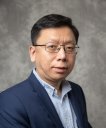
 Jianjiang Feng
· 4 previous affiliations
- Tsinghua UniversitySince 2009
- Associate Professor · Since 2012
- Assistant Professor · 2009–2012
- Michigan State University2008–2009
- Postdoc · 2008–2009
- Postdoc · 2007
- PhD student · 2000–2006
Research Overview
Jianjiang Feng focuses on biometric recognition systems, particularly fingerprint analysis, and medical image segmentation. His early work developed robust algorithms for latent fingerprint matching and ridge extraction, which later evolved into deep learning frameworks for dense fingerprint registration and 3D reconstruction. Currently, he investigates weakly supervised methods and cross-modality techniques for complex vascular and lesion segmentation.
Research Trajectory
The trajectory begins with foundational algorithms for fingerprint verification in the early 2000s. Early research introduced robust methods for feature extraction and matching, as seen in Robust Ridge Following in Fingerprints and An Exact Ridge Matching Algorithm for Fingerprint Verification. This work subsequently expanded to address the specific challenges of forensic applications, where poor image quality and large non-linear distortions complicate identification. Participation in On matching latent fingerprints contributed to systems designed specifically for matching difficult latent images against rolled fingerprints, accounting for the unique characteristics of friction ridge impressions.
Building on these classical techniques, the focus shifted toward pixel-wise alignment and continuous deformation modeling. The development of Dense registration of fingerprints marked a transition toward dense spatial mapping. This approach was later modernized with end-to-end convolutional neural networks in Dense Registration and Mosaicking of Fingerprints by Training an End-to-End Network. By combining Siamese feature extractors with encoder-decoder networks and synthetic training strategies, this research advanced the broader area of Non-Rigid Elastic Deformation Modeling in Biometrics and contributed to the research direction of Real-Time Volumetric Image Registration via Deep Learning. The same framework also enabled high-fidelity fingerprint mosaicking, intersecting with techniques in the area of Graph-Based Seam Optimization for Image Composition.
Parallel to advancements in biometrics, a significant line of research emerged in medical image analysis, particularly focusing on weakly supervised learning and vascular segmentation. He guided the development of GASNet: Weakly-supervised Framework for COVID-19 Lesion Segmentation, which framed segmentation as an adversarial image restoration task to drastically reduce the need for voxel-level annotations. This medical focus expanded into complex vascular structures with Vessel Extraction and Analysis of Aortic Dissection, an automated algorithm for extracting centerlines and segmenting true and false lumens to aid in diagnosing dangerous aortic conditions. Further diagnostic systems were explored in Deep diagnostic agent forest (DDAF): A deep learning pathogen recognition system for pneumonia based on CT.
In recent years, the biometric research has addressed the perspective distortion inherent in contactless fingerprint acquisition. Monocular 3D Fingerprint Reconstruction and Unwarping proposed a learning-based shape-from-texture algorithm to reconstruct 3D finger shapes from single images. To ensure compatibility with legacy 2D databases, Pose-Specific 3D Fingerprint Unfolding introduced algorithms to unfold 3D prints using the same pose as flat fingerprints, minimizing elastic deformation. Concurrently, 2D dense registration was further optimized in Phase-Aggregated Dual-Branch Network for Efficient Fingerprint Dense Registration, which explicitly aggregates high-resolution ridge phase information with global texture features for fast, pixel-level alignment.
Recent medical imaging work continues to tackle the annotation bottleneck and multi-modality challenges in vascular analysis. Participation in Edge-Aware Vessel Segmentation Using Scribble Supervision explored the use of scribble annotations combined with structural edge detection to train segmentation networks. Additionally, Multi-task global optimization-based method for vascular landmark detection incorporated structural priors into an end-to-end deep learning method, while Cross-modality cerebrovascular segmentation based on pseudo-label generation via paired data developed pseudo-label generation schemes to enable accurate cerebrovascular segmentation across different imaging modalities.
Current Directions
The most recent papers in the evidence address two primary domains: advanced 3D biometric reconstruction and weakly supervised medical image segmentation. In biometrics, current work investigates contactless fingerprint systems, focusing on monocular 3D reconstruction and pose-specific unfolding algorithms that mitigate perspective distortion and maintain compatibility with legacy 2D databases. In the medical domain, recent efforts focus on reducing the annotation burden for complex vascular structures. This includes developing cross-modality segmentation frameworks using pseudo-label generation and leveraging scribble supervision combined with structural priors to achieve accurate cerebrovascular and landmark detection without exhaustive manual labeling.
Profile updated
Loading new papers…
Other researchers whose papers cluster into the same research directions — a proxy for overlapping technical interests and shared intellectual neighborhoods.
See something wrong? Report a mistake