

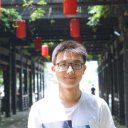
 Jianhui Sun
· 3 previous affiliations
- Meta (United States)Since 2024
- Research Scientist · Since 2024
- Research Scientist Intern · 2022
- University of VirginiaCurrent
- Current
- PhD student · 2016–2019
- Applied Scientist Intern · 2023
Research Overview
Jianhui Sun focuses on machine learning optimization, federated learning, and adversarial robustness. His early research explored hyperparameter scheduling and momentum-based stochastic gradient descent to improve model generalization. More recently, his work addresses complex optimization challenges in distributed environments and multi-modal personalization systems.
Research Trajectory
Sun’s early research involved applying optimization techniques to complex data domains. In 2018, he contributed to the development of non-convex optimization algorithms for analyzing brain responses in A low-rank multivariate general linear model for multi-subject fMRI data and a non-convex optimization algorithm for brain response comparison. He subsequently participated in designing deep learning architectures for natural language processing, helping to develop the Correlation Networks (CorNet) module to capture label dependencies in Correlation Networks for Extreme Multi-label Text Classification (2020). Alongside this work, he investigated the security of reinforcement learning systems, analyzing adversarial vulnerabilities in Malicious Attacks against Deep Reinforcement Learning Interpretations (2020).
A central theme of Sun’s research has been the theoretical and empirical analysis of stochastic optimization, particularly focusing on hyperparameter scheduling to improve model generalization. In A Stagewise Hyperparameter Scheduler to Improve Generalization (2021), he introduced methods to efficiently tune multistage momentum variants, such as quasi-hyperbolic momentum, within stochastic gradient descent (SGD). He expanded on this foundation in Demystify Hyperparameters for Stochastic Optimization with Transferable Representations (2022), providing a unified convergence analysis of popular momentum schemes like Polyak's heavy ball and Nesterov's accelerated gradient. This line of inquiry was further extended to distributed environments in Scheduling Hyperparameters to Improve Generalization: From Centralized SGD to Asynchronous SGD (2023). Applying these optimization insights to model robustness, he addressed the challenges of hyperparameter configuration and overfitting in Projected Gradient Descent Adversarial Training in Enhance Diffusion to Improve Robust Generalization (2023).
Sun has also explored knowledge transfer in structured data. In Augmenting Knowledge Transfer across Graphs (2022), he investigated domain adaptation techniques for resource-scarce target graphs. This interest in graph domain adaptation continued with his participation in EvoluNet: Advancing Dynamic Non-IID Transfer Learning on Graphs (2024), which proposed a framework for handling domain evolution and discrepancy in non-IID data. This work contributes to the research direction of Aligning Feature and Topological Shifts in Graph Neural Networks and intersects with methods used in the area of Spatio-temporal Alignment for Video Domain Adaptation.
As distributed training became more prominent, Sun’s focus expanded to federated learning. He and his collaborators developed algorithms to handle complex saddle point problems in Solving a Class of Non-Convex Minimax Optimization in Federated Learning (2023), proving that their methods could match single-machine sample complexity while reducing communication overhead. He also contributed to Federated Conditional Stochastic Optimization (2023), which introduced a suite of algorithms for tasks like meta-learning and AUPRC maximization across decentralized networks.
Most recently, following his transition to a Research Scientist role at Meta, his collaborative work has addressed generative recommendation systems. He participated in the development of the UniMP framework in Towards Unified Multi-Modal Personalization: Large Vision-Language Models for Generative Recommendation and Beyond (2024), which treats a user's multi-modal history as an interleaved sequence of text and images. This research advances several broader fields, including the area of The Semantic Bottleneck of ID-Based Recommendation, the direction of Single Stream Transformers for Joint Feature Interaction, and the study of Real-Time Preference Adaptation for Interactive Recommendation.
Current Directions
The most recent papers in the evidence indicate a dual focus on advanced optimization in distributed settings and the application of large vision-language models to personalization tasks. In federated learning, recent work investigates conditional stochastic optimization and non-convex minimax problems, aiming to achieve theoretical lower bounds for sample complexity while maintaining linear speedups across client networks. Concurrently, work in multi-modal personalization explores how instruction-tuned generative frameworks can unify diverse recommendation tasks by processing interleaved text and image histories. Additionally, recent research addresses dynamic graph transfer learning, focusing on theoretical generalization bounds for non-IID data subject to domain evolution.
Profile updated
Loading new papers…
Other researchers whose papers cluster into the same research directions — a proxy for overlapping technical interests and shared intellectual neighborhoods.
See something wrong? Report a mistake