

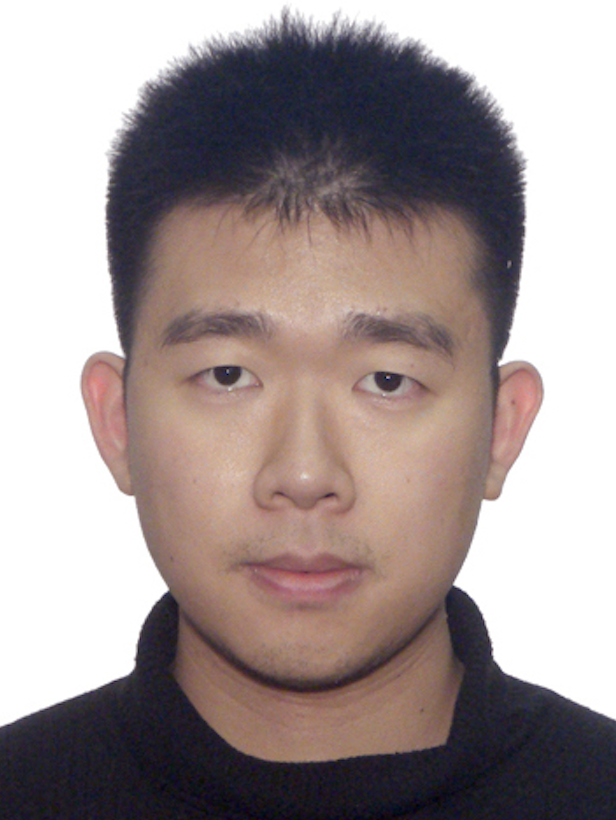
 Jianhong Wang
· 8 previous affiliations
- INFORMED-AI HubSince 2024
- Senior Research Associate · Since 2024
- University of BristolSince 2024
- Postdoc · Since 2024
- ZeroAISince 2023
- Scientific Advisor · Since 2023
- University of Manchester2023–2024
- Postdoctoral Research Associate · 2023–2024
- Imperial College London2016–2023
- Doctor of Philosophy - PhD, Electrical and Electronic Engineering Research · 2019–2023
- MS student · 2016–2017
- Part-time Research Internship at London Research Center (Noah's Ark Lab) · 2020–2021
- University College London2017–2018
- Master of Research (MRes), Web Science and Big Data Analytics · 2017–2018
- University of Liverpool2012–2016
- Undergrad student · 2012–2016
Research Overview
Jianhong Wang focuses on multi-agent reinforcement learning (MARL), cooperative game theory, and the development of robust autonomous systems. His research primarily addresses the challenges of coordination, credit assignment, and reward engineering in complex, decentralized environments. By integrating game-theoretic concepts—specifically Shapley value theory—into reinforcement learning frameworks, he seeks to improve the interpretability and efficiency of agent interactions in both closed and open systems. His current work explores the intersection of MARL and generative AI, with applications extending to smart grids, robotics, and large-scale distributed control.
Research Trajectory
The evolution of Wang’s research reflects a transition from foundational signal processing and deep learning architectures toward the theoretical and practical complexities of multi-agent systems. His early work, conducted during his undergraduate and master’s studies, focused on the computational challenges of high-dimensional data and sequential modeling. This period included investigations into Scalable Video Analysis via Compact Feature Aggregation, which addressed the "curse of dimensionality" in large-scale retrieval tasks. During his M.Res. at University College London, his focus shifted toward probabilistic modeling and Bayesian inference, exploring methods such as Overcoming Local Mode Entrapment in Multimodal Sampling and Parallel Tempering for Sampling Multimodal Posterior Distributions. These early projects established a methodological foundation in handling complex probability distributions and temporal dependencies, which would later inform his approach to reinforcement learning.
In 2018, Wang applied these sequential modeling techniques to healthcare acoustics, developing a dual-convolutional gated recurrent unit (GRU) architecture for snore sound classification. This work demonstrated an early interest in capturing time-frequency pattern interdependencies, a theme that would recur as he moved into the dynamic environments of reinforcement learning.
As he transitioned into his doctoral research at Imperial College London, Wang’s focus solidified around multi-agent reinforcement learning. A significant portion of this work involved addressing the "sparse reward" problem and the difficulties of credit assignment in cooperative settings. He contributed to the development of automated reward-shaping frameworks, moving away from manual engineering toward autonomous learning agents that could determine optimal shaping values through competitive or cooperative games. This period also saw the introduction of Shapley value theory as a mechanism for value factorization in MARL. By generalizing the Shapley value to Markov convex games, Wang provided a theoretical framework for decomposing a global team reward into individual agent contributions, ensuring fairness and sensitivity to "dummy" agents that do not contribute to the team's success.
Following his PhD, Wang’s research expanded to address the "sim-to-real gap" and the unpredictability of open systems. His work in Dual Reformulations for Robust Reinforcement Learning reflects an effort to ensure that RL agents remain effective when encountering environmental dynamics that differ from their training simulations. This interest in robustness is coupled with a focus on Budget-Aware Optimization for Efficient Deep Learning, particularly for deploying models on hardware with limited computational resources.
Current Directions
Wang’s current research as a Senior Research Associate at the University of Bristol centers on Ad Hoc Teamwork (AHT) and the integration of generative AI into multi-agent frameworks. Ad hoc teamwork represents a significant shift from traditional MARL; it requires agents to cooperate with unknown teammates without prior coordination or shared training. Wang approaches this by modeling open multi-agent systems through the lens of cooperative game theory, aiming to provide theoretical rigor to a field often dominated by heuristic designs.
His most recent initiatives involve exploring how generative AI can serve as a foundation for multi-agent systems that reason and adapt across diverse environments. This includes investigating large language model (LLM)-based multi-agent systems and their potential for real-world distributed system control. Additionally, he has participated in collaborative work regarding preference alignment in diffusion models, indicating a broadening interest in how human feedback can guide complex generative processes.
Representative Work
A Cnn-Gru Approach to Capture Time-Frequency Pattern Interdependence for Snore Sound Classification In this first-author work, Wang developed the DualConv-vGRU network to address challenges in acoustic signal classification. The architecture utilizes a dual convolutional layer to extract features from spectrograms across different frequency scales while employing a GRU to learn dependencies within channel slices. This research highlighted his early focus on hybrid architectures for sequential data.
SHAQ: Incorporating Shapley Value Theory into Multi-Agent Q-Learning As the primary author, Wang introduced SHAQ, a framework that applies Shapley value theory to the problem of value factorization in MARL. The paper provides a theoretical basis for how global rewards can be distributed among agents fairly and efficiently. By demonstrating that the generalized Shapley value is sensitive to agent contributions, the work offers a more interpretable alternative to black-box value decomposition methods.
Learning to Shape Rewards using a Game of Switching Controls In this second-author paper, Wang contributed to the development of the Reinforcement Learning Optimising Shaping Algorithm (ROSA). The framework automates reward shaping by framing it as a Markov game between a "shaper" agent and a learner. This approach reduces the need for manual domain expertise, allowing the system to autonomously identify states where additional rewards can accelerate the learning process.
A Cooperative-Game-Theoretical Model for Ad Hoc Teamwork This first-author paper addresses the limitations of existing ad hoc teamwork models, which often rely on non-cooperative game theory or heuristic graph-based policies. Wang proposes a cooperative game-theoretic model that improves the interpretability of global Q-value representations, facilitating the application of ad hoc teamwork to real-world scenarios where agents must coordinate with unfamiliar partners.
Shapley Machine: A Game-Theoretic Framework for N-Agent Ad Hoc Teamwork Continuing his work on open systems, Wang introduced the "Shapley Machine" to solve the n-agent ad hoc teamwork (NAHT) problem. By modeling open systems as instances in a cooperative game space, this first-author work provides a mathematically grounded approach to credit assignment in teams where only a subset of agents is under the controller's influence.
Workshop on Multi-Agent Learning and Its Opportunities in the Era of Generative AI As the lead organizer and first author of the workshop proposal, Wang outlines the convergence of MARL and generative AI. The work identifies key research fronts, including LLM-based coordination and the use of multi-agent learning for scalable, data-driven control in distributed systems, setting a trajectory for future research in the field.
In addition to these core contributions, Wang has participated in collaborative research involving out-of-distribution generalization using causal concepts and the application of MARL to complex railway networks, where he contributed to local-critic approaches to mitigate the "curse of agents" in large-scale systems.
Profile updated
Loading new papers…
Other researchers whose papers cluster into the same research directions — a proxy for overlapping technical interests and shared intellectual neighborhoods.
See something wrong? Report a mistake