

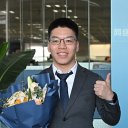
 Jiangui Chen
· 2 previous affiliations
- Huawei Technologies (China)Since 2024
- Researcher · Since 2024
- Chinese Academy of Sciences2018–2024
- PhD student · 2018–2024
Research Overview
Jiangui Chen focuses on generative information retrieval, knowledge-intensive language tasks, and federated learning architectures. His trajectory spans from early work in community question answering and personalized federated learning to the development of pre-trained generative retrieval models. Most recently, his research investigates continual learning for dynamic corpora and retrieval-augmented generation systems.
Research Trajectory
Jiangui Chen’s early research involved natural language processing applications, beginning with collaborative work on ensemble models for affect prediction, as seen in Zewen at SemEval-2018 Task 1: An Ensemble Model for Affect Prediction in Tweets. He subsequently explored community question answering (CQA), participating in the development of methods to automatically identify high-quality, trustworthy answers on CQA platforms in Beyond Relevance: Trustworthy Answer Selection via Consensus Verification.
In 2021, his focus expanded to privacy-preserving machine learning architectures for natural language tasks. He introduced FedMatch: Federated Learning Over Heterogeneous Question Answering Data, which addressed the challenges of training models across diverse, decentralized datasets. This work contributed significantly to the research direction of Personalized Federated Learning for Statistically Heterogeneous Data and the broader area of Collaborative Learning Across Private Data Silos. By investigating techniques for model updates, the research also advanced the direction of Communication Efficient Federated Fine-tuning of Foundation Models and the related area of Low-Rank Weight Decomposition for Efficient Model Adaptation. Furthermore, the methodology provided insights into the research direction of Decoupled Architectures for Personalized Federated Learning and strategies for the area of Regularizing Federated Learning Under Extreme Local Data Scarcity.
Following his work in federated learning, Chen transitioned toward generative information retrieval, particularly for knowledge-intensive language tasks (KILTs). He developed GERE: Generative Evidence Retrieval for Fact Verification, utilizing generative models to retrieve supporting evidence. Building on this paradigm, he introduced CorpusBrain: Pre-train a Generative Retrieval Model for Knowledge-Intensive Language Tasks. This work challenged the traditional "index-retrieve-then-rank" pipeline by pre-training a generative model to directly map queries to relevant contexts, addressing memory footprint and end-to-end optimization challenges in model-based information retrieval.
To improve the generalization of these models across different levels of semantic granularity—such as documents, passages, and entities—he subsequently proposed A Unified Generative Retriever for Knowledge-Intensive Language Tasks via Prompt Learning. Concurrently, he collaborated on advancing the Differentiable Search Index (DSI) paradigm in Semantic-Enhanced Differentiable Search Index Inspired by Learning Strategies, which explored how to better parameterize document identifiers and learn query-document associations within a single neural network.
Recognizing that real-world knowledge corpora are rarely static, Chen’s trajectory then shifted toward adapting generative retrieval models for dynamic environments. He led the investigation in Continual Learning for Generative Retrieval over Dynamic Corpora, exploring how models can incorporate new information over time. This effort culminated in a collaborative framework detailed in CorpusBrain++: A Continual Generative Pre-Training Framework for Knowledge-Intensive Language Tasks, which specifically addressed the dynamic nature of document collections by enabling the retrieval model to handle continuous updates without catastrophic forgetting. Most recently, he has applied retrieval-augmented generation (RAG) techniques to social media contexts, participating in the design of RIGHT: Retrieval-Augmented Generation for Mainstream Hashtag Recommendation to identify relevant hashtags for emerging topics.
Current Directions
The most recent papers in the evidence highlight a sustained focus on the adaptability and application of generative retrieval systems. A primary current direction is continual learning for dynamic corpora, addressing the critical limitation of static knowledge bases in traditional retrieval models. This involves developing frameworks that allow pre-trained generative retrievers to seamlessly integrate newly published documents and emerging facts without losing previously acquired knowledge.
Additionally, recent work investigates the integration of retrieval mechanisms with large language models through Retrieval-Augmented Generation (RAG). This includes designing specialized selector components to improve the relevance and accuracy of generated outputs for specific downstream applications, such as social media recommendation systems and the processing of emerging, real-time topics.
Profile updated
Loading new papers…
Other researchers whose papers cluster into the same research directions — a proxy for overlapping technical interests and shared intellectual neighborhoods.
See something wrong? Report a mistake