

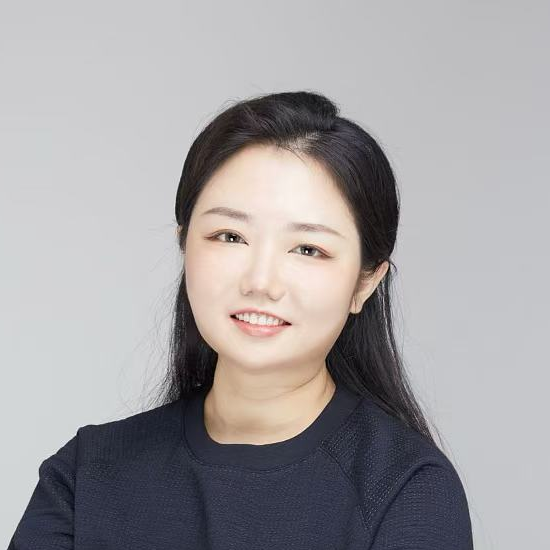
 Jiangtao Gong
· 2 previous affiliations
- Current
- Associate Professor · 2026
- Tsinghua University2013–2026
- Assistant Professor · 2022–2026
- PhD student · 2013–2018
1 other author named Jiangtao Gong: jiangtao gong (1 paper)
Research Overview
Jiangtao Gong focuses on human-computer interaction, embodied artificial intelligence, and cognition-inspired autonomous systems. Her early work explored interactive tools and accessibility technologies for diverse user groups, including the visually impaired. Recently, her research has shifted toward integrating human cognitive models and large language models into end-to-end autonomous driving and human-centric robotic navigation.
Research Trajectory
Gong's early research focused on interactive tools and visualization. She developed BugMap: a topographic map of bugs, a system for visualizing large-scale software defects, and PaperLego: component-based papercraft designing tool for children, an algorithm-driven interface that converts 3D models into 2D folding patterns suitable for young users.
Expanding into broader human-computer interaction and accessibility, her work began to address complex cognitive and social environments. She investigated tactile cognition for the visually impaired in "I can't name it, but I can perceive it" Conceptual and Operational Design of "Tactile Accuracy" Assisting Tactile Image Cognition. In the educational domain, she introduced HoloBoard: a Large-format Immersive Teaching Board based on pseudo HoloGraphics to enhance student engagement through immersive visual displays, and analyzed the dynamics of digital communication in All in One Group: Current Practices, Lessons and Challenges of Chinese Home-School Communication in IM Group Chat.
As her focus shifted toward embodied AI and robotics, Gong led projects examining how humans interact with autonomous agents. She explored the balance of control in guiding robots for blind and low-vision users in "I am the follower, also the boss": Exploring Different Levels of Autonomy and Machine Forms of Guiding Robots for the Visually Impaired. She also advanced affective computing by developing a biomimetic quadruped robot capable of interpreting natural human tactile gestures in Touch-and-Heal: Data-driven Affective Computing in Tactile Interaction with Robotic Dog.
In recent years, Gong's trajectory has heavily emphasized the integration of large language models (LLMs) and human cognitive patterns into autonomous driving and navigation systems. She contributed to grounding trajectory prediction in static scene geometry with Large Language Models Powered Context-aware Motion Prediction in Autonomous Driving, which uses visual and textual prompts to extract traffic context for improved prediction accuracy. She further advanced the research direction of Hierarchical Reasoning for Real-Time Autonomous Driving with SurrealDriver: Designing LLM-powered Generative Driver Agent Framework based on Human Drivers' Driving-thinking Data, a framework that trains autonomous agents using the verbalized thought processes of human drivers to enhance safety and human-likeness.
This intersection of cognitive science and embodied AI extends to unstructured environments. Gong and her collaborators introduced Bench2FreeAD: A Benchmark for Vision-based End-to-end Navigation in Unstructured Robotic Environments, which combines real-world data and synthetic simulation to improve navigation where traditional traffic rules do not apply. This work spans several research areas, including semantic reasoning for autonomous robotic exploration, closed-loop evaluation for autonomous driving, and hybrid co-training for embodied AI. She also explored interactive simulation in FreeAskWorld: An Interactive and Closed-Loop Simulator for Human-Centric Embodied AI, demonstrating that proactive information-seeking is crucial for models working in socially compliant navigation in human-populated spaces.
Gong has continued to innovate in accessibility and digital health by applying these advanced AI models. She developed a system to help visually impaired users interpret unfamiliar environments in AI system facilitates people with blindness and low vision in interpreting and experiencing unfamiliar environments, contributing to hierarchical 3D scene graphs for embodied spatial reasoning. In the clinical domain, her work on CA+: Cognition Augmented Counselor Agent Framework for Long-term Dynamic Client Engagement established a multi-session therapeutic structure for LLMs, advancing research in closing the engagement gap in digital health interventions, grounding large language models for clinical reliability, and dual-stream episodic and semantic memory for agents.
Most recently, Gong's research has pushed the boundaries of end-to-end autonomous driving by directly incorporating human brain signals. In Embodied Cognition Augmented End2End Autonomous Driving, she aligned visual features with the cognitive patterns of expert drivers via EEG data, a significant step in multimodal alignment for neural signal decoding. She also addressed long-tail driving scenarios in CoIRL-AD: Collaborative-Competitive Imitation-Reinforcement Learning in Latent World Models for Autonomous Driving, utilizing a latent world model to balance imitation and reinforcement learning for reactive traffic simulation.
Current Directions
Gong's most recent work investigates the intersection of cognitive science and embodied artificial intelligence, with a strong emphasis on end-to-end autonomous driving and human-centric robotic navigation. A major ongoing theme is the integration of human cognitive processes—such as verbalized driving-thinking data and direct neural signals (EEG)—into the training pipelines of autonomous agents. This approach aims to improve the safety, human-likeness, and real-time reasoning capabilities of models operating in complex or unstructured environments.
Additionally, her recent research addresses the limitations of static AI interactions by developing closed-loop, interactive simulators and dual-policy frameworks that balance imitation and reinforcement learning. These systems are designed to handle rare, long-tail traffic scenarios and enable proactive information-seeking behaviors in robots. Beyond autonomous driving, she continues to apply these advanced cognitive and spatial reasoning models to digital health and accessibility, creating sophisticated, multi-session therapeutic agents and personalized navigation systems for the visually impaired.
Profile updated
Loading new papers…
Other researchers whose papers cluster into the same research directions — a proxy for overlapping technical interests and shared intellectual neighborhoods.
See something wrong? Report a mistake