

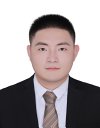
 Jiangpeng Yan
· 3 previous affiliations
- EfundSince 2024
- Researcher · Since 2024
- Huawei Technologies (China)2022–2024
- Researcher · 2022–2024
- Tsinghua University2013–2022
- PhD student · 2017–2022
- Undergrad student · 2013–2017
Research Overview
Jiangpeng Yan focuses on medical image analysis, computer vision, and label-efficient deep learning. His trajectory spans from early work in neural architecture search and instance segmentation to specialized frameworks for histopathology and magnetic resonance imaging. Recently, his research investigates semi-supervised learning and image enhancement techniques to improve diagnostic models under constrained or mixed-quality annotation conditions.
Research Trajectory
Yan's early research explored the efficiency of deep convolutional neural networks for environmental monitoring. He developed A More Efficient CNN Architecture for Plankton Classification in 2017, investigating the trade-offs between network depth and classification accuracy to automate the annotation of seafloor observation data.
Transitioning toward medical image analysis, he began applying automated network design to clinical modalities. He introduced Neural Architecture Search for compressed sensing Magnetic Resonance image reconstruction, which automated the design of networks for CS-MRI to achieve high reconstruction quality with significantly reduced computational overhead. This work contributed to broader research directions involving the automated discovery of task-specific neural architectures and the gradient-based optimization of continuous architecture relaxations.
In 2021, Yan expanded his focus to complex segmentation and registration tasks. To address the gigapixel scale of whole slide images (WSIs) in computer-aided cancer diagnosis, he developed the Hierarchical Attention Guided Framework for Multi-resolution Collaborative Whole Slide Image Segmentation. This approach utilized global and local branches to balance receptive fields and local details. In parallel, he guided research on natural image processing, overseeing the development of A Coarse-to-Fine Instance Segmentation Network with Learning Boundary Representation, which improved object boundary prediction on the COCO dataset by balancing multiple objectives in deep learning models. He also contributed to unsupervised multimodal medical image registration through Unimodal Cyclic Regularization For Training Multimodal Image Registration Networks, leveraging knowledge from simpler unimodal tasks to constrain deformation fields.
A major theme of Yan's subsequent work is label-efficient learning and the extraction of shared representations across domains. He addressed the scarcity of annotated histology images by participating in the design of Towards Better Understanding and Better Generalization of Low-shot Classification in Histology Images with Contrastive Learning, which combined contrastive learning with latent augmentation to transfer semantic variations. He further advanced annotation-free histopathology image analysis by introducing Deep contrastive learning based tissue clustering for annotation-free histopathology image analysis. In the domain of MRI, he proposed Seeking Common Ground While Reserving Differences: Multiple Anatomy Collaborative Framework for Undersampled MRI Reconstruction, a framework that exploits shared de-aliasing knowledge across different anatomies rather than training isolated expert networks. Additionally, he contributed to abdominal CT-MRI registration with Double-Uncertainty Guided Spatial and Temporal Consistency Regularization Weighting for Learning-Based Abdominal Registration. This method adaptively adjusted regularization weights using a mean-teacher framework, advancing the research direction of The Computational Bottleneck of Stochastic Uncertainty Estimation and the broader area of Temporal Weight Averaging for Stable Self Supervision.
Yan's recent trajectory emphasizes human-machine collaboration and robustness to imperfect data. He co-developed Human-Machine Interactive Tissue Prototype Learning for Label-Efficient Histopathology Image Segmentation, utilizing self-supervised prototypes to guide segmentation with minimal manual input. Addressing the reality of clinical data collection, he also collaborated on Towards Expert-Amateur Collaboration: Prototypical Label Isolation Learning for Left Atrium Segmentation with Mixed-Quality Labels, a framework designed to learn robustly from a mixture of scarce expert annotations and massive low-quality crowdsourced labels. His work in semi-supervised medical image segmentation continued with Ambiguity-selective consistency regularization for mean-teacher semi-supervised medical image segmentation. Most recently, he participated in the development of HQG-Net: Unpaired Medical Image Enhancement With High-Quality Guidance, which encodes high-quality cues into a variational framework to enhance low-quality medical images without relying on paired training data.
Current Directions
The most recent papers in the evidence indicate a strong focus on label-efficient and semi-supervised learning frameworks for medical image analysis. Yan's current work investigates methods to overcome the bottleneck of acquiring high-quality clinical annotations. This includes developing human-machine interactive systems and prototype learning techniques that can robustly utilize mixed-quality labels—such as combining scarce expert annotations with abundant, lower-quality crowdsourced data. Additionally, recent research addresses unpaired medical image enhancement, utilizing variational approaches to guide the enhancement of low-quality scans without requiring perfectly paired datasets. Across these efforts, the central objective is to build robust, clinically applicable diagnostic models under constrained data conditions.
Profile updated
Loading new papers…
Other researchers whose papers cluster into the same research directions — a proxy for overlapping technical interests and shared intellectual neighborhoods.
See something wrong? Report a mistake