

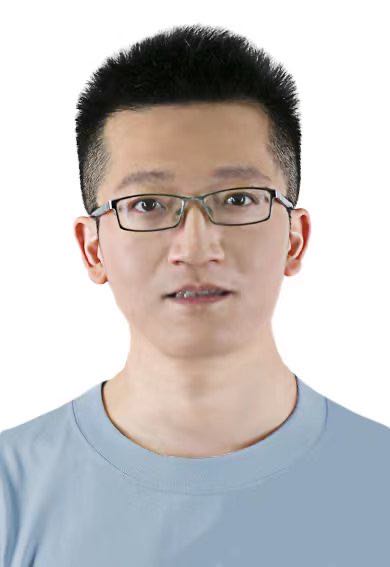
 Jiangming Liu
· 5 previous affiliations
- Yunnan UniversitySince 2023
- Associate Professor · Since 2023
- Tencent (China)2021–2023
- Researcher · 2021–2023
- University of Edinburgh2017–2021
- PhD student · 2017–2021
- Researcher · 2015–2017
- Beijing Jiaotong University2008–2015
- MS student · 2012–2015
- Undergrad student · 2008–2012
Research Overview
Jiangming Liu focuses on natural language processing, specifically transition-based syntactic parsing and formal semantic representation. Early work explored neural architectures for incremental structure prediction and constituent parsing. More recently, the focus has shifted toward Discourse Representation Theory, addressing crosslingual semantic parsing, multi-step reasoning, and text generation from formal semantic structures.
Research Trajectory
Jiangming Liu’s early research primarily addressed the mechanics of syntactic parsing, with a particular focus on the area of Neural Stack Architectures for Incremental Structure Prediction. In 2017, transition-based models were recognized for their speed and accuracy in constituent parsing, but they often suffered from a lack of right-hand context during incremental processing. To resolve this, Liu led the development of Shift-Reduce Constituent Parsing with Neural Lookahead Features. This work introduced a fast neural model utilizing bidirectional LSTMs to extract full-sentence information, effectively predicting the hierarchy of constituents and providing necessary lookahead guidance to the shift-reduce parser.
During the same period, Liu investigated the structural traversal strategies used in neural parsing. Bottom-up parsers benefited from rich features derived from partial parses but lacked non-local guidance, while top-down parsers offered non-local guidance but required strong encoders to predict hierarchies before construction. In In-Order Transition-based Constituent Parsing, Liu proposed a novel parsing system that balanced these trade-offs by employing an in-order traversal strategy, mitigating the respective weaknesses of both purely bottom-up and top-down approaches.
By 2018 and 2019, Liu’s focus transitioned from syntactic parsing to formal semantics, specifically contributing to the theme of Sequence to Sequence Learning for Formal Semantics. A major milestone in this period was the shift toward Discourse Representation Theory (DRT). In Discourse Representation Parsing for Sentences and Documents, Liu expanded parsing capabilities beyond isolated sentences, tackling the more complex challenge of generating formal semantic representations for entire documents.
As work in Discourse Representation Structure (DRS) parsing matured, the need for robust infrastructure and evaluation became apparent. In 2020, Liu introduced Dscorer: A Fast Evaluation Metric for Discourse Representation Structure Parsing, providing the community with a more efficient tool for benchmarking semantic parsers. Simultaneously, Liu's research broadened to encompass the broader direction of Dynamic Orchestration of Reasoning Paths. This was evidenced by Multi-Step Inference for Reasoning Over Paragraphs, which investigated how models navigate complex information gathering and logical deduction across longer spans of text.
In 2021, Liu extended DRS parsing into multilingual settings. Universal Discourse Representation Structure Parsing introduced Universal Discourse Representation Theory (UDRT), a variant of DRT designed to explicitly anchor semantic representations to linguistic tokens. Utilizing Transformer architectures, this work demonstrated how knowledge from annotated corpora in resource-rich languages could be transferred via bitext to guide semantic parsing in multiple other languages.
Current Directions
The most recent papers in the evidence, published in 2021, indicate a comprehensive approach to Discourse Representation Theory that spans both natural language understanding and generation. Recent work investigates the bidirectional relationship between text and formal semantics. This includes advancing crosslingual semantic parsing frameworks that leverage Transformer architectures for many-to-one translation and parsing tasks. Furthermore, the most recent evidence highlights an active interest in the inverse problem: generating coherent natural language text directly from Discourse Representation Structures. Together, these directions suggest an ongoing focus on making formal semantic representations more robust, universally applicable across languages, and useful for downstream generation tasks.
Profile updated
Loading new papers…
Other researchers whose papers cluster into the same research directions — a proxy for overlapping technical interests and shared intellectual neighborhoods.
See something wrong? Report a mistake