

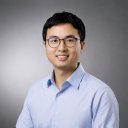
 Jiang Liu
· 8 previous affiliations
- Advanced Micro DevicesSince 2024
- Researcher · Since 2024
- Advanced Micro Devices (United States)Since 2024
- Senior Member of Technical Staff · Since 2025
- Member of Technical Staff · 2024–2025
- Johns Hopkins University2019–2024
- Graduate Research Assistant · 2020–2024
- Doctor of Philosophy - PhD, Electrical and Computer Engineering · 2019–2024
- Microsoft (United States)2023–2024
- Intern · 2023–2024
- Intern · 2022
- Subtle Medical2021
- Deep Learning Research Scientist Intern · 2021
- Tsinghua University2015–2019
- Undergrad student · 2015–2019
- Tsinghua PBCSF 清华五道口2016–2019
- Minor, Finance Technology · 2016–2019
7 other authors named Jiang Liu: Jiang Liu (Southern University of Science and Technology · 158 papers), Jiang Liu (Zhejiang University · 7 papers), Jiang Liu (China Telecom · Xi'an Jiaotong University · 5 papers), Jiang Liu (Wuhan University · 4 papers), Jiang Liu (2 papers), and 2 more
Research Overview
Jiang Liu focuses on adversarial robustness in computer vision, multimodal generative modeling, and the evaluation of large language models. His trajectory spans from early work in medical image segmentation and adversarial defenses to recent advancements in video diffusion and cross-modal reasoning. Currently, his research addresses the alignment, reasoning capabilities, and spatial grounding of omni-modal and text-to-image systems.
Research Trajectory
He began his published research in medical image analysis, developing A Vessel-Focused 3D Convolutional Network for Automatic Segmentation and Classification of Coronary Artery Plaques in Cardiac CTA (2018). This early work utilized 3D convolutional architectures to automate the extraction of clinical features from cardiac scans.
His focus subsequently shifted toward the security and reliability of computer vision systems. In 2022, he addressed vulnerabilities in object detection pipelines with Segment and Complete: Defending Object Detectors against Adversarial Patch Attacks with Robust Patch Detection. This framework introduced a defense mechanism that localizes and removes adversarial patches before detection. In parallel, he explored collaborative training paradigms to enhance model security in Mutual Adversarial Training: Learning Together is Better Than Going Alone, demonstrating that multiple models can share knowledge of adversarial examples during training to improve overall robustness.
Continuing his work on spatial understanding, he introduced PolyFormer: Referring Image Segmentation as Sequential Polygon Generation in 2023. By formulating segmentation as an autoregressive sequence-to-sequence task, this architecture directly predicted floating-point coordinates for precise spatial grounding without quantization errors. That same year, he expanded his adversarial research into generative models. He presented Instruct2Attack: Language-Guided Semantic Adversarial Attacks, which leveraged latent diffusion models and text instructions to create semantically meaningful perturbations. He also addressed facial privacy in Attribute-Guided Encryption with Facial Texture Masking, a dual-manifold attack that hides perturbations within hair textures to fool recognition systems while preserving image aesthetics. This work directly contributed to the research direction of Adversarial Optimization on the Latent Image Manifold.
By 2025, his research broadened to encompass multimodal representations, large language models, and video generation. With collaborators, he investigated viewpoint-invariant human action recognition in VM-Gait: Multi-Modal 3D Representation Based on Virtual Marker for Gait Recognition, utilizing 3D representations to overcome occlusion and viewpoint challenges. In the domain of natural language processing, he presented Instella: Fully Open Language Models with Stellar Performance, a family of 3-billion-parameter models that achieved highly competitive performance while fully open-sourcing weights and training recipes. Concurrently, he made substantial contributions to generative video modeling. He introduced KeyVID: Keyframe-Aware Video Diffusion for Audio-Synchronized Visual Animation, a framework that prioritizes keyframe generation to achieve precise audio-visual synchronization. He also developed MOVi: Training-free Text-conditioned Multi-Object Video Generation, which utilized large language models as directors to plan trajectories for multiple objects, enabling modular inference-time control without requiring additional model fine-tuning.
Most recently, his work has focused on evaluating and enhancing the reasoning capabilities of multimodal systems. His research expanded into cross-modal benchmarking with XModBench: Benchmarking Cross-Modal Capabilities and Consistency in Omni-Language Models (2026), a large-scale evaluation revealing modality-specific biases in top-tier models and highlighting challenges in the broader area of The Reasoning Gap in Large Audio Language Models. In parallel, he helped develop ImageDoctor: Diagnosing Text-to-Image Generation via Grounded Image Reasoning, an evaluation framework that provides pixel-level heatmaps and multi-dimensional scores to explain and localize generation flaws. Finally, his work on Latent Visual Reasoning introduced a paradigm enabling multimodal models to process visual features directly within their internal continuous hidden state sequences, improving fine-grained perception.
Current Directions
The most recent papers in the evidence address the evaluation and internal reasoning mechanisms of multimodal large language models. Recent work investigates how omni-modal systems process information across text, vision, and audio, with a particular focus on identifying and mitigating modality-specific biases and reasoning gaps. Additionally, current research explores grounded image reasoning, developing frameworks that provide dense, pixel-level diagnostics for generative models to improve spatial localization and generation quality. This extends to novel paradigms where models perform latent visual reasoning directly within their embedding spaces, enhancing fine-grained perception without relying solely on text-based intermediate steps.
Profile updated
Loading new papers…
Other researchers whose papers cluster into the same research directions — a proxy for overlapping technical interests and shared intellectual neighborhoods.
See something wrong? Report a mistake