

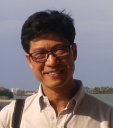
 Jian-Yun Nie
· 1 previous affiliation
- Université de MontréalSince 2003
- Full Professor · Since 2003
Research Overview
Jian-Yun Nie focuses on information retrieval, natural language processing, and conversational search. His trajectory spans early probabilistic models for cross-language retrieval to modern neural architectures for text generation and knowledge graph embedding. Recently, his work emphasizes retrieval-augmented generation, large language model optimization, and conversational dense retrieval.
Research Trajectory
Jian-Yun Nie’s early research investigated probabilistic and behavioral models for information retrieval. In 1998, he explored translation models for cross-language search with Using a Probabilistic Translation Model for Cross-Language Information Retrieval. This was followed by investigations into user behavior, such as Query clustering using user logs, which leveraged search logs to group similar queries. He also advanced language modeling techniques for retrieval; for instance, Dependence language model for information retrieval relaxed the standard unigram independence assumption by modeling term dependencies as an acyclic, planar graph to better capture query semantics.
Moving into the 2010s, his focus expanded to query expansion and context-aware systems, contributing to the broader area of Resolving Query Underspecification through Interactive Clarification. In Compact Aspect Embedding for Diversified Query Expansions, he and his collaborators proposed a method using trace norm regularization to learn a low-rank vector space, ensuring that expansion terms covered diverse query aspects with minimal redundancy. Addressing the challenge of data sparsity in search sessions, he helped develop a hierarchical recurrent encoder-decoder architecture in A Hierarchical Recurrent Encoder-Decoder for Generative Context-Aware Query Suggestion, which modeled sequences of previous queries to generate context-sensitive suggestions. Concurrently, he contributed to representation learning, participating in the development of RotatE: Knowledge Graph Embedding by Relational Rotation in Complex Space, an approach that models relations as rotations in complex vector space to infer patterns like symmetry and inversion.
In the 2020s, Nie’s research increasingly addressed conversational search and the integration of pre-trained language models, aligning with the research direction of Contextual Query Resolution for Conversational Search. His work on the TREC Conversational Assistance Track, detailed in MLIA-LIP6@TREC-CAST2021: Feature augmentation for query recontextualization and passage ranking, explored feature augmentation to resolve conversational context. He also investigated efficient text generation architectures, such as the non-autoregressive model introduced in ELMER: A Non-Autoregressive Pre-trained Language Model for Efficient and Effective Text Generation, which utilized an early exit mechanism to accelerate generation. This expertise in generation models culminated in a comprehensive overview of the field, Pre-Trained Language Models for Text Generation: A Survey, which synthesized approaches within the broader area of The Text to Text Paradigm for Task Unification.
His recent trajectory demonstrates a synthesis of large language models, conversational retrieval, and specialized domain applications. In ConvMix: A Mixed-Criteria Data Augmentation Framework for Conversational Dense Retrieval, he addressed training data scarcity by using LLMs for bidirectional data augmentation combined with semantic clustering. He also formalized the state of conversational systems in A Survey of Conversational Search. Expanding into specialized modalities, he contributed to FinAudio: A Benchmark for Audio Large Language Models in Financial Applications, evaluating the capacity of audio models to process complex financial terminology. Additionally, he explored the theoretical underpinnings of reinforcement learning for LLMs in It Takes Two: Your GRPO Is Secretly DPO, reframing Group Relative Policy Optimization as a form of contrastive learning to reduce computational overhead.
Looking toward 2026, his work continues to push the boundaries of retrieval and graph-based learning. Leveraging historical information to boost retrieval-augmented generation in conversations further refines RAG systems by integrating conversational history. Meanwhile, Learning Discriminative and Generalizable Anomaly Detector for Dynamic Graph with Limited Supervision tackles the challenge of identifying anomalies in evolving networks under sparse supervision.
Current Directions
Recent work investigates the optimization and application of large language models, particularly in the context of conversational search and retrieval-augmented generation (RAG). The most recent papers in the evidence address the integration of historical dialogue context to improve RAG systems and the development of robust data augmentation frameworks for conversational dense retrieval. Additionally, his current research explores the theoretical alignment of reinforcement learning algorithms for post-training language models, demonstrating connections between policy optimization and direct preference learning to improve computational efficiency. He is also expanding into specialized multimodal domains, evaluating the performance of audio-processing language models on complex financial data, and developing anomaly detection methods for dynamic graphs under limited supervision.
Profile updated
Loading new papers…
Other researchers whose papers cluster into the same research directions — a proxy for overlapping technical interests and shared intellectual neighborhoods.
See something wrong? Report a mistake