

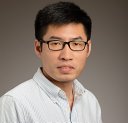
 Jian Huang
· 1 previous affiliation
- University of Illinois Urbana-ChampaignSince 2018
- Associate Professor · Since 2024
- Current
- Assistant Professor · 2018–2024
4 other authors named Jian Huang: Jian Huang (Hong Kong Polytechnic University · 290 papers), Jian Huang (3 papers), Jian Huang (1 paper), Jian Huang (1 paper)
Research Overview
Jian Huang focuses on computer architecture, memory and storage systems, and the design of scalable AI infrastructure. His early work addressed the performance and resource management of flash-based solid-state drives and non-volatile memory in cloud environments. More recently, his research investigates hardware-software co-design to accelerate machine learning workloads, emphasizing efficient tensor offloading, neural processing unit virtualization, and memory-semantic storage architectures.
Research Trajectory
Jian Huang’s research trajectory begins with foundational work in distributed systems and storage architectures. Early in his career, he contributed to optimizing distributed key-value stores, as seen in High-Performance Design of HBase with RDMA over InfiniBand, which addressed the sub-optimal performance of Java socket interfaces by leveraging advanced network technologies. He subsequently explored storage solutions for power-constrained devices, developing WearDrive: Fast and Energy-Efficient Storage for Wearables. This system offloaded energy-intensive storage tasks to nearby smartphones using battery-backed RAM. Concurrently, he investigated memory-mapped solid-state drives (SSDs), introducing Unified address translation for memory-mapped SSDs with FlashMap.
Transitioning toward cloud infrastructure, his research addressed the complexities of virtualized storage environments and non-volatile memory (NVM). In FlashBlox: Achieving Both Performance Isolation and Uniform Lifetime for Virtualized SSDs, he utilized hardware-level parallelism to provide strong isolation for multiple tenants while introducing novel wear-leveling mechanisms. He expanded on cloud resource utilization with BlockFlex: Enabling Storage Harvesting with Software-Defined Flash in Modern Cloud Platforms, a framework designed to harvest allocated and unallocated flash storage from evictable virtual machines, thereby eliminating resource stranding. His group also tackled byte-addressable NVM, proposing UniHeap: Managing Persistent Objects Across Managed Runtimes for Non-Volatile Memory. UniHeap provides filesystem-like primitives for persistent objects across different managed languages, contributing to the broader research direction of Sequentializing Random Writes for Solid State Media.
As data center architectures evolved, his focus expanded to rack-scale systems and hardware-software co-design for machine learning. His lab developed RackBlox: A Software-Defined Rack-Scale Storage System with Network-Storage Co-Design, which coordinates software-defined networking and software-defined flash to improve end-to-end I/O performance. He also explored broader infrastructure sustainability in Exploring the Efficiency of Renewable Energy-based Modular Data Centers at Scale. To support multi-tenant machine learning services, his team introduced Hardware-Assisted Virtualization of Neural Processing Units for Cloud Platforms, addressing the lack of architectural support for dynamic operator scheduling on NPUs. Alongside virtualization, they developed deep learning compilers, such as in Scaling Deep Learning Computation over the Inter-Core Connected Intelligence Processor with T10, which uses a "compute-shift" paradigm to improve performance portability across diverse accelerator architectures.
In recent years, his research has heavily emphasized optimizing large language model (LLM) training and inference alongside next-generation memory interfaces. He led the development of the TERAIO framework in Cost-Efficient LLM Training with Lifetime-Aware Tensor Offloading via GPUDirect Storage, utilizing GPU-initiated direct storage access to offload inactive data to SSDs. Concurrently, his lab has been architecting systems for Compute Express Link (CXL) based memory-semantic SSDs, evidenced by ByteFS: System Support for (CXL-based) Memory-Semantic Solid-State Drives and SkyByte: Architecting an Efficient Memory-Semantic CXL-based SSD with OS and Hardware Co-design. SkyByte mitigates the performance penalties of page-granular flash accesses by co-designing the operating system and hardware. Additionally, he has applied multi-agent reinforcement learning to cloud storage management in FleetIO: Managing Multi-Tenant Cloud Storage with Multi-Agent Reinforcement Learning. His work also extends to algorithmic optimizations for generative AI, such as Vegas: Self-Speculative Decoding with Verification-Guided Sparse Attention, which leverages verification steps to identify critical KV cache components for faster, more efficient autoregressive inference.
Current Directions
The most recent papers in the evidence address the intersection of generative AI workloads and advanced memory hierarchies. A primary focus is on optimizing large language model (LLM) inference and training through hardware-software co-design. This includes developing speculative sampling techniques for accelerated autoregressive inference and designing lifetime-aware tensor offloading strategies that utilize GPU-initiated direct storage access to reduce memory bottlenecks. Additionally, ongoing research investigates the system-level integration of Compute Express Link (CXL) technologies to create memory-semantic solid-state drives, aiming to scale main memory capacity efficiently while mitigating the latency penalties of traditional flash storage.
Profile updated
Loading new papers…
Other researchers whose papers cluster into the same research directions — a proxy for overlapping technical interests and shared intellectual neighborhoods.
See something wrong? Report a mistake