

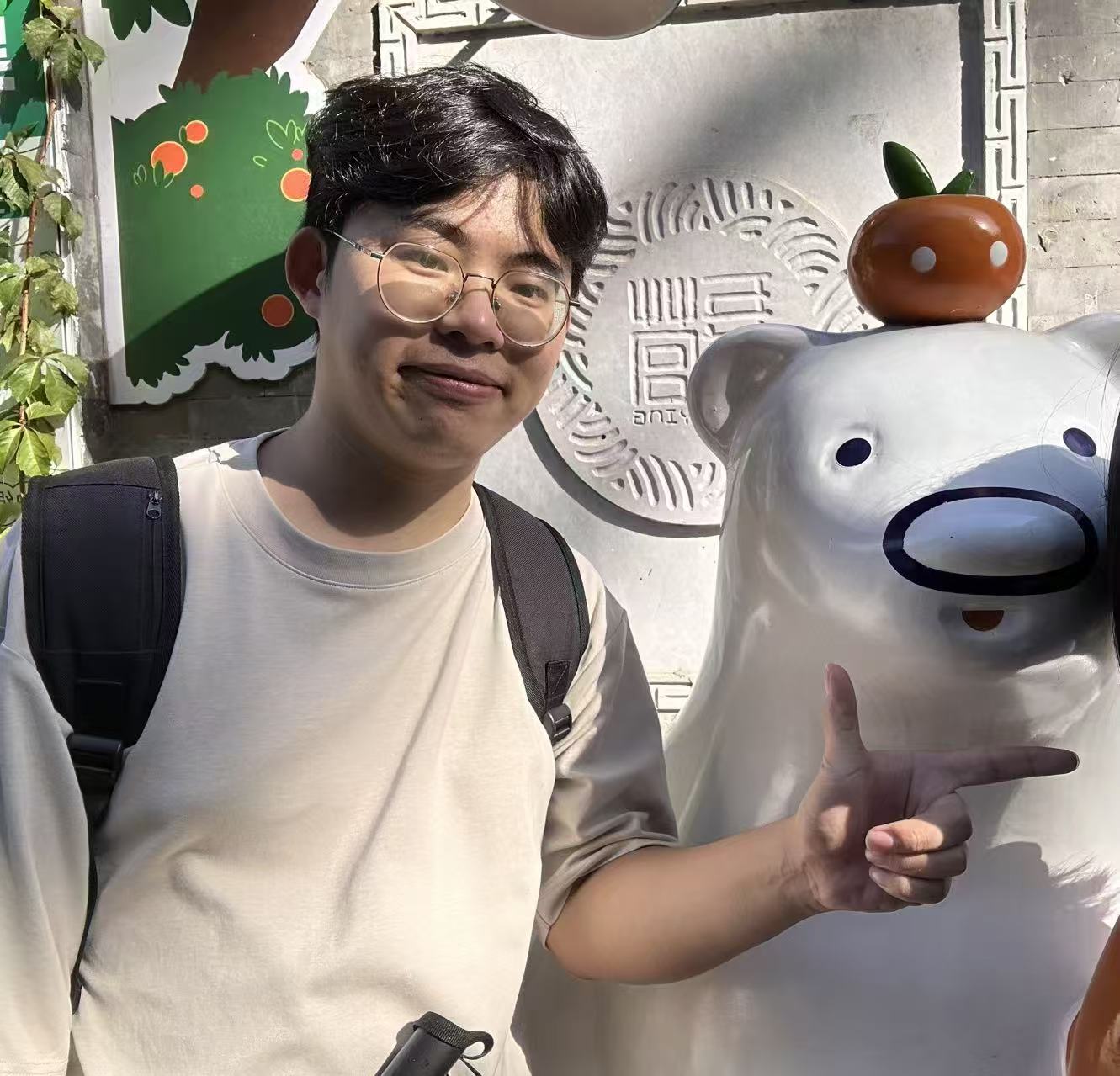
 Jian Gao
· 2 previous affiliations
- Nanjing UniversitySince 2023
- PhD student · 2024–2028
- Current
- Intern · 2023–2024
- Wuhan University2020–2023
- MS student · 2020–2023
4 other authors named Jian Gao: Jian Gao (Northeastern University · 13 papers), Jian Gao (9 papers), Jian Gao (Northeast Normal University · 7 papers), Jian Gao (1 paper)
Research Overview
Jian Gao focuses on 3D reconstruction, differentiable rendering, and the application of 3D Gaussian Splatting to complex imaging environments. His work spans from large-scale satellite multi-view stereo matching to highly efficient spatiotemporal modeling for medical imaging. Recently, his research emphasizes real-time neural rendering, relighting, and object-scene composition using advanced spatial representations.
Research Trajectory
Jian Gao’s early research addressed the geometric challenges of large-scale Earth surface reconstruction using satellite imagery. He introduced Rational Polynomial Camera Model Warping for Deep Learning Based Satellite Multi-View Stereo Matching, which tackled the limitations of standard pin-hole camera models in multi-view stereo (MVS) pipelines. Because push-broom linear-array satellite cameras rely on the cubic rational polynomial camera (RPC) model, traditional homography warping used in learning-based MVS is ineffective for satellite data. By developing a rigorous RPC warping mechanism, this work successfully bridged the gap, allowing state-of-the-art learning-based MVS techniques to be applied directly to large-scale satellite imagery.
Following his work in large-scale static reconstruction, his focus expanded toward highly efficient, differentiable 3D representations, particularly leveraging 3D Gaussian Splatting (3DGS). He participated in adapting these techniques to the clinical domain with SlingBAG: Sliding ball adaptive growth algorithm with differentiable radiation enables super-efficient iterative 3D photoacoustic image reconstruction. This research replaced memory-intensive voxel grids with an adaptive point cloud of Gaussian spheres. By introducing a fully differentiable forward acoustic radiator, the method drastically reduced GPU memory consumption and accelerated reconstruction speeds by over 55x. This allowed for high-quality 3D clinical imaging on consumer-grade hardware, even when utilizing highly sparse sensor arrays. This contribution intersects with several broader research areas, including the challenge of Scaling 3D Representations Beyond the Memory Wall and the development of Adaptive Density Control for 3D Gaussian Splatting. Furthermore, it provided new techniques for the broader field of Sparse Volumetric Convolution for Efficient 3D Perception while advancing the specific area of Modeling Speed of Sound Variations in Heterogeneous Tissues.
Building upon the foundational efficiency of SlingBAG, he subsequently guided the development of 4D SlingBAG: spatial-temporal coupled Gaussian ball for large-scale dynamic 3D photoacoustic iterative reconstruction. This project extended the static model into the temporal dimension to capture tissue movement over time. By modeling tissues as "deformable Gaussian balls" and learning their spatiotemporal dynamics, the approach achieved significant speedups in iterative reconstruction while maintaining the low memory footprint characteristic of single-frame methods. This represented a key advancement in the direction of 4D Gaussian Splatting for Dynamic Scenes.
Concurrently with his medical imaging research, he has made significant contributions to core neural rendering and computer vision. He developed Relightable 3D Gaussians: Realistic Point Cloud Relighting with BRDF Decomposition and Ray Tracing, a framework designed to upgrade standard 3DGS to support high-fidelity relighting and realistic shadow generation. By decomposing scenes into normals, Bidirectional Reflectance Distribution Function (BRDF) materials, and incident light, and by introducing a novel point-based ray tracing method, this architecture enables the real-time rendering of captured scenes under arbitrary new lighting conditions. This aligns with his broader focus on the area of Compact 3D Gaussian Representations for Neural Rendering.
Recognizing that the scalability and real-world fidelity of spatial intelligence models are often constrained by a lack of high-quality training data, he collaborated on SpatialVID: A Large-Scale Video Dataset with Spatial Annotations. This project introduced a massive corpus of in-the-wild videos featuring diverse scenes and camera movements, paired with dense 3D annotations such as per-frame camera poses, depth maps, and motion data, providing a critical resource for future spatial reconstruction and world exploration models.
Most recently, he introduced ComGS: Efficient 3D Object-Scene Composition via Surface Octahedral Probes. This framework tackles the computational bottlenecks of realistic 3D object-scene composition by replacing slow, traditional ray tracing with highly efficient Surface Octahedral Probes (SOPs). When combined with diffusion-based lighting estimation, the system achieves high-quality relighting and vivid shadow generation at real-time speeds, outperforming existing composition methods in both visual harmony and computational efficiency.
Current Directions
Based on his most recent publications, Jian Gao’s current research investigates the intersection of real-time neural rendering, scene composition, and spatial intelligence. A primary focus is moving beyond the static memorization of 3D scenes toward fully editable and relightable representations. Recent work addresses the complex challenge of seamlessly integrating synthetic or external 3D objects into captured environments, ensuring that lighting and shadows harmonize dynamically with the original scene. To achieve this, he is exploring efficient probe-based rendering techniques and diffusion-based lighting estimation to bypass the computational expense of traditional ray tracing. Additionally, his involvement in large-scale spatial datasets indicates an ongoing interest in scaling 3D reconstruction and spatial reasoning to diverse, in-the-wild video data, laying the groundwork for more robust and scalable spatial intelligence models.
Profile updated
Loading new papers…
Other researchers whose papers cluster into the same research directions — a proxy for overlapping technical interests and shared intellectual neighborhoods.
See something wrong? Report a mistake