

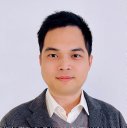
 Jiaming Zhang
· 6 previous affiliations
- Hunan UniversitySince 2025
- Full Professor · Since 2025
- ETH Zurich2024–2025
- Postdoc · 2024–2025
- Karlsruhe Institute of Technology2017–2025
- Postdoc · 2023–2025
- Postdoctoral Researcher · 2020–2023
- Student Assistant · 2019–2020
- MS student · 2017–2020
- PhD student · 2023
- Student Assistant · 2020
- Shenzhen University2011–2015
- Undergrad student · 2011–2015
7 other authors named Jiaming Zhang: Jiaming Zhang (Nanyang Technological University · 75 papers), Jiaming Zhang (Zhejiang University · 8 papers), Jiaming Zhang (Renmin University of China · 5 papers), Jiaming Zhang (2 papers), Jiaming Zhang (University of Glasgow · 1 paper), and 2 more
Research Overview
Jiaming Zhang focuses on computer vision and assistive technology, developing intelligent systems for scene understanding, multimodal perception, and autonomous navigation. His trajectory spans from addressing distortions in omnidirectional cameras to designing robust, occlusion-aware segmentation models for complex environments. Currently, he investigates multi-modal visual question answering and open-vocabulary systems to enhance spatial reasoning for visually impaired individuals and autonomous vehicles.
Research Trajectory
Zhang's early work addresses the limitations of standard convolutional networks when applied to the expanded field of view of 360-degree sensors. He participated in developing efficient models for parsing urban environments in Capturing Omni-Range Context for Omnidirectional Segmentation. Recognizing that transferring models from narrow-angle pinhole cameras to panoramic images causes significant performance drops due to image distortion, he introduced solutions to bridge this gap. In Bending Reality: Distortion-aware Transformers for Adapting to Panoramic Semantic Segmentation, he developed transformer architectures specifically designed to handle the distinct feature distributions of 360-degree panoramas. He further tackled this challenge through unsupervised domain adaptation in Transfer Beyond the Field of View: Dense Panoramic Semantic Segmentation via Unsupervised Domain Adaptation, enabling the use of conventional image datasets to train panoramic models.
Parallel to his work on autonomous driving perception, Zhang applied semantic segmentation to assistive technology. He developed a wearable system detailed in Trans4Trans: Efficient Transformer for Transparent Object and Semantic Scene Segmentation in Real-World Navigation Assistance, which helps visually impaired individuals navigate safely by detecting architectural obstacles like glass walls and doors. His focus on robust perception in edge cases also extended to autonomous vehicles; in Towards Robust Semantic Segmentation of Accident Scenes via Multi-Source Mixed Sampling and Meta-Learning, he contributed to the research direction of simulating domain shifts via episodic meta-learning by combining multiple driving datasets to better recognize overturned vehicles and motion-blurred collisions.
As his research progressed, Zhang increasingly focused on multimodal fusion to enhance the reliability of semantic segmentation. He introduced the DeLiVER benchmark in Delivering Arbitrary-Modal Semantic Segmentation, presenting a framework capable of extracting and fusing information from an arbitrary number of modalities—such as depth, LiDAR, and event cameras—to resolve partial sensor outages in severe weather. This cross-modal approach was further explored in CMX: Cross-Modal Fusion for RGB-X Semantic Segmentation With Transformers. Additionally, he investigated robust perception under challenging conditions in the area of Multi-Stream Fusion for Skeleton Based Action Recognition, contributing to Delving Deep Into One-Shot Skeleton-Based Action Recognition With Diverse Occlusions to improve action recognition when subjects are partially hidden.
The challenge of occlusion became a central theme in his subsequent work. He formalized a new task in Occlusion-Aware Seamless Segmentation, advancing the broader research direction of amodal perception for complete scene understanding by enabling models to infer the full geometry of partially hidden objects, while also continuing his contributions to the area of Distortion Aware Computer Vision for Spherical Panoramas. He later extended this framework to privacy-preserving contexts with Unlocking Constraints: Source-Free Occlusion-Aware Seamless Segmentation, allowing models to achieve panoramic understanding without requiring access to the original source training data.
Returning to assistive technology, Zhang integrated large language models with real-time perception. He developed ObjectFinder: Open-Vocabulary Assistive System for Interactive Object Search by Blind People, a wearable system that combines open-vocabulary object detection with multimodal reasoning to provide context-aware navigation guidance. Concurrently, he participated in research on state-space models for wide-angle imagery in Deformable Mamba for Wide Field of View Segmentation, engaging with the direction of Deformable Convolutions for Adaptive Spatial Sampling to handle the extreme stretching and curves inherent in fisheye and panoramic images. Expanding into document vision-language understanding, Zhang also contributed to Read, Parse, Describe: Unified Document Parsing with Visual Element Description Generation, introducing a benchmark and a space-awareness enhancer to jointly output reading order, layout structures, and descriptive text for visual elements.
Current Directions
Recent work investigates multi-modal visual question answering (VQA), spatial reasoning for assistive navigation, and highly optimized object detection for specialized sensor modalities. In mmWalk: Towards Multi-modal Multi-view Walking Assistance, Zhang and collaborators explore spatial reasoning in vision-language models by developing a benchmark that synchronizes perspectives from a walker, a guide dog, and a drone to evaluate how models handle real-world navigation risks for visually impaired users. This focus on complex, multi-view reasoning extends to autonomous driving in DRIVEXQA: Cross-modal Visual Question Answering for Adverse Driving Scene Understanding, which introduces architectures for fusing heterogeneous sensor data to maintain perception in fog or during sensor failures. Additionally, his recent participation in TY-RIST: Tactical YOLO Tricks for Real-time Infrared Small Target Detection highlights an ongoing interest in infrared small target detection in complex backgrounds, focusing on architectural optimizations for detecting tiny, low-contrast targets at high frame rates.
Profile updated
Loading new papers…
Other researchers whose papers cluster into the same research directions — a proxy for overlapping technical interests and shared intellectual neighborhoods.
See something wrong? Report a mistake