

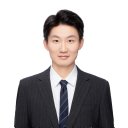
 Jiahao Chang
· 2 previous affiliations
- Shenzhen Research Institute of Big DataSince 2023
- PhD student · Since 2024
- Intern · 2023–2024
- MS student · 2020–2023
- Undergrad student · 2016–2020
1 other author named Jiahao Chang: Jiahao Chang (3 papers)
Research Overview
Jiahao Chang focuses on 3D computer vision, multi-view reconstruction, and spatial-temporal reasoning. His trajectory spans from foundational geometric feature matching and multi-view stereo networks to advanced 3D scene representations using Gaussian Splatting. Most recently, his work explores the intersection of generative diffusion models, multimodal large language models, and high-fidelity 3D object reconstruction.
Research Trajectory
Chang’s early work centers on the fundamental challenges of local feature matching in computer vision, particularly in handling textureless regions, repetitive patterns, and scale variations. He developed Structured Epipolar Matcher for Local Feature Matching, which introduces a geometry-prior approach to iteratively model the relative positional relationships between pixels and high-confidence anchor points. Concurrently, he collaborated on Adaptive Spot-Guided Transformer for Consistent Local Feature Matching, a Transformer-based method utilizing a spot-guided attention mechanism and adaptive scaling to maintain local consistency across images.
Building on these geometric foundations, Chang expanded into multi-view stereo (MVS) reconstruction and autonomous driving applications. He introduced EI-MVSNet: Epipolar-Guided Multi-View Stereo Network With Interval-Aware Label, a network designed to improve depth estimation by aligning receptive fields between views during cost volume construction via an epipolar-guided module. In the domain of autonomous navigation, he participated in the development of TopoMLP: A Simple yet Strong Pipeline for Driving Topology Reasoning. This work demonstrated that pairing robust 3D lane and 2D traffic element detectors with simple MLP-based reasoning heads could effectively solve complex road topology problems, achieving strong performance on the OpenLane-V2 benchmark.
A significant portion of Chang’s research arc involves advancing implicit 3D scene representations, specifically 3D Gaussian Splatting (3DGS). He contributed to GauStudio: A Modular Framework for 3D Gaussian Splatting and Beyond, a plug-and-play architecture that standardizes 3DGS research. This framework introduced a hybrid foreground-skyball representation to mitigate outdoor artifacts and a render-then-fuse method for rapid mesh extraction. This work directly supports the research direction of Representation Agnostic 3D Deep Learning, while also advancing areas such as Volumetric Fusion for High Fidelity Surface Reconstruction and the broader field of Decomposing 3D Scenes into Editable Semantic Parts. To address the challenge of aligning these implicit representations, he subsequently developed GaussReg: Fast 3D Registration with Gaussian Splatting, providing a mechanism for large-scale 3D scene scanning and registration using NeRF and 3DGS models.
As multimodal models grew in prominence, Chang’s research incorporated automated data curation strategies. With collaborators, he proposed VC-Agent: An Interactive Agent for Customized Video Dataset Collection, a human-in-the-loop system powered by multimodal large language models (MLLMs). By iteratively refining filtering policies based on user feedback, the agent automates the collection of highly specific video datasets, contributing significantly to the research direction of Automated Scaling of Video Language Datasets.
In his most recent work, Chang integrates generative AI with spatial and temporal reasoning to overcome the limitations of sparse data in 3D reconstruction. He developed ReconViaGen: Towards Accurate Multi-view 3D Object Reconstruction via Generation, a framework that merges the hallucination capabilities of diffusion models with traditional structural accuracy, advancing the area of Geometry-Grounded Generative Novel View Synthesis. Similarly, he collaborated on GSFixer: Improving 3D Gaussian Splatting with Reference-Guided Video Diffusion Priors, which utilizes 2D semantic and 3D geometric features to correct rendering artifacts in sparse-view 3DGS, a key contribution to the research direction of Video Diffusion Models as 3D Priors. Finally, he participated in MLLM-4D: Towards Visual-based Spatial-Temporal Intelligence, which equips MLLMs with a specialized spatiotemporal chain of thought to reason about dynamic 4D environments using only standard 2D video inputs.
Current Directions
The most recent papers in the evidence address the intersection of generative AI, multimodal large language models, and spatial-temporal reasoning. Recent work investigates how diffusion models can serve as powerful priors for 3D reconstruction, particularly in sparse-view scenarios where traditional geometric methods struggle. This includes leveraging video diffusion models to guide and refine 3D Gaussian Splatting representations while maintaining strict pixel-level consistency with original scenes. Additionally, current research explores visual-based spatial-temporal intelligence, aiming to equip MLLMs with the ability to reason about dynamic 4D environments using standard 2D video inputs. This modeling effort is supported by parallel work in automated, human-in-the-loop data collection pipelines designed to scale customized video datasets efficiently.
Profile updated
Loading new papers…
Other researchers whose papers cluster into the same research directions — a proxy for overlapping technical interests and shared intellectual neighborhoods.
See something wrong? Report a mistake