

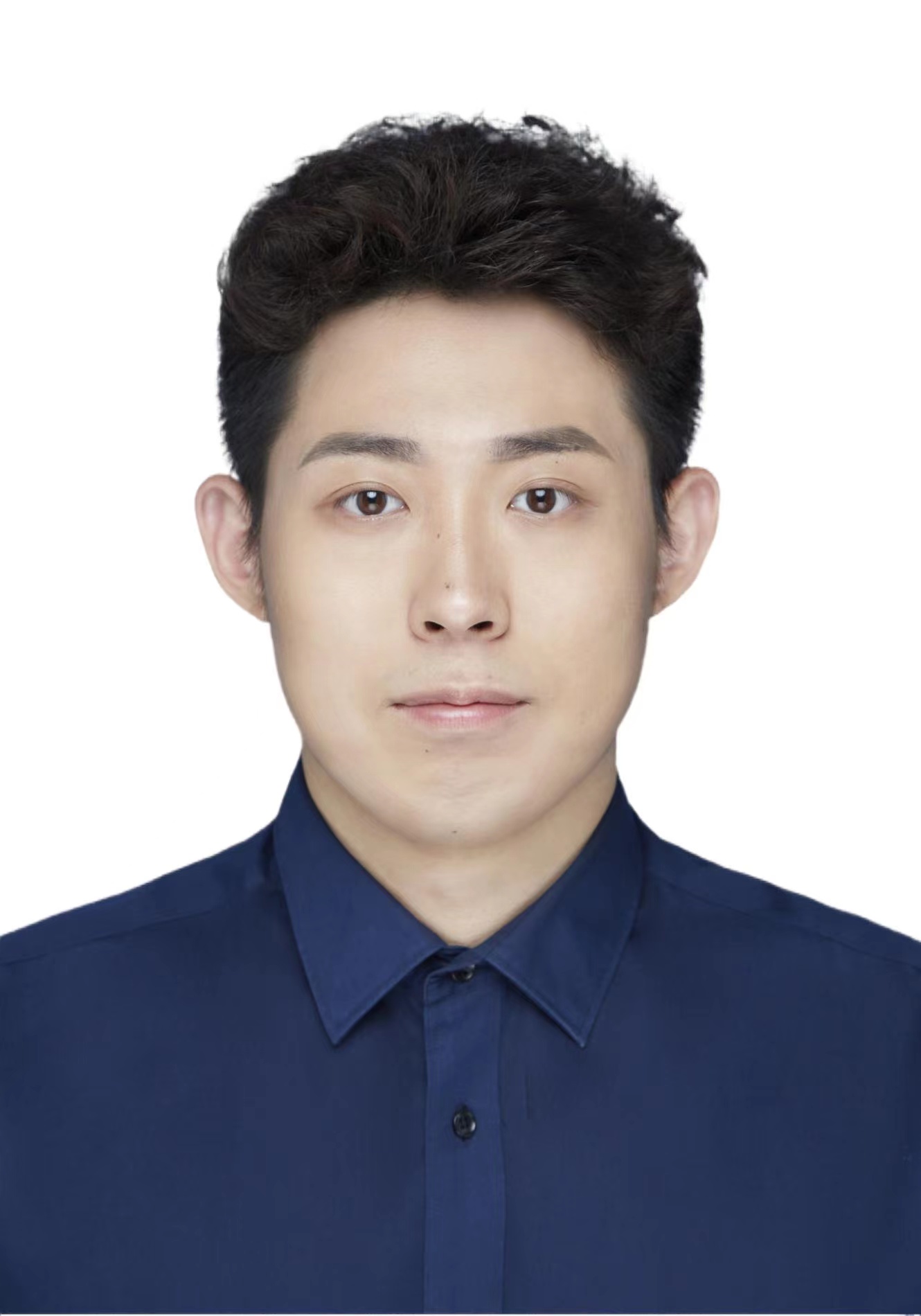
 Jiacheng Lin
· 2 previous affiliations
- University of Illinois Urbana-ChampaignSince 2023
- PhD student · Since 2023
- Current
- Tsinghua University2016–2023
- MS student · 2020–2023
- Undergrad student · 2016–2020
1 other author named Jiacheng Lin: Jiacheng Lin (1 paper)
Research Overview
Jiacheng Lin focuses on foundation models, reinforcement learning, and agentic systems, with particular emphasis on their applications in complex reasoning, healthcare, and recommendation environments. His trajectory spans early work in combinatorial optimization and robotic planning to the development of specialized language models for biomedical and clinical domains. Currently, his research addresses the integration of large language models with search and recommendation systems through reinforcement learning, alongside fundamental investigations into domain-specific fine-tuning.
Research Trajectory
Jiacheng Lin’s early research explored the intersection of machine learning and combinatorial optimization. He introduced Learning to branch with Tree-aware Branching Transformers in 2022, proposing a framework that captures mutual connections between candidate variables to improve branching decisions in mixed-integer linear programs (MILPs). He later expanded on this optimization work with CAMBranch: Contrastive Learning with Augmented MILPs for Branching, which utilized variable-shifting data augmentation and contrastive learning to drastically reduce the expert data required for training. This work contributed to the broader research direction of Bipartite Graph Representations for Mathematical Optimization. Concurrently, he investigated the application of large language models (LLMs) to physical environments, participating in the development of HiCRISP: A Hierarchical Closed-Loop Robotic Intelligent Self-Correction Planner. This framework enabled robots to actively monitor and correct errors during task execution, advancing the research areas of Closed-Loop Feedback for Robust Robotic Manipulation and Spatial Reasoning in Vision Language Models.
Applying deep learning to the biomedical domain, Lin developed R2-DDI: relation-aware feature refinement for drug-drug interaction prediction, which integrated relation types into drug representation learning to better predict adverse effects in combination treatments. He subsequently scaled these domain-specific applications to foundation models with Panacea: A foundation model for clinical trial search, summarization, design, and recruitment, creating a specialized architecture capable of handling multiple complex tasks across the clinical trial lifecycle.
As LLMs became more central to his work, Lin shifted toward evaluating and optimizing their core capabilities. He collaborated on GenRES: Rethinking Evaluation for Generative Relation Extraction in the Era of Large Language Models, which introduced a multi-dimensional assessment framework to replace rigid exact-matching metrics for generative relation extraction. Addressing inference bottlenecks, he contributed to Cascade Speculative Drafting for Even Faster LLM Inference. By utilizing a multi-tiered hierarchy of draft models, this approach accelerated generation speeds, aligning with ongoing work in the areas of Hierarchical Speculative Decoding for Accelerated Inference and Prioritizing Early Tokens in Speculative Decoding. He also explored the integration of structured knowledge into LLMs, introducing GT2Vec: Large Language Models for Knowledge Graph Augmented Text Embedding to jointly process text and graph data via contrastive alignment.
Most recently, Lin’s trajectory has focused heavily on using reinforcement learning (RL) to bridge generative models with external, user-centric environments. He proposed Rec-R1: Bridging Generative Large Language Models and User-Centric Recommendation Systems via Reinforcement Learning, a closed-loop optimization framework that aligns LLM generation using feedback from black-box recommendation models, contributing to the research direction of Mitigating the Reasoning Tax in Specialized Language Models. In a similar vein, he helped develop DeepRetrieval: Hacking Real Search Engines and Retrievers with Large Language Models via Reinforcement Learning, which trains models to generate optimal search queries by directly optimizing for retrieval metrics. He further extended these RL paradigms to simulate complex human behaviors in Shop-R1: Rewarding LLMs to Simulate Human Behavior in Online Shopping via Reinforcement Learning, utilizing a hierarchical reward system with difficulty-aware scaling. Alongside these agentic systems, he investigated the fundamental mechanics of model adaptation in SFT Doesn’t Always Hurt General Capabilities: Revisiting Domain-Specific Fine-Tuning in LLMs, demonstrating that catastrophic forgetting during specialization can be mitigated through adaptive token reweighting and calibrated learning rates.
Current Directions
The most recent papers in the evidence indicate a strong focus on agentic AI and the alignment of large language models with interactive, real-world systems. Lin is actively investigating how reinforcement learning can be used to optimize LLMs for search, retrieval, and recommendation tasks without relying on expensive supervised fine-tuning data from proprietary models. This involves designing closed-loop frameworks where models learn directly from environmental feedback, such as retrieval metrics or user-centric recommendation signals. Additionally, his current work addresses the theoretical and practical challenges of domain-specific adaptation, exploring methods to impart specialized expertise—such as clinical or behavioral knowledge—into foundation models while preserving their general reasoning capabilities.
Profile updated
Loading new papers…
Other researchers whose papers cluster into the same research directions — a proxy for overlapping technical interests and shared intellectual neighborhoods.
See something wrong? Report a mistake