

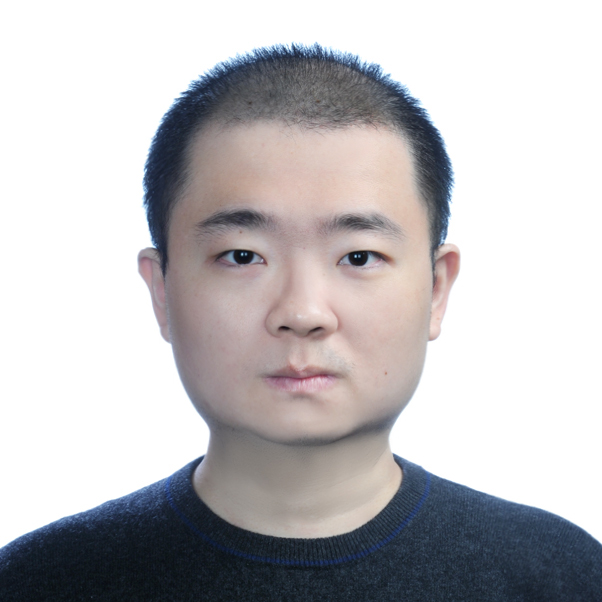
 Jiacheng Cheng
· 5 previous affiliations
- Yale UniversitySince 2025
- Postdoctoral Associate · Since 2025
- University of California San Diego2018–2025
- Graduate Student Researcher · 2019–2025
- PhD student · 2018–2025
- Research Intern · 2022
- Undergrad student · 2014–2018
- Visiting Researcher · 2017
1 other author named Jiacheng Cheng: Jiacheng Cheng (2 papers)
Research Overview
Jiacheng Cheng focuses on machine learning, computer vision, and computational imaging, with an emphasis on improving the reliability and privacy of visual systems. His trajectory spans foundational work in model calibration and label noise to the design of privacy-preserving camera architectures. Recently, he has investigated privacy leakage in wearable devices and applied unsupervised learning to medical imaging diagnostics.
Research Trajectory
His early research addressed the challenge of training robust models on corrupted datasets. In Learning with Bounded Instance and Label-dependent Label Noise (2020), he focused on the pervasive but under-studied problem of bounded instance- and label-dependent label noise. This work advanced the research direction of Learning with Instance Dependent Label Noise, while also contributing to the broader areas of Density Ratio Estimation for Distribution Shift Adaptation and Robust Learning without Known Label Noise Rates.
Following this, his focus expanded to the reliability and probabilistic interpretation of deep neural networks. In Learning Deep Classifiers Consistent With Fine-Grained Novelty Detection (2021), he examined the limitations of standard softmax convolutional neural networks in fine-grained visual classification. By demonstrating that their learned class-conditional distributions are unidentifiable, he proposed a class-conditional Gaussianity loss to enforce consistency in novelty detection. Continuing the theme of model reliability, he investigated network calibration in Calibrating Deep Neural Networks by Pairwise Constraints (2022). This research hypothesized that standard cross-entropy loss provides insufficient calibration supervision, and demonstrated that framing a multi-class problem as a series of pairwise binary classification constraints significantly improves the calibration of class-posterior probabilities. He later extended these calibration principles to more complex learning scenarios. In Towards Calibrated Multi-Label Deep Neural Networks (2024), he addressed the calibration shortcomings of popular asymmetric losses, which are frequently used to handle severe dataset imbalance in multi-label learning but often fail to induce well-calibrated classifiers.
Parallel to his work on model reliability, he has developed novel approaches to computational imaging and hardware-software co-design. In Learning a Dynamic Privacy-Preserving Camera Robust to Inversion Attacks (2024), he introduced a dynamic privacy-preserving camera design. Recognizing that static point spread functions can be easily inverted by attackers measuring a camera's response to light, this work utilized spatial light modulators to implement a time-varying point spread function, drawing from a learned manifold embedding to protect recognizable visual features from reconstruction.
Most recently, his collaborative efforts have applied advanced computer vision techniques to medical diagnostics and egocentric video analysis. He participated in Artificial Intelligence Characterization of Spatial Patterns of Macula and Their Association With Central Visual Field Progression in Glaucoma (2025), which utilized unsupervised AI to identify distinct spatial patterns of macular thinning. This diagnostic approach intersects with the research areas of Archetypal Analysis for Extremal Data Representation and Predicting Rare Transitions in Longitudinal Time Series. Additionally, he contributed to EgoPrivacy: What Your First-Person Camera Says About You? (2025), a large-scale benchmark quantifying the private information leaked about the wearers of first-person cameras. By demonstrating how foundation models can identify demographic and location data from hand biometrics and exocentric cross-referencing, this work informs the broader area of Demographic Fairness in Deep Facial Recognition.
Current Directions
The most recent papers in the evidence indicate a dual focus on visual privacy and applied machine learning for healthcare. In the privacy domain, recent work investigates both hardware-level defenses—such as dynamic optical elements that prevent inversion attacks—and the quantification of privacy risks inherent in egocentric vision models. Concurrently, his collaborative efforts in medical imaging address the use of unsupervised learning techniques to predict disease progression from spatial patterns, highlighting an ongoing interest in deploying robust computer vision tools for clinical diagnostics.
Profile updated
Loading new papers…
Other researchers whose papers cluster into the same research directions — a proxy for overlapping technical interests and shared intellectual neighborhoods.
See something wrong? Report a mistake