

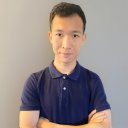
 Jiachen Yang
· 6 previous affiliations
- SimularSince 2023
- Co-founder · Since 2023
- South Park Commons2023–2024
- Founder Fellow · 2023–2024
- Research Staff Member · 2022–2023
- Georgia Institute of Technology2018–2021
- Graduate Research Assistant · 2018–2021
- Research Intern · 2019
- University of California, Berkeley2010–2014
- Bachelor of Science (BS), Electrical Engineering and Computer Science · 2010–2014
2 other authors named Jiachen Yang: Jiachen Yang (Tianjin University · 259 papers), Jiachen Yang (1 paper)
Research Overview
Jiachen Yang focuses on multi-agent deep reinforcement learning, autonomous computer-use agents, and artificial intelligence for scientific computing. His early research explored cooperative behavior and incentive design in complex multi-agent systems, leading to subsequent work on applying reinforcement learning to physical simulations and symbolic mathematics. Currently, he investigates scalable frameworks for reliable, long-horizon autonomous agents.
Research Trajectory
His early research explored the intersection of machine learning and complex social dynamics. This included participation in developing Fake News Mitigation via Point Process Based Intervention (2017), which combined reinforcement learning with network activity models to address the spread of misinformation. He subsequently led research into macroscopic population modeling with Learning Deep Mean Field Games for Modeling Large Population Behavior (2018), reducing mean field games to Markov Decision Processes to predict shifts in social media trends.
Moving deeper into multi-agent systems, he investigated how agents can discover complementary skills and adapt to new environments. In Hierarchical Cooperative Multi-Agent Reinforcement Learning with Skill Discovery (2020), he introduced a two-level architecture where agents learn latent skills via independent Q-learning and coordinate them through centralized training. To address rapid adaptation, Single Episode Policy Transfer in Reinforcement Learning (2020) proposed a modular approach for the quick estimation of latent variables, contributing to the broader area of Reinforcement Learning with Hidden Parameter Markov Decision Processes.
A major theme of his doctoral work involved structuring cooperation and incentives among independent learning agents. He explored how agents might influence one another in Learning to Incentivize Other Learning Agents (2020), equipping them with learned incentive functions to reward peers directly. This focus on the research direction of Aligning Individual Incentives for Collective Social Welfare was further formalized in Adaptive Incentive Design with Multi-Agent Meta-Gradient Reinforcement Learning (2022). Concurrently, he addressed the challenge of multi-goal settings with CM3: Cooperative Multi-goal Multi-stage Multi-agent Reinforcement Learning (2020), which utilized a two-stage curriculum to separate individual goal attainment from multi-agent cooperation, advancing the area of Zero-Shot Policy Generalization for Massive Swarms. This foundational period culminated in his dissertation, Cooperation in Multi-Agent Reinforcement Learning (2022), which synthesized methods for both centralized training and fully decentralized learning.
Following his doctoral studies, his research expanded into artificial intelligence for scientific computing, particularly during his time as a staff scientist at Lawrence Livermore National Laboratory. He applied reinforcement learning to optimize physical simulations, introducing novel strategies in Reinforcement Learning for Adaptive Mesh Refinement (2022) that outperformed traditional heuristic methods. He later guided the development of DynAMO: Multi-agent reinforcement learning for dynamic anticipatory mesh optimization with applications to hyperbolic conservation laws (2024), a framework that anticipates future solution behavior to improve simulation accuracy and efficiency.
In parallel, he contributed to the discovery of interpretable scientific models. With collaborators, he developed A Unified Framework for Deep Symbolic Regression (2022), which hybridized multiple solution strategies—such as neural-guided search and genetic programming—to advance the research direction of Complexity Constrained Symbolic Regression for Scientific Laws. This trajectory in symbolic mathematics continued with Deep Symbolic Optimization: Reinforcement Learning for Symbolic Mathematics (2025), which shifted the optimization focus toward seeking rare, high-performing solutions in mixed continuous and categorical search spaces.
Most recently, as a co-founder of Simular, his work has pivoted toward creating general-purpose autonomous agents capable of interacting with computer interfaces. He participated in the design of Agent S: An Open Agentic Framework that Uses Computers Like a Human (2025), which employs experience-augmented hierarchical planning to automate complex, multi-step graphical user interface tasks. To improve the reliability of these systems, he co-authored The Unreasonable Effectiveness of Scaling Agents for Computer Use (2025) and the subsequent Scaling Agents for Computer Use (2026). These papers introduced the "Behavior Judge" framework, which evaluates multiple parallel agent rollouts using concise behavior narratives to select optimal trajectories, significantly advancing performance on long-horizon tasks.
Current Directions
Recent work investigates the development and scaling of autonomous agents for complex, long-horizon computer tasks. The most recent papers in the evidence address the challenges of dynamic graphical user interfaces by employing experience-augmented hierarchical planning and external knowledge retrieval. This includes contributions to the broader areas of Semantic Action Abstraction for Robust GUI Agents and Hierarchical Memory Architectures for Language Agents. To mitigate compounding errors in these environments, current research also explores wide-scaling techniques, utilizing vision-language models to evaluate parallel agent trajectories through concise behavior narratives. Alongside this focus on computer-use agents, ongoing work continues to refine deep symbolic optimization, leveraging reinforcement learning to discover interpretable mathematical models in high-dimensional search spaces.
Profile updated
Loading new papers…
Other researchers whose papers cluster into the same research directions — a proxy for overlapping technical interests and shared intellectual neighborhoods.
See something wrong? Report a mistake