

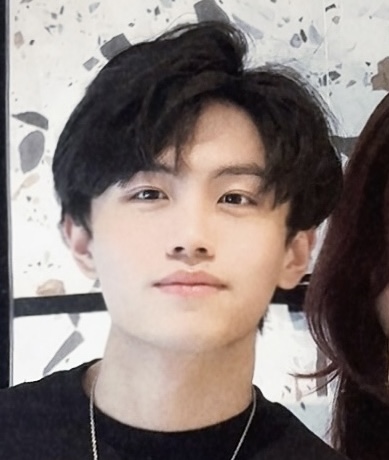
 Jiabin Tang
· 2 previous affiliations
- University of Hong KongSince 2023
- PhD student · 2023–2027
- Current
- Southwest Jiaotong University2019–2023
- Undergrad student · 2019–2023
Research Overview
Jiabin Tang focuses on large language models, graph representation learning, and autonomous language agents. His early work addressed spatio-temporal data mining and the integration of graph neural networks with language models for complex structural reasoning. Recently, his research has shifted toward fully automated scientific discovery, developing multi-agent frameworks that execute end-to-end research pipelines and democratize access to intelligent decision-making systems.
Research Trajectory
Tang's early research focused on improving the accuracy and scalability of spatio-temporal data mining, particularly in urban computing and intelligent transportation systems. In 2022, he introduced Spatio-Temporal Latent Graph Structure Learning for Traffic Forecasting, addressing the limitations of static, predefined graph structures. By learning latent topologies, this work captured both spatial dependencies and temporal correlations that conventional models often overlooked. He expanded on this foundation with Spatio-Temporal Meta Contrastive Learning in 2023. Recognizing the scalability challenges inherent in recursive graph neural network (GNN) message-passing schemes, he later developed EasyST: A Simple Framework for Spatio-Temporal Prediction. This framework improved generalization performance across large-scale urban sensing datasets that are frequently subject to distribution shifts.
As large language models (LLMs) demonstrated unprecedented reasoning capabilities, Tang shifted his focus toward integrating these models with complex structural data. He provided a comprehensive roadmap for this intersection in A Survey of Large Language Models for Graphs, categorizing the integration of GNNs and LLMs to overcome traditional data sparsity limits. This survey highlighted his engagement with the broader research area of Hybrid Semantic and Structural Reasoning for Large Graphs, as well as work in the area of Contrastive Alignment of Graph Structure and Natural Language. To operationalize these concepts, he developed GraphGPT: Graph Instruction Tuning for Large Language Models, a framework designed to advance graph model generalization in zero-shot environments without relying on downstream labeled data. He extended this paradigm to complex networks with diverse node types in HiGPT: Heterogeneous Graph Language Model. By combining a language-aware tokenizer with a "Mixture-of-Thought" instruction tuning approach, HiGPT enabled zero-shot generalization on entirely new graph datasets, contributing significantly to the research direction of Scaling Graph Reasoning within Finite Context Windows. Collaborating on domain-specific applications, Tang helped adapt these foundational concepts to urban environments. In UrbanGPT: Spatio-Temporal Large Language Models, he and his co-authors integrated a dedicated spatio-temporal encoder with instruction tuning to predict phenomena like traffic flow and crime rates in data-scarce scenarios.
Parallel to his work on graph foundation models in 2024, Tang explored efficient knowledge transfer and data augmentation in recommender systems. He introduced PromptMM: Multi-Modal Knowledge Distillation for Recommendation with Prompt-Tuning, a framework that distills insights from a complex multi-modal teacher into a lightweight student model, reducing computational overhead while mitigating data noise. He also participated in the development of LLMRec: Large Language Models with Graph Augmentation for Recommendation, which employed LLM-based graph augmentation to address data sparsity and improve the modeling of user preferences.
Most recently, Tang's trajectory has culminated in the design of autonomous language agents capable of complex reasoning and end-to-end task execution. He introduced GraphAgent: Agentic Graph Language Assistant, a multi-agent framework that bridges structured graph data and unstructured text by autonomously constructing Semantic Knowledge Graphs. This work advanced the area of Aligning Structural Topology with Language Model Latent Spaces and contributed to the direction of Multimodal Graph Retrieval Augmented Generation. Recognizing the technical barriers to agent development, he subsequently developed AutoAgent: A Fully-Automated and Zero-Code Framework for LLM Agents, enabling users without programming expertise to build intelligent agents using natural language. Building on these agentic frameworks, Tang, who serves as a co-founder of Novix, introduced AI-Researcher: Autonomous Scientific Innovation. This fully autonomous multi-agent system executes the entire scientific discovery pipeline—from literature review and hypothesis generation to experimental execution and manuscript drafting—demonstrating that AI-generated research can approach human-level quality in open-ended exploration.
Current Directions
Recent work investigates the automation of complex, open-ended intellectual tasks through multi-agent systems. The most recent papers in the evidence address the democratization of agent creation and the end-to-end automation of the scientific method. This involves designing zero-code frameworks that translate natural language instructions into functional large language model agents, bypassing the need for traditional programming expertise. Furthermore, current research explores autonomous scientific innovation, developing systems capable of independently reviewing literature, formulating novel hypotheses, executing code-based experiments, and drafting academic manuscripts. A key open problem in this domain is evaluating the quality and novelty of AI-generated research, which is being addressed through the creation of comprehensive benchmarks designed to measure the efficacy of autonomous discovery pipelines against human-authored publications.
Profile updated
Loading new papers…
Other researchers whose papers cluster into the same research directions — a proxy for overlapping technical interests and shared intellectual neighborhoods.
See something wrong? Report a mistake