

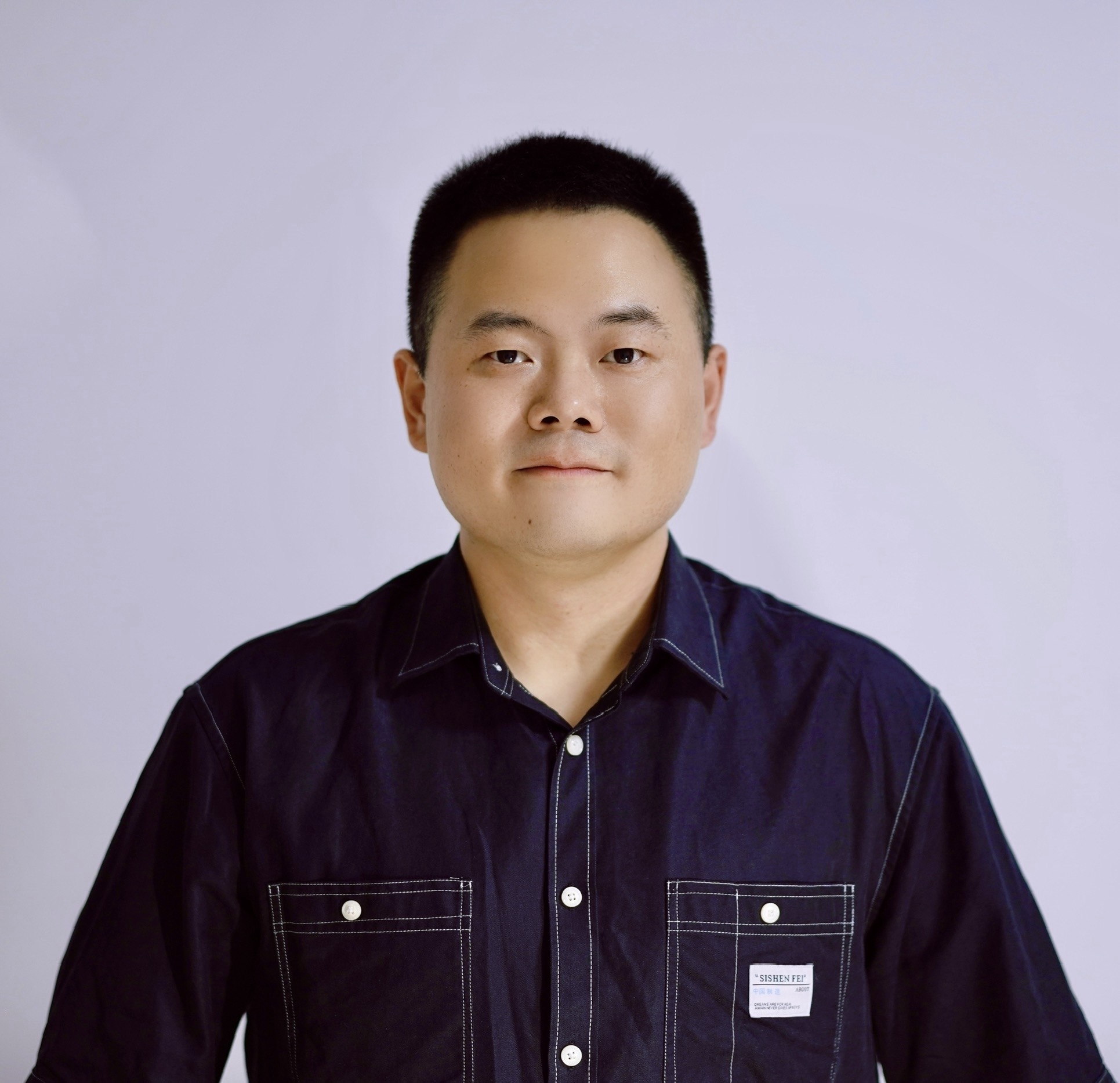
 Ji Guan
· 1 previous affiliation
- Chinese Academy of SciencesSince 2022
- Associate Professor · 2022–2030
Research Overview
Ji Guan focuses on quantum algorithms, quantum programming environments, and the formal verification of quantum machine learning models. Early collaborative work involved developing simulation and compilation tools for quantum programming languages, which subsequently evolved into theoretical research on quantum walks and algorithms for computing quantum entropies. Most recently, Guan investigates the robustness and verification of quantum machine learning systems against adversarial noise.
Research Trajectory
Ji Guan's research trajectory begins with collaborative work on software infrastructure for quantum computing. In 2017, Guan participated as a middle author in the development of Q|SI〉: A Quantum Programming Environment, a platform embedded in the .Net framework designed to support a quantum extension of the while-language. This early work focused on building compilers and simulation tools to analyze, optimize, and verify quantum programs on classical platforms.
By 2021, Guan's focus shifted toward the theoretical properties of quantum dynamics, leading first-author work on quantum walks. This research aligns with the research direction of Convergence and Stability of Quantum Markov Processes, exploring how quantum systems evolve and the mathematical frameworks required to model their behavior over time.
Following this, Guan contributed to the design of quantum algorithms for calculating fundamental information-theoretic quantities. As a second author on New Quantum Algorithms for Computing Quantum Entropies and Distances (published in IEEE Transactions on Information Theory in 2024, following a 2022 preprint), Guan helped propose algorithms for computing the von Neumann entropy, quantum Rényi entropy, trace distance, and fidelity. The work demonstrated significant time complexity improvements for low-rank quantum states. During this period, Guan also participated as a middle author in related collaborative research on a Quantum Algorithm for Fidelity Estimation (2023), further expanding on methods for comparing unknown mixed quantum states in high-dimensional Hilbert spaces.
Current Directions
The most recent papers in the evidence indicate a focus on the reliability and security of quantum machine learning (QML) models in the presence of hardware noise. Recent work investigates adversarial noise attacks, which present a significant threat to quantum algorithms operating in the Noisy Intermediate-Scale Quantum (NISQ) era.
Guan is a second author on VeriQR: A Robustness Verification Tool for Quantum Machine Learning Models (2026), which introduces a framework for formally verifying and improving the robustness of QML models. By simulating the effects of unknown noise sources, the tool aims to ensure model stability before deployment on real-world quantum hardware. This direction bridges Guan's earlier background in quantum program verification with contemporary machine learning challenges, contributing to themes such as Formal Verification of Quantum Markov Chains and the broader area of Noise Resilience in Solid State Quantum Computing.
Profile updated
| Title | Venue | Year |
|---|---|---|
| VeriQR: A Robustness Verification Tool for Quantum Machine Learning Models | International Symposium on Formal Methods | 2026 |
| ConQEC: Concolic Testing for Quantum Error-Correcting Code Implementations | arXiv | 2026 |
| QSeqSim: A Symbolic Simulator for Qiskit While Loops Using Sequential Quantum Circuits | arXiv | 2026 |
| Differential Privacy of Quantum and Quantum-Inspired-Classical Recommendation Algorithms | arXiv | 2025 |
| Detecting Violations of Differential Privacy for Quantum Algorithms | CCS | 2023 |
| Verifying Fairness in Quantum Machine Learning | Cav | 2022 |
| New Quantum Algorithms for Computing Quantum Entropies and Distances | IEEE Trans. Information Theory | 2022 |
| Quantum Algorithm for Fidelity Estimation | IEEE Trans. Information Theory | 2022 |
| quantum walks | Quantum Inf. Comput | 2021 |
| Robustness Verification of Quantum Classifiers | Cav | 2021 |
Loading new papers…
Other researchers whose papers cluster into the same research directions — a proxy for overlapping technical interests and shared intellectual neighborhoods.
See something wrong? Report a mistake