

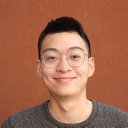
 Jesse Mu
· 9 previous affiliations
- Anthropic (United States)Since 2023
- Researcher · Since 2023
- AISince 2023
- Member of Technical Staff · Since 2023
- Stanford University2018–2023
- PhD student · 2018–2023
- Research Scientist Intern · 2022
- Meta (United States)2021–2022
- Part-Time Student Researcher · 2021–2022
- Research Intern · 2021
- Codecademy2019–2020
- Consultant · 2019–2020
- University of Cambridge2017–2018
- MS student · 2017–2018
- Applied Scientist Intern · 2017
- Boston College2013–2017
- Undergrad student · 2013–2017
Research Overview
Jesse Mu focuses on the intersection of natural language processing, reinforcement learning, and model interpretability. His work explores how language can be operationalized to improve machine learning systems, serving as a medium for human-AI communication, a tool for explaining internal model representations, and a mechanism for guiding agent exploration in complex environments. Currently a member of the technical staff at Anthropic, Mu’s research trajectory has moved from the linguistic foundations of verb argument structure to the development of robust, interpretable, and efficient large language models.
Research Trajectory
Mu’s early research was rooted in computational linguistics and the acquisition of semantic structures. In Unsupervised learning of VerbNet argument structure, he investigated the relationship between verb semantics and syntactic frames, using large-scale data to evaluate theories of verb argument structure that had previously been tested only on small subsets of verbs. This interest in the nuances of language extended to the study of Holistic Figurative Language Understanding and Generation. In Learning Outside the Box: Discourse-level Features Improve Metaphor Identification, Mu addressed the Subjectivity Ceiling in Figurative Language Understanding by demonstrating that discourse-level context is essential for identifying metaphors, which are often treated as noise in traditional NLP pipelines.
Around 2020, Mu’s focus shifted toward the interpretability of deep neural networks, specifically the challenge of Compositional Logical Explanations for Individual Neurons. Moving beyond the paradigm of labeling neurons with single concepts, he developed methods to describe neuron behavior using complex logical formulas. This work revealed that while interpretable neurons in vision models often indicate healthy feature learning, "interpretable" neurons in language models can sometimes expose shallow heuristics or "cheating" behaviors the model uses to solve tasks. This period also involved investigating the Adversarial Manipulation of Model Explanations, highlighting the risks of relying on transparency mechanisms that can be subverted.
Mu subsequently expanded his work into multi-agent systems and reinforcement learning (RL), treating language as a functional tool for coordination and exploration. He addressed the problem of "semantic drift"—where agents in self-play evolve nonsensical communication protocols—by introducing communication-based training methods that regularize speakers against ensembles of listeners. In the domain of RL, he explored how natural language can serve as a general medium for Mapping Concept Evolution Across Neural Network Layers and providing high-level abstractions that improve agent exploration in environments with sparse rewards.
Current Directions
Mu’s recent work, particularly since joining Anthropic, focuses on the practical challenges of deploying and securing large language models (LLMs). This includes improving the efficiency of model interactions through prompt compression and addressing the robustness of model safety. He has contributed to research on jailbreak defenses, exploring the limitations of existing safety training and adversarial training methods in narrow domains. His current focus involves operationalizing language for model alignment, including the development of constitutional classifiers and forecasting rare or emergent model behaviors. This work continues his long-standing interest in how language can be used not just as an output, but as a structured signal for training, interpreting, and controlling complex AI systems.
Representative Work
Unsupervised learning of VerbNet argument structure In this early work, Mu applied unsupervised learning techniques to analyze the relationship between verb semantics and syntactic frames across a dataset of over 6,000 verbs. By moving beyond the small subsets of verbs typically studied in psycholinguistics, the research provided a more substantial empirical basis for evaluating theories of verb argument structure, demonstrating how computational methods can validate or refine linguistic hypotheses at scale.
Learning Outside the Box: Discourse-level Features Improve Metaphor Identification This paper addresses the limitations of local context in metaphor identification. Mu and his collaborators showed that incorporating discourse-level features—looking beyond the immediate sentence to the broader narrative context—significantly improves the ability of models to identify figurative language. The work highlights the necessity of holistic context for understanding non-literal communication, a theme that persists in his later work on pragmatic communication.
Compositional Explanations of Neurons Mu introduced a framework for generating compositional logical explanations (e.g., using AND, OR, and NOT operators) to describe the behavior of individual neurons in deep networks. This approach moved interpretability research away from simple "dog neuron" labels toward a more nuanced understanding of how neurons respond to complex combinations of features. The study found that while compositional interpretability is a hallmark of successful learning in vision, it can reveal the use of brittle heuristics in language models.
Calibrate your listeners! Robust communication-based training for pragmatic speakers Addressing the issue of semantic drift in emergent communication, this work proposes training pragmatic speakers against an ensemble of listeners. Mu and his co-authors demonstrated that by accounting for the uncertainty and lack of calibration in neural listeners, speakers can be regularized to produce more human-like and stable language. This research provides a path toward building AI agents that can communicate more effectively with humans and other agents in unconstrained environments.
Improving Intrinsic Exploration with Language Abstractions In this first-author paper, Mu explores the use of natural language as a medium for intrinsic reward in reinforcement learning. He argues that traditional state-based novelty measures often fail to scale to complex domains requiring abstract skills. By using language to highlight relevant abstractions in an environment, Mu demonstrated that agents could achieve more effective exploration and better performance in tasks with sparse rewards compared to competitive non-linguistic baselines.
Learning to Compress Prompts with Gist Tokens Mu developed "gisting," a technique to improve the efficiency of large language models by compressing long prompts into a small set of virtual "gist tokens." By modifying the attention mask during instruction finetuning, the model learns to condense complex instructions into a cacheable prefix. This method achieves significant reductions in FLOPs and prompt length (up to 26x) with minimal impact on output quality, addressing a major bottleneck in the deployment of LLMs for long-context applications.
Profile updated
Loading new papers…
Other researchers whose papers cluster into the same research directions — a proxy for overlapping technical interests and shared intellectual neighborhoods.
See something wrong? Report a mistake