

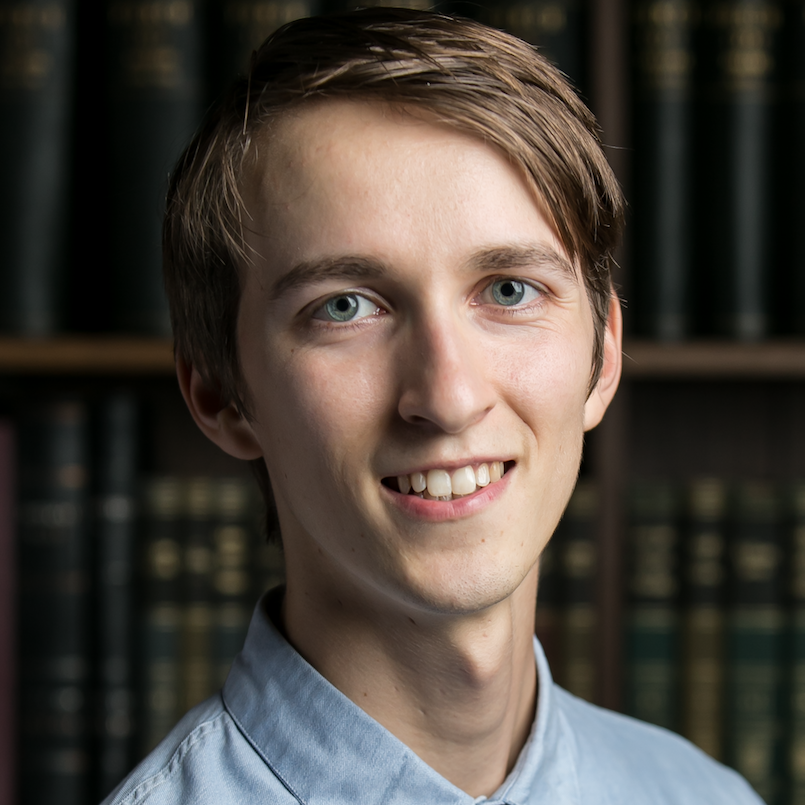
 Jesse C. Cresswell
· 3 previous affiliations
- layer6Since 2019
- Staff Machine Learning Scientist · Since 2019
- Layer 6 AICurrent
- Current
- University of Toronto2015–2019
- PhD · 2015–2019
Research Overview
Jesse C. Cresswell focuses on the geometry of deep generative models, uncertainty quantification, and trustworthy artificial intelligence. His early work investigates how generative models interact with the low-dimensional manifold structure of high-dimensional data. More recently, he has developed frameworks for conformal prediction, fairness in algorithmic decision-making, and uncertainty estimation in large language models.
Research Trajectory
Cresswell’s early research centers on the intersection of deep learning and data geometry, specifically examining how generative models handle data that lies on low-dimensional manifolds embedded in high-dimensional spaces. In 2021, he contributed to the research direction of Decoupling Manifold Geometry and Density Estimation with the development of Tractable Density Estimation on Learned Manifolds with Conformal Embedding Flows. This work introduced a framework to maintain the exact density estimation benefits of normalizing flows while accurately modeling manifold-supported data. He expanded on this in the broader area of Generative Modeling under the Manifold Hypothesis by co-authoring Diagnosing and Fixing Manifold Overfitting in Deep Generative Models (2022). This paper formally proved that maximum-likelihood training can lead to degenerate optima where a model learns the manifold itself but fails to capture the correct distribution upon it, and proposed dimensionality reduction techniques to mitigate the issue.
In 2023, Cresswell continued to probe the geometric assumptions underlying deep learning. He participated in work advancing the area of Learning on Manifolds with Heterogeneous Local Intrinsic Dimensions through Verifying the Union of Manifolds Hypothesis for Image Data. This research challenged the standard manifold hypothesis by demonstrating that image data is better understood as a union of subregions with varying intrinsic dimensions, contributing to the broader field of Intrinsic Dimension and the Geometry of Deep Learning. Alongside his geometric research, he engaged in the rigorous evaluation of generative systems, co-authoring Exposing flaws of generative model evaluation metrics and their unfair treatment of diffusion models, which utilized psychophysics to demonstrate that existing automated metrics often fail to correlate with human perception of image realism.
Throughout 2024, Cresswell synthesized and expanded his work on data geometry. He directed research on Neural Implicit Manifold Learning for Topology-Aware Density Estimation and led a comprehensive survey, Deep Generative Models through the Lens of the Manifold Hypothesis: A Survey and New Connections, which clarified why certain architectures, like diffusion models, empirically outperform likelihood-based models in sample generation. He also collaborated on A Geometric View of Data Complexity: Efficient Local Intrinsic Dimension Estimation with Diffusion Models, leveraging generative models to estimate the number of local factors of variation in high-dimensional data, and A Geometric Explanation of the Likelihood OOD Detection Paradox. Concurrently, he participated in multimodal representation research, contributing to Data-Efficient Multimodal Fusion on a Single GPU. This project introduced a latent-space augmentation scheme that intersected with the research areas of Cross-Modal Interpolation for Unified Representation Learning and Determinantal Point Processes for Diverse Subset Selection.
Beginning in 2024, Cresswell’s trajectory expanded significantly into uncertainty quantification, conformal prediction, and algorithmic fairness. He introduced Conformal Prediction Sets Improve Human Decision Making, exploring how statistically rigorous uncertainty bounds can aid human evaluators. However, he subsequently identified critical ethical trade-offs in this approach. In Conformal Prediction Sets Can Cause Disparate Impact (2025), he demonstrated that providing prediction sets to decision-makers can inadvertently widen performance gaps between demographic groups, arguing that equalizing prediction set sizes is more effective for fairness than the standard metric of equalized coverage. He broadened this critical perspective in Trustworthy AI Must Account for Intersectionality (2025), systematically reviewing how efforts to improve one aspect of AI trustworthiness (such as privacy) can negatively impact others (such as fairness).
Cresswell has also applied conformal prediction and retrieval methods to complex systems and natural language processing. He directed Document Summarization with Conformal Importance Guarantees (2025), which provided statistical assurances that large language models retain critical information when summarizing text. In a systems context, he oversaw Zero-Execution Retrieval-Augmented Configuration Tuning of Spark Applications (2025), utilizing embeddings of logical query plans to optimize database configurations without costly initial executions.
In 2026, his research further integrated Bayesian inference with large language models. He led the development of Textual Bayes: Quantifying Prompt Uncertainty in LLM-Based Systems, a framework that treats prompts as textual parameters optimized via Markov Chain Monte Carlo methods to quantify output uncertainty and enable safer model abstention. Concurrently, he continued to advance algorithmic equity, directing Beyond Procedure: Substantive Fairness in Conformal Prediction, which introduced an LLM-in-the-loop evaluator to balance utility and equity in real-world decision-making pipelines.
Current Directions
The most recent papers in the evidence address the reliability, uncertainty, and fairness of large language models and human-AI decision systems. A primary focus is quantifying uncertainty in LLM outputs by treating prompts as probabilistic parameters rather than static instructions. By applying Bayesian inference to textual parameters, this work aims to improve model calibration and provide principled mechanisms for AI systems to abstain when uncertain. Alongside this, ongoing research investigates substantive fairness in conformal prediction. This direction moves beyond procedural metrics to ensure that uncertainty quantification tools—when deployed in human-in-the-loop pipelines—do not inadvertently exacerbate demographic disparities or widen performance gaps.
Profile updated
Loading new papers…
Other researchers whose papers cluster into the same research directions — a proxy for overlapping technical interests and shared intellectual neighborhoods.
See something wrong? Report a mistake