

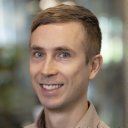
 Jens Sjölund
· 3 previous affiliations
- Uppsala UniversitySince 2021
- Assistant Professor · Since 2021
- Elekta2012–2021
- Researcher · 2012–2021
- Linköping University2013–2018
- PhD student · 2013–2018
Research Overview
Jens Sjölund focuses on machine learning, mathematical optimization, and medical image analysis. His early work addressed dose planning and image registration for radiotherapy, bridging clinical applications with computational methods. Recently, his research has expanded to include generative modeling, graph neural networks for accelerating optimization algorithms, and machine-learning-guided scientific discovery across domains like battery chemistry and astronomy.
Research Trajectory
Sjölund’s early research bridged mathematical optimization and medical imaging, particularly in the context of radiotherapy. During his time as an industrial researcher at Elekta, he investigated methods to streamline clinical workflows and improve dose optimization. His early investigations included Dose planning from MRI using machine learning for automatic segmentation of skull and air, which explored using support vector machines to segment head MRI images, potentially bypassing the need for supplementary CT scans in dose calculations. He also contributed to the optimization of magnetic resonance techniques in Constrained optimization of gradient waveforms for generalized diffusion encoding.
Continuing his focus on medical image analysis, Sjölund developed deep learning approaches for aligning complex anatomical structures. With collaborators, he introduced an unsupervised approach in Learning a Deformable Registration Pyramid, which estimates and refines displacement fields across multiple feature map levels. This work aligns with his broader contributions to the research areas of Real-Time Volumetric Image Registration via Deep Learning and Amortized Optimization for Real-Time Deformable Image Registration. He later participated in a large-scale community benchmarking effort, Learn2Reg: Comprehensive Multi-Task Medical Image Registration Challenge, Dataset and Evaluation in the Era of Deep Learning, which evaluated the trade-offs between deep learning and conventional registration methods across diverse anatomies and modalities.
By 2023, Sjölund’s research expanded into generative modeling for image enhancement, contributing to the broader area of All-in-One Image Restoration for Compound Degradations. In Image Restoration with Mean-Reverting Stochastic Differential Equations, he and his co-authors framed image degradation as a mean-reverting diffusion process, improving stability for deraining and deblurring tasks. This work also touches upon the research direction of The Perception-Distortion Tradeoff. He further explored multi-task capabilities in this domain through Controlling Vision-Language Models for Multi-Task Image Restoration.
A major, ongoing theme in Sjölund’s trajectory is the use of machine learning to accelerate classical optimization and numerical solvers. He has made significant contributions to the research direction of Preconditioning Strategies for Large Scale Iterative Solvers. In Neural incomplete factorization: learning preconditioners for the conjugate gradient method, his team replaced hand-engineered preconditioners with graph neural networks (GNNs) to accelerate the solution of large-scale sparse linear systems. He extended this GNN-based approach to other solvers, developing invertible and sparse preconditioners in Learning incomplete factorization preconditioners for GMRES.
His work on learning-to-optimize also addresses quadratic programming and distributed optimization, intersecting with the area of Zero Shot Scale Generalization in Neural Combinatorial Optimization. He proposed using GNNs to predict optimal active sets in Warm-starting active-set solvers using graph neural networks, reducing computational overhead for real-time control. Similarly, in Learning to accelerate distributed ADMM using graph neural networks, he demonstrated that the Alternating Direction Method of Multipliers (ADMM) can be represented within a message-passing framework, allowing a GNN to adaptively predict step sizes and communication weights. Returning to his roots in radiotherapy, he applied massively parallel ADMM algorithms in A parallel algorithm for generating Pareto-optimal radiosurgery treatment plans, leveraging GPU acceleration to allow clinicians to navigate trade-offs in real time.
Most recently, Sjölund has applied advanced probabilistic and generative methods to diverse scientific domains. In generative modeling, he developed exact conditional simulation techniques in Conditioning diffusion models by explicit forward-backward bridging and explored gradient-free guidance for flow-based models in ESS-Flow: Training-free guidance of flow-based models as inference in source space. His machine-learning-guided approaches have also been deployed for inverse design and discovery. In Navigating chemical design spaces for metal-ion batteries via machine-learning-guided phase-field simulations, he led work combining Bayesian optimization with phase-field simulations to identify battery chemistries that suppress dendrite growth. He also investigated the modularity of large language models for orchestrating chemistry tools in Exploring Modularity of Agentic Systems for Drug Discovery, and applied probabilistic techniques to astronomy in Probabilistic Zeeman-Doppler imaging of stellar magnetic fields. Finally, he has contributed to data privacy methodologies, as seen in his work on Personalized Privacy Amplification via Importance Sampling.
Current Directions
The most recent papers in the evidence address two primary themes: the integration of graph neural networks to accelerate classical numerical solvers, and the application of generative AI and probabilistic modeling to scientific discovery. Work in optimization focuses on learning preconditioners for iterative solvers (like GMRES) and predicting hyperparameters for distributed algorithms (like ADMM) to enable real-time performance in large-scale systems. Concurrently, recent projects investigate advanced conditioning for diffusion and flow-based models, deploying these generative techniques alongside Bayesian optimization and LLM agents to solve complex inverse problems in fields ranging from battery chemistry and drug discovery to stellar magnetic field imaging.
Profile updated
Loading new papers…
Other researchers whose papers cluster into the same research directions — a proxy for overlapping technical interests and shared intellectual neighborhoods.
See something wrong? Report a mistake