

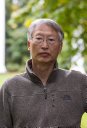
 Jenq-Neng Hwang
· 1 previous affiliation
- University of WashingtonSince 1989
- Full Professor · 1989–2027
Research Overview
Jenq-Neng Hwang focuses on machine learning, computer vision, and multimedia signal processing. His early research explored neural network regression and statistical learning, evolving into extensive work on multi-object tracking, sensor fusion, and large-scale video analytics. Currently, he investigates multimodal foundation models, efficient visual autoregressive modeling, and the integration of generative AI into healthcare and complex temporal reasoning tasks.
Research Trajectory
Jenq-Neng Hwang’s research trajectory spans several decades, beginning with foundational contributions to neural network architectures and statistical learning before expanding into large-scale computer vision, multi-object tracking, and multimodal foundation models. In the early 1990s, he investigated model-free regression techniques, comparing projection pursuit learning with back-propagation to evaluate training efficiency and robustness in A Comparison of Projection Pursuit and Neural Network Regression Modeling. This focus on the theoretical underpinnings of learning systems continued through the decade, culminating in comprehensive frameworks such as A Unified Perspective of Statistical Learning Networks.
As deep learning and computer vision matured, his focus shifted toward optimizing data efficiency and scaling perception systems to complex, real-world environments. He addressed the redundancy of batch-mode active learning by combining uncertainty, diversity, and density via sparse modeling in Uncertainty-Based Active Learning via Sparse Modeling for Image Classification. Concurrently, he led major initiatives in urban-scale video analytics. This work produced CityFlow: A City-Scale Benchmark for Multi-Target Multi-Camera Vehicle Tracking and Re-Identification, which provided a massive dataset with synchronized video and camera geometry to track traffic flow across multiple intersections. He also applied these tracking methodologies to challenging natural environments, such as monitoring marine life in Fish Tracking and Segmentation From Stereo Videos on the Wild Sea Surface for Electronic Monitoring of Rail Fishing.
In the early 2020s, his research increasingly addressed the robustness of perception models under challenging conditions and data imbalances. To tackle the "seesaw" problem in long-tailed recognition, he developed ACE: Ally Complementary Experts for Solving Long-Tailed Recognition in One-Shot, a framework that trains specialized experts to maintain accuracy across both common and rare categories. He also advanced cross-modal sensor fusion, contributing significantly to the research direction of Dense Radar Tensors for High Fidelity Sensing. This is exemplified by RODNet: A Real-Time Radar Object Detection Network Cross-Supervised by Camera-Radar Fused Object 3D Localization, which utilized camera-radar fusion to cross-supervise radar object detection. Broadening his scope to vision-language alignment, he participated in developing Grounded Language-Image Pre-training (GLIP), a highly influential model that unified object detection and phrase grounding to advance the broader area of Open Vocabulary Learning for Object and Event Detection.
More recently, his work has concentrated on the intersection of foundation models, temporal reasoning, and generative AI. In the domain of object tracking and 3D reconstruction, he adapted the Segment Anything Model (SAM 2) for multi-modal tracking in Adapting SAM 2 for Visual Object Tracking: 1st Place Solution for MMVPR Challenge Multi-Modal Tracking. He also introduced Unsupervised Severely Deformed Mesh Reconstruction (DMR) from a Single-View Image, utilizing differentiable rendering to reconstruct non-rigid objects without 3D ground truth. To improve tracking stability in critical medical applications, he proposed a closed-loop memory correction framework in Detector-in-the-Loop Tracking: Active Memory Rectification for Stable Glottic Opening Localization.
His recent investigations into multimodal and generative systems emphasize efficiency, temporal logic, and human motion. He explored fine-grained temporal boundaries in video through TEMPURA: Temporal Event Masked Prediction and Understanding for Reasoning in Action. In the realm of human motion, he integrated continuous motion representations directly into language models with Human Motion Instruction Tuning and achieved bidirectional text-to-motion generation using mutual prompting in PackDiT: Joint Human Motion and Text Generation via Mutual Prompting. Finally, he has addressed the computational and interpretability challenges of large language and visual models. This includes compressing key-value caches for high-resolution image generation in Memory-Efficient Visual Autoregressive Modeling with Scale-Aware KV Cache Compression, proposing new metrics for model explainability in Attention Consistency for LLMs Explanation, analyzing the mathematical trade-offs of context windows in Intrinsic Entropy of Context Length Scaling in LLMs, and reframing medical AI tasks as visual question-answering processes in QRad: Enhancing Radiology Report Generation by Captioning-to-VQA Reframing.
Current Directions
The most recent papers in the evidence indicate a strong focus on adapting large-scale foundation models for complex, multimodal reasoning and generation tasks. Recent work investigates the integration of continuous human motion into large language models and the bidirectional generation of text and motion using diffusion transformers. Additionally, there is a significant emphasis on temporal logic in video understanding, aiming to improve how models parse fine-grained event boundaries and causal sequences in dynamic environments.
Another major current direction involves optimizing the efficiency and reliability of generative AI. This includes developing scale-aware memory compression techniques for visual autoregressive models and analyzing the intrinsic entropy of context length scaling in large language models to determine optimal performance thresholds. Furthermore, recent research applies these advanced generative and tracking capabilities to the healthcare domain, exploring methods to stabilize glottic opening localization during medical procedures and reframing radiology report generation as an interactive visual question-answering process to improve factual reliability and clinical utility.
Profile updated
Loading new papers…
Other researchers whose papers cluster into the same research directions — a proxy for overlapping technical interests and shared intellectual neighborhoods.
See something wrong? Report a mistake