

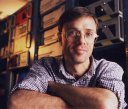
 Jeffrey O. Kephart
6 previous affiliations
- IBM Research1990–2020
- Distinguished Research Staff Member · 2016–2020
- Manager · 1994–2016
- Research Staff Member · 1990–1994
- Principal Researcher · 1990–1994
- Xerox (United States)1987–1990
- Postdoc · 1987–1990
- Palo Alto Research Center1987–1989
- Visiting Scientist · 1987–1989
- Lecturer · 1987
- Doctor of Philosophy (Ph.D.), Electrical Engineering, Physics (minor)
- Princeton University1976–1980
- Undergrad student · 1976–1980
- Bachelor's Degree, Electrical Engineering, Engineering Physics
Research Overview
Jeffrey O. Kephart focuses on autonomic computing, human-agent interaction, and the design of embodied cognitive assistants. His early research explored autonomous pricing algorithms and market-based resource allocation for data centers. Over time, his trajectory has evolved toward self-aware computing systems and multimodal, attention-aware agents that collaborate with users in immersive decision-making environments.
Research Trajectory
In the late 1990s, Kephart's research engaged heavily with the economics of autonomous systems. He contributed to the research direction of Pure Strategy Equilibrium Instability in Pricing Games, exploring how algorithmic actors impact market equilibrium. This work intersected with themes such as Reinforcement Learning for Dynamic Bidding and Market Equilibrium and the broader area of Emergent Tacit Collusion between Autonomous Pricing Algorithms, examining the unintended consequences of deploying strategic, utility-maximizing agents in digital economies.
By the mid-2000s, Kephart transitioned these economic principles into the domain of autonomic computing and systems management. A major focus became the automated provisioning of resources in large-scale environments. In Expressive Power-Based Resource Allocation for Data Centers, he and his co-authors developed a market mechanism to balance power consumption and computational performance. By separating the system into "buyer" agents maximizing performance and "seller" agents minimizing power costs, the work demonstrated a scalable approach to energy-efficient data center management. During this period, he also participated in broader collaborative efforts to coordinate IT systems with physical cooling infrastructure to optimize overall energy use.
This interest in self-managing infrastructure naturally progressed into the study of self-aware computing systems. As first author of Reference Scenarios for Self-aware Computing, Kephart helped formalize the domain by defining standard scenarios—such as adaptive sorting algorithms—that illustrate how systems can autonomously adapt to shifting data, environmental conditions, and performance criteria.
In the latter half of the 2010s, Kephart's focus shifted significantly toward human-agent teaming and the design of cognitive assistants. Rather than purely autonomous background systems, his work began to emphasize agents that interact directly and collaboratively with humans. As the senior author on [Workflow Complexity for Collaborative Interactions: Where are the Metrics?
- A Challenge](/work/workflow-complexity-for-collaborative-interactions-where), he investigated the comprehensibility of automated plans, proposing metrics to evaluate workflow complexity when humans and agents jointly solve tasks.
This conceptual work on collaboration was subsequently realized in physical, multimodal prototypes. Kephart led the development of an embodied agent in A Cognitive Assistant for Visualizing and Analyzing Exoplanets, designing a system situated in a sensor-equipped room that allowed scientists to interact via speech and gesture. Continuing to refine natural human-agent interaction, he co-authored You Talkin' to Me? A Practical Attention-Aware Embodied Agent, which explored low-complexity alternatives to traditional wake-up words by inferring user intent through head orientation.
Current Directions
The most recent papers in the evidence, spanning 2019 to 2020, indicate a continued focus on immersive, multi-agent environments and explainable decision-making. Recent work investigates the role of proactive orchestrators in smart meeting rooms, emphasizing how visualizing an agent's internal planning processes can establish transparency and trust with human users. Additionally, Kephart has participated in developing platforms for human-agent negotiation competitions, where human participants haggle with life-size AI agents in immersive settings. These directions highlight an ongoing commitment to bridging the gap between complex automated planning and intuitive, naturalistic human interaction.
Profile updated
| Title | Venue | Year |
|---|---|---|
| Text-to-SQL domain adaptation via automated benchmark transformation | Openreview | 2026 |
| HUMAINE: Human Multi-Agent Immersive Negotiation Competition | CHI Extended Abstracts | 2020 |
| An Embodied Cognitive Assistant for Visualizing and Analyzing Exoplanet Data | IEEE Internet Comput | 2019 |
| You Talkin' to Me? A Practical Attention-Aware Embodied Agent | Interact | 2019 |
| Planning and visualization for a smart meeting room assistant | Ai Commun | 2019 |
| A Cognitive Assistant for Visualizing and Analyzing Exoplanets | AAAI | 2018 |
| Visualizations for an Explainable Planning Agent | IJCAI | 2018 |
| Reference Scenarios for Self-aware Computing | Self-aware Computing Systems | 2017 |
| Workflow Complexity for Collaborative Interactions: Where are the Metrics? - A Challenge | arXiv | 2017 |
| Mr. Jones - Towards a Proactive Smart Room Orchestrator | AAAI | 2017 |
Loading new papers…
Other researchers whose papers cluster into the same research directions — a proxy for overlapping technical interests and shared intellectual neighborhoods.
See something wrong? Report a mistake