

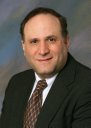
 Jeffrey Mark Siskind
· 8 previous affiliations
- Purdue University West LafayetteSince 2002
- Full Professor · Since 2019
- Associate Professor · 2002–2019
- NEC Research Institute1997–2001
- Researcher · 1997–2001
- Princeton University1998–1999
- Lecturer · 1998–1999
- University of Vermont1996–1997
- Assistant Professor · 1996–1997
- University of Toronto1993–1996
- Assistant Professor · 1993–1996
- Senior Lecturer · 1996
- Undergrad student · 1976–1979
- University of Pennsylvania1992–1993
- Postdoc · 1992–1993
- PhD student · 1989–1992
- MS student · 1980–1989
Research Overview
Jeffrey Mark Siskind focuses on the intersection of natural language and visual perception, automatic differentiation, and the methodological rigor of neural decoding. His trajectory spans early systems for grounding lexical semantics in video to foundational contributions in differentiable programming. Recently, his work emphasizes exposing experimental confounds in electroencephalography classification and developing novel accumulation modes for automatic differentiation.
Research Trajectory
Siskind’s early research explored how computational systems could acquire meaning from multimodal inputs without prior linguistic knowledge. In Acquiring Core Meanings of Words, Represented as Jackendoff-Style Conceptual Structures, from Correlated Streams of Linguistic and Non-Linguistic Input, he developed an operational system that learned a lexicon by observing sequences of scenes alongside descriptive sentences. He later expanded this approach in Grounding the Lexical Semantics of Verbs in Visual Perception using Force Dynamics and Event Logic, introducing a finite representation for recognizing events described by spatial-motion verbs in image sequences.
In the early 2000s, he contributed to computer vision techniques, such as graph-based image segmentation using a novel cut-ratio cost function in Image Segmentation with Ratio Cut. Concurrently, he began foundational work in programming languages and automatic differentiation (AD), exploring reverse-mode AD within functional frameworks in Reverse-mode AD in a functional framework: Lambda the ultimate backpropagator.
Moving into the 2010s, his work integrated linguistic semantics with video analysis, contributing to the broader area of Bridging the Semantic Gap in Video Understanding. His research group developed frameworks for sentence-guided activity recognition in Seeing What You're Told: Sentence-Guided Activity Recognition in Video, leveraging the compositional structure of both language and events. They subsequently advanced video search capabilities in Saying What You're Looking For: Linguistics Meets Video Search., enabling nuanced queries that rely on compositional semantics rather than simple keyword matching.
Parallel to his vision research, Siskind continued to advance differentiable programming, a key component of the research direction Compiler Integrated Automatic Differentiation and Differentiable Programming. He co-authored a comprehensive overview bridging AD and machine learning in Automatic Differentiation in Machine Learning: a Survey. His subsequent work addressed subtle bugs in AD libraries, demonstrating in Perturbation confusion in forward automatic differentiation of higher-order functions how standard tagging systems fail with curried or nested derivatives. This work significantly advanced the area of Preventing Perturbation Confusion in Nested Differentiation.
In 2021, he explored robotics applications, developing frameworks for spoken dialogue-driven navigation in unknown indoor environments in Talk the talk and walk the walk: Dialogue-driven navigation in unknown indoor environments.
Around the same time, Siskind initiated a major methodological critique of electroencephalography (EEG) classification. In The Perils and Pitfalls of Block Design for EEG Classification Experiments, his team demonstrated that high-profile claims of decoding visual stimuli from brain waves were heavily dependent on flawed block designs. He expanded this critique in Object Classification From Randomized EEG Trials, providing a rigorous reality check on brain-reading capabilities. This aligns with the research direction Mitigating Temporal Correlation Bias in EEG Classification and the broader area of Decoding Noisy Neural Signals via Latent Generative Priors. He further solidified this stance in Confounds in the Data - Comments on "Decoding Brain Representations by Multimodal Learning of Neural Activity and Visual Features", showing that impressive neural decoding results often stemmed from experimental confounds rather than superior network architectures.
Current Directions
The most recent papers in the evidence, spanning 2024 and 2025, show a continued dual focus on methodological rigor in neural decoding and fundamental advances in automatic differentiation.
In the realm of EEG research, he continues to expose data leakage issues that artificially inflate decoding accuracies. Learning Exemplar Representations in Single-Trial EEG Category Decoding reveals how repeated object trials allow models to learn specific instances rather than general categories. Similarly, The Repeated-Stimulus Confound in Electroencephalography demonstrates that training and testing on identical stimuli drastically overestimates decoding accuracy, identifying a critical methodological flaw present in numerous recent studies.
In automatic differentiation, his recent work introduces novel computational methods. Automatic Differentiation: Inverse Accumulation Mode proposes a new approach to calculate Jacobian-inverse-vector products with the efficiency of standard gradients, avoiding the massive overhead of traditional matrix inversion for second-order optimization. Additionally, he has participated in research on multimodal human-AI collaboration, contributing to the evaluation of augmented reality agents for procedural tasks in Towards Effective Human-in-the-Loop Assistive AI Agents.
Profile updated
Loading new papers…
Other researchers whose papers cluster into the same research directions — a proxy for overlapping technical interests and shared intellectual neighborhoods.
See something wrong? Report a mistake