

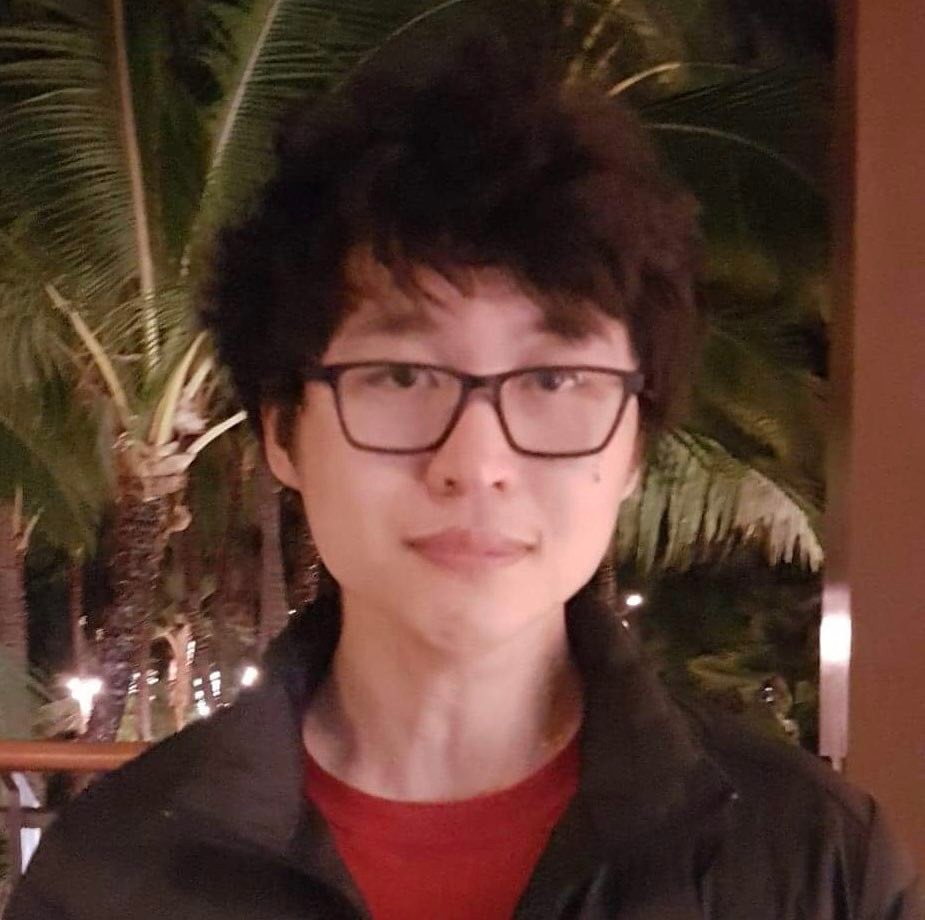
 Jeffrey Gu
· 5 previous affiliations
- Princeton UniversitySince 2025
- Postdoctoral Researcher · Since 2025
- Stanford University2018–2025
- Research Assistant · 2020–2025
- MS student · 2018–2020
- Course Assistant · 2019
- Software Engineering Intern · 2019
- Percolata2018
- Machine Learning Intern · 2018
- California Institute of Technology2013–2017
- Undergrad student · 2013–2017
Research Overview
Jeffrey Gu focuses on 3D computer vision, geometric deep learning, and artificial intelligence for scientific applications. His early trajectory explored hyperbolic representations for capturing hierarchical structures in biomedical imaging and invariant shape representations. More recently, his research investigates neural fields, hypernetwork architectures, and transformer-based models for complex structural reconstruction in cryo-electron microscopy.
Research Trajectory
During his doctoral studies, Gu's research initially centered on the application of non-Euclidean geometry to biomedical imaging, specifically contributing to the research direction of Computational Overhead in Hyperbolic Deep Learning. In Learning Hyperbolic Representations for Unsupervised 3D Segmentation (2020), he helped develop an unsupervised framework that embeds image subvolumes into a hyperbolic latent space. This approach naturally captures the nested, hierarchical structures inherent in biological data, such as organelles within cells, demonstrating performance that rivals semi-supervised approaches.
Building on this foundation, collaborative work expanded into Capturing implicit hierarchical structure in 3D biomedical images with self-supervised hyperbolic representations (2021). This research introduced a 3D hyperbolic variational autoencoder equipped with a novel gyroplane convolutional layer to map embeddings back to 3D images. By incorporating a self-supervised loss to infer hierarchical relationships, this work advanced the broader area of Overcoming Euclidean Distortion with Hyperbolic Embeddings and the field of Deep Learning in Hyperbolic Space. Concurrently, Gu explored shape analysis in Staying in shape: learning invariant shape representations using contrastive learning (2021), where he introduced methods to learn representations that remain invariant to isometric or almost-isometric transformations.
By 2023, his focus expanded to continuous representations and human motion modeling. In Generalizable Neural Fields as Partially Observed Neural Processes, he addressed the inefficiency of optimizing separate neural fields for individual signals. By framing the generalization of neural fields as a meta-learning problem, the work provided a mechanism to capitalize on shared structures among signals rather than training isolated models from scratch. That same year, he participated in the development of NeMo: 3D Neural Motion Fields from Multiple Video Instances of the Same Action. This framework reconstructs high-fidelity 3D human motion from monocular "in-the-wild" videos by jointly optimizing across multiple instances of the same action, overcoming single-view depth ambiguities to recover global trajectories. This contribution intersected with research areas such as Absolute Spatial Localization for 3D Human Pose Estimation and Generalizing Human Motion Models to Rare and Extreme Poses.
Synthesizing his earlier work in geometric deep learning, Gu co-authored Hyperbolic Deep Learning in Computer Vision: A Survey (2024), which categorized the rapidly growing literature on hyperbolic manifolds for embedding hierarchical structures, quantifying uncertainty, and learning from limited samples.
Most recently, Gu has focused on hypernetworks and their application to structural biology. In CryoHype: Reconstructing a thousand cryo-EM structures with transformer-based hypernetworks (2025), he and his collaborators developed a transformer-based architecture designed to solve extreme compositional heterogeneity in cryo-electron microscopy. By dynamically generating the weights of a 3D reconstruction network, the model can simultaneously resolve up to a thousand distinct molecular structures from a single unlabeled mixture, advancing the area of Pose Free 3D Reconstruction from Unconstrained Images. Parallel to this domain-specific application, he investigated the underlying mechanics of these architectures in Foundation Models Secretly Understand Neural Network Weights: Enhancing Hypernetwork Architectures with Foundation Models (2025). This research revealed that vision foundation models possess internal representations that can be repurposed to generate weights for other neural networks, achieving superior data efficiency and generalization for implicit neural representations with significantly fewer trainable parameters.
Current Directions
The most recent papers in the evidence address the intersection of hypernetwork architectures, foundation models, and structural biology. Current work investigates how pre-trained vision models can be adapted to dynamically generate neural network weights, improving the efficiency and generalization of implicit neural representations for 3D shapes and audio. Concurrently, this hypernetwork-driven approach is being applied to complex scientific domains, particularly in resolving highly heterogeneous molecular structures from unlabeled cryo-EM mixtures.
Profile updated
Loading new papers…
Other researchers whose papers cluster into the same research directions — a proxy for overlapping technical interests and shared intellectual neighborhoods.
See something wrong? Report a mistake