

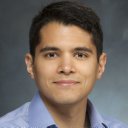
 Jeffrey B. Parker
· 6 previous affiliations
- Google (United States)Since 2023
- Software Engineer · Since 2023
- Aurora2022–2023
- Software Engineer · 2022–2023
- University of Wisconsin–Madison2020–2021
- Assistant Professor Of Physics · 2020–2021
- Research Scientist · 2018–2020
- Postdoctoral Researcher · 2016–2018
- Stanford University2014–2015
- Juris Doctor (J.D.) · 2014–2015
- Princeton University2008–2014
- PhD student · 2008–2014
Research Overview
Jeffrey B. Parker focuses on the statistical modeling of complex systems, with a research trajectory that spans from the mathematical foundations of navigational error distributions to contemporary challenges in plasma physics, turbulence, and quantum algorithms. His work frequently addresses the limitations of standard Gaussian assumptions in real-world data, employing Robust Modeling with Scale Mixtures of Gaussians and non-parametric methods to characterize heavy-tailed phenomena. Currently, his research explores the intersection of plasma dynamics, multiscale simulation, and machine learning for chaotic systems, seeking to bridge the gap between micro-scale fluctuations and macro-scale transport phenomena.
Research Trajectory
The early phase of Parker’s work was rooted in the practical and mathematical requirements of astronomical and air navigation. During the late 1940s and early 1950s, his research addressed the fundamental trade-offs between observational accuracy, equipment complexity, and the speed of data collection. In The Requirements for Astronomical Navigation, he examined how experimenters might deliberately sacrifice precision to achieve greater simplicity and speed in sight reduction, a critical consideration for air navigation of that era. This period was characterized by the development of practical tools, such as Sight Reduction Tables for Air Navigation - Sight Reduction Tables for Air Navigation, A.P. 3270 (1952 and 1953). 12 × 10 in., H.M. Stationery Office (3 vols.), 21s. (Vols. 1 and 3), 15s. (Vol. 2)., which standardized complex calculations for operational use.
By the mid-1960s, Parker’s focus shifted toward the statistical characterization of navigational errors, moving beyond simple Gaussian models to account for the "leptokurtic" or fat-tailed distributions observed in empirical data. This work aligns with broader themes of Modeling Heavy-Tailed Distributions and Tail Risk, where extreme deviations occur more frequently than predicted by a normal distribution. In The Exponential Integral Frequency Distribution, he provided a physical intuition for these errors by modeling them as mixtures of Gaussian distributions with varying standard deviations. This approach allowed for a more nuanced understanding of why navigational data often followed negative exponential patterns, contributing to the field of Predictive Clustering and Subgroup Discovery for Heterogeneous Data by identifying specific contexts where standard models failed.
Following a significant period of limited public record, Parker’s research re-emerged in the 2010s with a focus on plasma physics and computational fluid dynamics. This later work applies rigorous statistical and numerical methods to the study of electron transport and turbulence in plasma accelerators and fusion reactors. He has been particularly active in investigating "rotating spokes"—localized regions of increased plasma density—and their role in cross-field electron transport. His work in this area often involves the critical evaluation of numerical simulations, as seen in his analysis of discrepancies between experimental observations and high-velocity rotation models in cylindrical Hall thrusters.
Current Directions
Parker’s recent research is increasingly focused on the application of advanced computational frameworks to plasma turbulence and quantum computing. A primary area of interest is the emergence of "zonal flows," which are powerful jet streams observed in both planetary atmospheres and fusion plasmas. By treating these flows as a form of spontaneous pattern formation, he has utilized statistical closure theories to describe their growth and saturation.
Furthermore, Parker is engaged in developing multiscale numerical approaches to address the vast temporal gaps in fusion reactor simulations. This work involves coupling global turbulence simulations with specialized transport solvers to predict temperature profiles on timescales relevant to reactor operations, such as those planned for ITER. His recent contributions also extend to quantum information science, where he explores the use of Quantum Phase Estimation (QPE) to solve generalized eigenvalue problems. This research aims to adapt quantum algorithms for classical physics challenges, including the determination of plasma stability. Most recently, he has participated in the development of machine learning frameworks designed to stabilize the emulation of chaotic systems, ensuring that neural network models respect the long-term statistical distributions of the systems they simulate.
Representative Work
In The Requirements for Astronomical Navigation, Parker established a framework for evaluating the efficiency of navigational methods. He argued that the "maximum simplicity" in collecting results often requires a deliberate reduction in accuracy, particularly when rapid data processing is required in the field. This early work highlights a career-long interest in the practical application of mathematical models under constraints.
In the first-authored paper The Exponential Integral Frequency Distribution, Parker addressed the persistent problem of non-Gaussian error distributions in navigation. By demonstrating that these errors could be modeled as a mixture of normal distributions, he provided a theoretical basis for the observed "negative exponential" patterns in real-world data. This work is a clear application of Non-Parametric and Distribution-Free Uncertainty Quantification, offering a more robust alternative to the "bell curve" assumptions that often lead to the underestimation of extreme risks.
The transition to plasma physics is exemplified by Zonal Flow as Pattern Formation, where Parker (as first author) applied statistical closure theories to minimal turbulence models. The paper demonstrates that the growth and merging of jet streams in plasmas follow mathematical rules analogous to Rayleigh-Bénard convection. This work bridges the gap between fluid mechanics and plasma dynamics through the lens of pattern formation.
In Bringing global gyrokinetic turbulence simulations to the transport timescale using a multiscale approach, Parker led an effort to overcome the computational barriers in fusion research. By developing a method to couple microsecond-scale turbulence simulations with millisecond-scale energy transport solvers, the research enables the prediction of self-consistent temperature profiles in large-scale tokamaks. This multiscale approach is essential for the design and operation of future fusion reactors.
Parker’s work in quantum computing is represented by Quantum phase estimation for a class of generalized eigenvalue problems. As the lead author, he demonstrated that QPE can be extended to solve a broad class of generalized eigenvalue problems ($Av = \lambda Bv$), provided certain sparsity conditions are met. This extension is significant because it allows quantum computers to be applied to classical stability analysis in physics, particularly in the context of magnetized plasmas.
Finally, Parker participated in the development of the DySLIM: Dynamics Stable Learning by Invariant Measure for Chaotic Systems framework. As a co-author, he contributed to a regularization method that forces neural networks to respect the "invariant measure" or long-term statistical distribution of chaotic systems. This approach prevents the common issue of trajectory "blow-up" in machine learning models of fluid flow and weather, improving both short-term accuracy and long-term physical realism.
Profile updated
Loading new papers…
Other researchers whose papers cluster into the same research directions — a proxy for overlapping technical interests and shared intellectual neighborhoods.
See something wrong? Report a mistake