

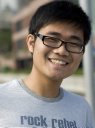
 Jeff Huang
· 1 previous affiliation
- Texas A&M UniversitySince 2025
- Full Professor · Since 2025
Research Overview
Jeff Huang focuses on software engineering, programming languages, and systems for high-performance computing, with a particular emphasis on concurrency and runtime verification. His research addresses the challenges of building reliable and efficient software by developing techniques for detecting complex bugs in concurrent programs and optimizing the execution of large-scale models. Currently, his work centers on the systems-level challenges of large language model (LLM) inference, specifically regarding memory management and structured program execution.
Research Trajectory
The early stages of Huang’s research career were defined by foundational work in concurrency and formal methods, specifically during his doctoral studies at the Hong Kong University of Science and Technology and his subsequent postdoctoral fellowship at the University of Illinois at Urbana-Champaign. During this period, he focused on the theoretical and practical aspects of stateless model checking and causality reduction. This work sought to address the state-space explosion problem in concurrent software by identifying and pruning redundant execution paths that lead to the same logical state.
Following his transition to the faculty at Texas A&M University, Huang’s research expanded into scalable program analysis and predictive bug detection. He developed methodologies for identifying concurrency-related vulnerabilities, such as data races and use-after-free errors, in large-scale systems. This phase of his work was characterized by a shift toward hybrid analysis techniques that combine the precision of dynamic monitoring with the coverage of static analysis. His contributions in this area were recognized with several honors, including the NSF CAREER Award and multiple ACM SIGSOFT Distinguished Paper Awards.
In recent years, Huang has pivoted toward the intersection of software systems and artificial intelligence. His current research addresses the "memory wall" in LLM inference, where the linear growth of intermediate states—known as the Key-Value (KV) cache—limits the throughput and context length of modern models. This work involves the co-design of high-level programming frontends and optimized backend runtimes to facilitate the efficient execution of complex, multi-step LLM workflows.
Current Directions
Huang’s current research is heavily focused on the development of systems for Prefix Aware KV Cache Sharing for Efficient LLM Inference. As LLMs are increasingly deployed for tasks involving long-context processing and multi-turn interactions, the management of the KV cache has become a critical bottleneck. Huang and his collaborators have introduced novel data structures and management policies to enable the reuse of these cached states across different generation calls, significantly reducing redundant computation and memory overhead.
A major component of this effort is the investigation of Hierarchical KV Cache Management for Long-Context LLMs. This research direction explores how to organize and evict cache entries across a hierarchy of memory devices (e.g., GPU HBM, system RAM, and SSDs) to support models processing millions of tokens. By optimizing the placement and retrieval of these states, Huang aims to enable more sophisticated LLM applications, such as autonomous agents and complex structured data extraction, without the prohibitive costs typically associated with long-sequence inference.
Representative Work
Huang’s contributions to concurrency are exemplified by his work on Stateless model checking concurrent programs with maximal causality reduction. This research introduced a technique to significantly reduce the number of interleavings that a model checker must explore to verify a concurrent program. By leveraging a "maximal" causality relation, the approach identifies the largest possible sets of independent operations, ensuring that the checker only explores truly distinct behaviors. This work provided a more efficient foundation for the formal verification of multi-threaded software.
In the domain of automated bug detection, Huang developed UFO: predictive concurrency use-after-free detection. Use-after-free (UAF) vulnerabilities are particularly difficult to detect in concurrent settings because they often depend on specific, rare timing conditions. The UFO framework utilizes a predictive analysis that monitors a single execution and reasons about alternative interleavings that could potentially trigger a UAF error. This approach allows for the detection of bugs that have not yet manifested in observed runs, providing a proactive tool for improving software security and reliability.
Huang also contributed to the development of Scalable thread sharing analysis, which addresses the challenge of identifying which memory locations are accessed by multiple threads in large-scale applications. This analysis is a prerequisite for many other program transformations and bug-finding tools. By improving the scalability of thread-sharing detection, Huang enabled the application of sophisticated concurrency analyses to industrial-sized codebases that were previously too large for such techniques.
More recently, Huang has been a key contributor to the development of SGLang: Efficient Execution of Structured Language Model Programs. SGLang is a comprehensive system designed to accelerate complex LLM workflows. It introduces a Python-based frontend that allows developers to express generation steps, control flow, and parallelism more naturally. The system’s backend runtime features "RadixAttention," a novel mechanism that treats the KV cache as a radix tree. This allows the system to automatically identify and reuse common prefixes in prompts—such as system instructions or shared context in a multi-user chat—leading to substantial improvements in throughput and reductions in latency compared to previous state-of-the-art inference engines.
The SGLang project also addresses the challenges of structured output generation. In Efficiently Programming Large Language Models using SGLang, the research team detailed how the system uses compressed finite state machines to accelerate the decoding of structured formats like JSON or regex-constrained text. By integrating these optimizations directly into the runtime, the system reduces the overhead of ensuring that LLM outputs adhere to specific schemas, which is essential for integrating models into larger software ecosystems.
Beyond these primary areas, Huang’s work in the mid-2010s included participation in the development of tools for human-computer interaction and learning systems. For instance, he participated in the creation of WebGazer: Scalable Webcam Eye Tracking Using User Interactions, a library that enables eye tracking in standard web browsers without specialized hardware. While his core focus remains on the systems and software engineering side of computing, these projects reflect a broader interest in how software can adapt to and learn from user behavior.
Profile updated
| Title | Venue | Year |
|---|---|---|
| DepFuzz: Efficient Smart Contract Fuzzing with Function Dependence Guidance | Proceedings of the ACM on Programming Languages | 2025 |
| VeriFix: Verifying Your Fix Towards An Atomicity Violation | J. Syst. Softw | 2025 |
| SGLang: Efficient Execution of Structured Language Model Programs | NeurIPS | 2024 |
| Distributed Networked Real-Time Learning | IEEE Trans. Control. Netw. Syst | 2021 |
| Computer Science Open Rankings | Openalex | 2021 |
| WebGazer: Scalable Webcam Eye Tracking Using User Interactions | IJCAI | 2016 |
| Vibration characteristics of GIS bus based on field measurement | Openalex | 2016 |
| Systematic Concurrency Testing with Maximal Causality | Openalex | 2015 |
| A Strategy-Aware Technique for Learning Behaviors from Discrete Human Feedback | AAAI | 2014 |
| Mastering the art of war | Openalex | 2013 |
Loading new papers…
Other researchers whose papers cluster into the same research directions — a proxy for overlapping technical interests and shared intellectual neighborhoods.
See something wrong? Report a mistake