

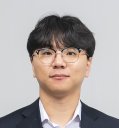
 Jawook Gu
· 4 previous affiliations
- Kakao Brain (South Korea)Since 2022
- Researcher · Since 2022
- Soombit.aiCurrent
- Current
- Samsung (South Korea)2021–2022
- Researcher · 2021–2022
- PhD student · 2016–2021
- MS student · 2014–2016
- Undergrad student · 2010–2014
Research Overview
Jawook Gu focuses on medical image reconstruction, deep learning for computational imaging, and unsupervised artifact reduction in computed tomography. Early work explored residual learning and interior tomography to address limited-angle and region-of-interest constraints. More recently, the focus has shifted toward unsupervised generative models, particularly CycleGAN architectures, for low-dose CT denoising and metal artifact reduction.
Research Trajectory
Jawook Gu’s research trajectory demonstrates a sustained focus on improving the quality and safety of computed tomography (CT) imaging through advanced computational methods. The earliest work in the available evidence, beginning around 2017, addressed the fundamental mathematical and physical constraints of incomplete projection data in CT scanning. During this period, Gu investigated supervised deep learning techniques to recover high-quality images from limited or truncated data.
In a first-author capacity, Gu published Multi-Scale Wavelet Domain Residual Learning for Limited-Angle CT Reconstruction (2017). Limited-angle CT, often used in interventional C-arm imaging, typically suffers from severe artifacts due to missing projection angles. Gu proposed a multi-scale wavelet domain residual learning architecture designed to isolate and compensate for these globally distributed, directional artifacts. This work contributed to the research direction of Reconstructing the Invisible in Limited Angle Tomography by leveraging techniques from the broader area of Residual Noise Estimation for Signal Restoration, where models are trained to predict and subtract noise rather than mapping directly to a clean image. That same year, Gu collaborated as a second author on Deep Learning Interior Tomography for Region-of-Interest Reconstruction. This research tackled the cupping artifacts inherent in standard analytic reconstruction of truncated Radon transforms, demonstrating that deep learning architectures could effectively remove null space signals from filtered back-projection (FBP) reconstructions to enable lower-dose, small-detector imaging.
By 2021, Gu’s methodological focus had evolved significantly, shifting from supervised learning on incomplete data to unsupervised learning for noise and artifact reduction. A major challenge in clinical CT research is the lack of perfectly matched pairs of noisy and clean images required for supervised training. To overcome this, Gu began developing sophisticated generative adversarial networks, specifically CycleGAN variants, that do not require paired datasets.
This transition aligns with the theme of High Fidelity Reconstruction for Low Dose Medical Imaging. In the first-author paper AdaIN-Based Tunable CycleGAN for Efficient Unsupervised Low-Dose CT Denoising (2021), Gu addressed the computational inefficiencies of standard dual-generator CycleGANs. By introducing an Adaptive Instance Normalization (AdaIN)-based tunable architecture, the research mitigated the heavy memory requirements and parameter counts typically associated with the area of Bidirectional Translation with Self-Inverse Neural Networks.
Gu continued to expand the application of unsupervised generative models to other complex CT artifacts. As a second author on Unsupervised CT Metal Artifact Learning Using Attention-Guided β-CycleGAN (2021), Gu helped develop a framework for metal artifact reduction (MAR). Because paired metal-free and metal-corrupted clinical images are virtually impossible to obtain, the team utilized an attention-guided approach to handle feature disentanglement without overly complex network architectures, incorporating methods from the research direction of Spatial and Channel Attention for Robust Feature Modulation. Also in 2021, Gu led the application of these unsupervised techniques to highly sensitive clinical domains, publishing the first-author work CycleGAN denoising of extreme low-dose cardiac CT using wavelet-assisted noise disentanglement, which combined the strengths of wavelet-domain processing with CycleGAN-based noise disentanglement.
Current Directions
Based on the most recent papers in the evidence from 2021, Gu’s work centers on unsupervised deep learning frameworks for medical image enhancement. A primary ongoing challenge is the "safety-quality paradox" in medical imaging: reducing patient radiation dose while maintaining the high-fidelity images necessary for accurate diagnosis.
Recent work investigates how generative models—particularly memory-efficient and attention-guided CycleGAN architectures—can perform robust image-to-image translation without relying on paired training data. By integrating domain-specific signal processing techniques, such as wavelet transforms, with advanced feature disentanglement and attention mechanisms, these models are increasingly capable of isolating complex, non-uniform noise profiles like metal artifacts and extreme low-dose quantum mottle. The trajectory suggests a continued emphasis on making these sophisticated neural network architectures computationally efficient and reliable enough for deployment in real-world clinical CT workflows.
Profile updated
| Title | Venue | Year |
|---|---|---|
| CycleGAN denoising of extreme low-dose cardiac CT using wavelet-assisted noise disentanglement | Medical Image Analysis | 2021 |
| AdaIN-Based Tunable CycleGAN for Efficient Unsupervised Low-Dose CT Denoising | IEEE Trans. Computational Imaging | 2021 |
| Unsupervised CT Metal Artifact Learning Using Attention-Guided β-CycleGAN | IEEE TMI | 2021 |
| Deep Learning Interior Tomography for Region-of-Interest Reconstruction | arXiv | 2017 |
| Multi-Scale Wavelet Domain Residual Learning for Limited-Angle CT Reconstruction | arXiv | 2017 |
Loading new papers…
Other researchers whose papers cluster into the same research directions — a proxy for overlapping technical interests and shared intellectual neighborhoods.
See something wrong? Report a mistake