

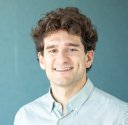
 Javier Abad
· 7 previous affiliations
- ETH AI CenterSince 2022
- Doctoral Fellow · Since 2022
- ETH Zurich2022–2026
- PhD student · 2022–2026
- PhD Student Researcher · 2025
- Machine Learning Researcher · 2025
- Featurespace2022
- Research Scientist · 2022
- University of Cambridge2020–2021
- Researcher · 2021
- MS student · 2020–2021
- Universitat Politècnica de València2015–2020
- Undergrad student · 2015–2020
Research Overview
Javier Abad focuses on causal inference, data privacy, and the intersection of observational and experimental study designs. His research develops statistical frameworks to quantify unmeasured confounding and leverages foundation models to improve the efficiency of randomized trials. Recently, his work has expanded into privacy-preserving synthetic data generation and copyright protection in large language models.
Research Trajectory
In 2024, Abad's research spanned both privacy-preserving machine learning and foundational causal inference. Working in the area of Dataset Distillation via Optimization Path Alignment, he collaborated on Privacy-Preserving Data Release Leveraging Optimal Transport and Particle Gradient Descent. This research introduced PrivPGD, a differentially private synthetic data generator that treats datasets as collections of particles moving through an embedding space. By optimizing these particles using Sliced Wasserstein distance and gradient descent, the method produces high-fidelity synthetic tabular data that scales efficiently while preserving the geometric relationships of real-world features better than prior graphical models.
Concurrently, he led significant methodological work in causal inference, focusing on the persistent challenge of unobserved confounding in medical and social sciences. In Hidden yet quantifiable: A lower bound for confounding strength using randomized trials, he introduced a statistical framework that leverages data from randomized controlled trials (RCTs) to calculate a provable lower bound on hidden bias in observational studies. This allows researchers to rigorously quantify the potential impact of unmeasured variables. This contribution advanced the research direction of Quantifying Robustness to Unmeasured Confounding with E-values and demonstrated novel approaches in the broader area of Causal Data Fusion across Heterogeneous Data Sources.
Continuing this focus on bridging study designs, he co-developed methods in Detecting critical treatment effect bias in small subgroups. Because observational studies cover broader populations but are prone to bias, this work proposed a strategy to benchmark observational studies against randomized trials by designing statistical tests for conditional treatment effects. This ensures that observational data can be reliably evaluated before being used for clinical decision-making.
Moving into 2025, Abad's trajectory expanded to integrate foundation models into rigorous statistical evaluation, while also addressing the unique legal and ethical challenges posed by large language models (LLMs). He collaborated on Efficient Randomized Experiments Using Foundation Models, which introduced the Hybrid Augmented Inverse Probability Weighting (H-AIPW) estimator. This framework provides a "no-regrets" guarantee, allowing researchers to use LLMs to boost the precision of randomized experiments without sacrificing statistical rigor—even if the underlying models are biased or inaccurate. This methodology offers a critical advancement for the research direction of Statistical Power Challenges in Rare Disease Research, where reducing required sample sizes is paramount.
Alongside his work in experimental design, he led research addressing intellectual property concerns in generative AI. In Copyright-Protected Language Generation via Adaptive Model Fusion, he developed CP-Fuse, an inference-time strategy that prevents LLMs from verbatim regurgitation of copyrighted training data. By enforcing a balancing property during decoding, the method adaptively fuses outputs from models trained on disjoint datasets, significantly reducing the reproduction of protected material while maintaining the functional utility and generation quality of the model.
Returning to fundamental causal discovery, Abad participated in the development of the RAMEN algorithm in Doubly robust identification of treatment effects from multiple environments. This work tackles the problem of identifying valid adjustment sets to avoid "bad controls" without requiring a known causal graph. It achieves a novel form of double robustness, guaranteeing unbiased estimates if the causal parents of either the treatment or the outcome are observed and invariant across environments. This research contributes directly to the broader areas of Strategic Covariate Selection to Avoid Collider Bias and Invariant Representation Learning Across Diverse Environments.
Current Directions
The most recent papers in the evidence indicate a dual focus on advancing robust causal inference and addressing the practical deployment challenges of foundation models. One major current direction investigates how large language models can be integrated into rigorous statistical frameworks, specifically exploring how they can be used to improve the precision and efficiency of randomized experiments without compromising theoretical guarantees.
Concurrently, ongoing work addresses the legal and ethical constraints of generative AI. This involves developing inference-time interventions to prevent models from memorizing and regurgitating copyrighted material, ensuring that high-utility language generation can coexist with intellectual property protections. Finally, there is a continued emphasis on causal discovery in complex, multi-environment settings. This work focuses on doubly robust methods that can automatically identify valid adjustment sets and isolate invariant causal relationships, even when the underlying causal graph remains unknown.
Profile updated
Loading new papers…
Other researchers whose papers cluster into the same research directions — a proxy for overlapping technical interests and shared intellectual neighborhoods.
See something wrong? Report a mistake