

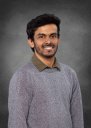
 Jathurshan Pradeepkumar
· 6 previous affiliations
- University of Illinois Urbana-ChampaignSince 2023
- Doctor of Philosophy - PhD, Computer Science · 2023–2028
- Graduate Research Assistant · Since 2023
- Graduate Teaching Assistant · 2025
- Amazon (United States)Since 2026
- Applied Scientist Intern · Since 2026
- AI Research Intern · 2024
- Harvard University2021–2023
- Researcher · 2022–2023
- Remote Undergraduate Researcher · 2021–2022
- University of Mauritius2019–2022
- Council Member · 2021–2022
- Secretary · 2020–2021
- Assistant Treasurer · 2019–2020
- University of Moratuwa2018–2022
- Undergrad student · 2018–2022
Research Overview
Jathurshan Pradeepkumar focuses on representation learning for biosignals, multimodal artificial intelligence, and deep learning applications in clinical care. His early work explored neural decoding and unobtrusive physiological monitoring, gradually expanding to large-scale foundation models for electroencephalography. Currently, he investigates discrete tokenization for continuous signals and the integration of large language models to automate clinical workflows and cancer survivorship planning.
Research Trajectory
Pradeepkumar's early research concentrated on decoding complex physiological signals for human-computer interaction and sleep monitoring. In 2021, he developed deep learning architectures for neural decoding, introducing Decoding of Hand Gestures from Electrocorticography with LSTM Based Deep Neural Network. This foundational work in time-series analysis naturally extended into the broader area of Unobtrusive and Remote Vital Sign Estimation. To bridge the performance gap between bulky clinical equipment and comfortable wearables, he designed A Knowledge Distillation Framework For Enhancing Ear-EEG Based Sleep Staging With Scalp-EEG Data. By training a student model operating on ear-EEG to mimic the feature representations of a scalp-EEG teacher model, this approach improved sleep staging accuracy for wearable sensors. Concurrently, he collaborated on Towards Accurate Cross-Domain in-Bed Human Pose Estimation, addressing the challenges of occlusions and varying illumination in sleep environments by transferring knowledge from unoccluded RGB images to long-wavelength infrared modalities.
Expanding his methodological scope, Pradeepkumar contributed to the research direction of Evidential Deep Learning for Predictive Uncertainty Quantification. He participated in the development of Contrastive Deep Encoding Enables Uncertainty-aware Machine-learning-assisted Histopathology, a self-supervised learning framework that achieves high performance with minimal labeled data while quantifying uncertainty to guide pathologists' attention. Returning to sleep analysis, he introduced Toward Interpretable Sleep Stage Classification Using Cross-Modal Transformers, which leveraged attention mechanisms to process electroencephalogram (EEG) and electrooculogram (EOG) signals. This architecture achieved strong predictive performance while addressing the "black-box" nature of deep learning, offering interpretability crucial for clinical trust. During this period, his focus broadened to encompass large-scale clinical data and natural language processing. He led the creation of Automatically Labeling $200B Life-Saving Datasets: A Large Clinical Trial Outcome Benchmark, an open-source benchmark that utilizes large language models alongside financial and sentiment data to automatically label over 125,000 clinical trials, providing a massive resource for tracking drug development outcomes.
In recent years, Pradeepkumar has increasingly integrated large language models into clinical workflows and advanced the development of foundation models for neural signals. Advancing work in the area of Grounding Language Models with External Knowledge Retrieval, he developed Survivorship Navigator: Personalized Survivorship Care Plan Generation using Large Language Models. This framework automates the creation of cancer survivorship care plans by combining retrieval-augmented generation with electronic health record integration, contributing significantly to the broader research area of Standardized Interoperability for Data-Driven Clinical Workflows. To support the broader clinical machine learning community, he collaborated on PyHealth 2.0: A Comprehensive Open-Source Toolkit for Accessible and Reproducible Clinical Deep Learning, a toolkit optimized for processing massive multimodal clinical datasets efficiently on standard hardware.
His most recent trajectory focuses heavily on scaling representation learning for EEG. He introduced Neural Signals Generate Clinical Notes in the Wild, presenting a foundation model that translates raw, long-duration EEG recordings directly into structured clinical reports, automating a labor-intensive task for neurologists. To ensure these models remain robust in practice, he co-authored Test-Time Adaptation for EEG Foundation Models: A Systematic Study under Real-World Distribution Shifts, which established a benchmark for evaluating test-time adaptation methods on neural data and identified optimization-free approaches as highly reliable. Further refining the architecture of EEG models, he developed Tokenizing Single-Channel EEG with Time-Frequency Motif Learning. This work advances the research direction of Discrete Tokenization for Continuous Signal Modeling by learning a vocabulary of motifs at the single-channel level. By incorporating techniques from the area of Dual-Stream Fusion of Temporal and Spectral Features, this tokenizer provides a model-agnostic component that enhances the interpretability and scalability of both lightweight transformers and massive foundation models.
Current Directions
The most recent papers in the evidence indicate a dual focus on scaling foundation models for continuous physiological signals and deploying large language models for automated clinical reasoning. A major current direction involves adapting natural language processing techniques—specifically discrete tokenization—to raw electroencephalogram data. By learning vocabularies of time-frequency motifs, this work aims to build robust, device-independent neural decoders that can translate complex brain activity directly into structured clinical text. Concurrently, recent work investigates the safe integration of generative AI into healthcare systems. This includes developing retrieval-augmented frameworks grounded in electronic health records to automate personalized cancer survivorship planning, as well as establishing systematic benchmarks to ensure clinical foundation models remain reliable under real-world distribution shifts.
Profile updated
Loading new papers…
Other researchers whose papers cluster into the same research directions — a proxy for overlapping technical interests and shared intellectual neighborhoods.
See something wrong? Report a mistake