

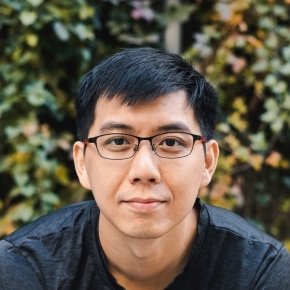
 Jason Phang
· 6 previous affiliations
- EleutherAISince 2020
- Lead Scientist · Since 2020
- OpenAI (United States)Since 2024
- Researcher · Since 2024
- New York University2017–2024
- PhD student · 2019–2024
- Master of Science - MS, Data Science · 2017–2019
- Google (United States)2021–2023
- Intern · 2023
- Student Researcher · 2021–2022
- Microsoft Research Asia (China)2022–2023
- Intern · 2022–2023
- Microsoft (United States)2022–2023
- Research Intern · 2022–2023
Research Overview
Jason Phang focuses on the development, evaluation, and optimization of large-scale language models, with specific expertise in transfer learning and natural language understanding (NLU). His work encompasses the design of intermediate training stages to enhance model performance, the creation of robust evaluation benchmarks to measure model capabilities and limitations, and the application of deep learning architectures to complex domains such as medical imaging. Currently a researcher at OpenAI within the Foundations team, his recent research explores scalable oversight mechanisms, efficient model adaptation, and the safety profiles of frontier AI systems.
Research Trajectory
Phang’s research trajectory began with a focus on improving the efficiency of transfer learning in the early era of Transformer-based encoders. Between 2018 and 2020, he developed methodologies to bridge the gap between general-purpose pre-training and specific downstream applications. This period was characterized by the introduction of the STILTs (Supplementary Training on Intermediate Labeled-data Tasks) framework, which demonstrated that an intermediate stage of supervised learning on data-rich tasks could significantly boost performance on diverse NLU benchmarks. During this time, he also explored the cross-lingual applicability of these techniques, investigating how intermediate training in English could improve zero-shot transfer to other languages.
Parallel to his contributions to NLU, Phang maintained a significant research presence in the field of medical imaging. Working at the NYU Center for Data Science, he addressed the technical challenges of applying deep learning to high-resolution mammography. This work focused on the discrepancy between the massive pixel count of medical scans and the minute size of clinically relevant features. He contributed to the development of multi-stage "global-local" architectures that allowed models to process entire images for context while maintaining high-capacity analysis of specific patches, eventually matching or exceeding the diagnostic performance of human radiologists in controlled studies.
As the field shifted toward increasingly large autoregressive models, Phang’s work evolved to address the challenges of scale, evaluation, and democratization. In 2021 and 2022, he became a key contributor to the EleutherAI collective, participating in the development of GPT-NeoX-20B, one of the first large-scale autoregressive models to have its weights made publicly available. This period also saw a shift toward critical evaluation; he investigated the limitations of existing benchmarks and the potential pitfalls of adversarial dataset creation. He participated in massive collaborative efforts like BIG-bench to probe the limits of large language models (LLMs) and explored how human-AI interaction, such as structured debate, might assist in answering complex questions.
In his recent work at OpenAI and NYU, Phang has focused on the dual challenges of efficiency and oversight. He has investigated methods for Low Rank and Adapter Based Model Tuning to reduce the computational cost of model adaptation. His research into "Gisting" explores how to compress long contexts into a small number of virtual tokens, addressing the memory bottlenecks inherent in standard Transformer architectures. Furthermore, he has pioneered research into scalable oversight, examining how feedback loops between models of varying strengths can be used to supervise AI systems on tasks that are difficult for humans to evaluate directly.
Representative Work
In Sentence Encoders on STILTs: Supplementary Training on Intermediate Labeled-data Tasks, Phang introduced a training pipeline that supplements standard language model pre-training with an intermediate stage of supervised training on data-rich tasks, such as natural language inference. This approach provided a significant performance boost for models like BERT and ELMo on the GLUE benchmark, establishing that supervised intermediate tasks can help models learn more robust representations before they are fine-tuned on target tasks with limited data. This work also highlighted a reduction in variance across random restarts, suggesting that intermediate training contributes to more stable model convergence.
Addressing the domain of medical diagnostics, Phang co-authored Deep Neural Networks Improve Radiologists' Performance in Breast Cancer Screening. This research detailed a two-stage training procedure for a deep convolutional neural network trained on over one million images. The model utilized a high-capacity patch-level network to learn from pixel-level labels in conjunction with a network learning from macroscopic breast-level labels. The study demonstrated that the model achieved an AUC of 0.895 in cancer prediction and, in a reader study, proved to be as accurate as experienced radiologists while significantly reducing the human workload when used as a decision-support tool.
Phang extended his work on intermediate training to the multilingual setting in English Intermediate-Task Training Improves Zero-Shot Cross-Lingual Transfer Too. This study investigated whether the benefits of the STILTs framework could be realized when the intermediate task is in English but the target task is in a different language. The findings confirmed that English intermediate training consistently improves zero-shot cross-lingual transfer across a variety of languages and tasks, suggesting that the linguistic features learned during intermediate training are sufficiently abstract to transcend language boundaries.
In the area of model evaluation, Phang led the study Adversarially Constructed Evaluation Sets Are More Challenging, but May Not Be Fair. As LLMs began to saturate standard benchmarks, adversarial filtering was proposed to create more difficult test sets. Phang and his colleagues adapted the AFLite algorithm to filter evaluation data and tested it against 18 different adversary models. They found that while adversarial filtering successfully lowered model performance, it often did so by selecting examples that were biased or unrepresentative, raising questions about whether such "hard" datasets are valid measures of general progress in NLU.
Phang’s recent work on model efficiency is exemplified by Investigating the Effectiveness of HyperTuning via Gisting. This research addresses the problem of Compressing Transformer Context via Attention Bottlenecks. By using a framework called HyperLlama, the study explores "Gisting"—a method to compress few-shot examples into a small set of "soft prefix" tokens. This approach utilizes Parameter Synthesis for Dynamic Model Adaptation to create efficient representations. While the study noted a "compression tax" where compressed models slightly underperform compared to full-context models, it demonstrated a path toward significantly more computationally efficient in-context learning.
In the domain of scalable oversight and model refinement, Phang co-authored Generate-Feedback-Refine: How Much Does Model Quality in Each Role Matter?. This paper investigates the utility of textual feedback in improving model outputs, specifically focusing on whether weaker models can provide effective feedback to stronger ones. Using code generation as a testbed, the research found that feedback-and-refinement loops consistently improve performance across various datasets. Crucially, the study showed that weaker models can sometimes provide feedback as effectively as stronger ones, suggesting that multi-model oversight systems could be a viable strategy for managing highly capable AI systems.
Current Directions
Phang’s current research is deeply integrated into the development and safety assessment of frontier models at OpenAI. This includes contributing to system cards and safety evaluations for major releases, such as GPT-4o, where he focuses on identifying and mitigating potential risks in model behavior. His work continues to bridge the gap between theoretical NLU and practical system deployment, with an ongoing interest in how Functional Specialization and Redundancy in Deep Layer Hierarchies can be leveraged to create more efficient and interpretable models.
A major pillar of his current focus is the refinement of scalable oversight techniques. As AI systems are applied to increasingly specialized and complex tasks, the difficulty of providing high-quality human supervision grows. Phang’s work on feedback loops and model-to-model interaction aims to develop protocols that maintain human intent and safety even when the task complexity exceeds the immediate grasp of a human evaluator. Additionally, he continues to explore Comparing Neural Network Representations with Centered Kernel Alignment and other interpretability methods to better understand the internal mechanics of the models he helps build.
His involvement with the open-source community through EleutherAI and the Alignment Research Group at NYU reflects a commitment to transparent and reproducible AI research. This is further evidenced by his work on Automated Sparsity Allocation for Neural Network Pruning, which seeks to make large-scale models more accessible by reducing their resource requirements without sacrificing their core capabilities. Through these diverse but interconnected threads, Phang’s work addresses the fundamental question of how to build AI systems that are simultaneously more powerful, more efficient, and more reliably aligned with human values.
Profile updated
Loading new papers…
Other researchers whose papers cluster into the same research directions — a proxy for overlapping technical interests and shared intellectual neighborhoods.
See something wrong? Report a mistake