

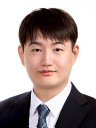
 Jangho Kim
· 3 previous affiliations
- Kookmin UniversitySince 2022
- Assistant Professor · Since 2022
- Seoul National University2017–2022
- PhD student · 2017–2022
- Researcher · 2022
Research Overview
Jangho Kim focuses on knowledge distillation, model compression, and domain generalization across visual and acoustic domains. His early work developed novel frameworks for transferring feature-level representations from complex neural networks to efficient student models. Recently, his research has expanded to address robust meta-learning and self-supervised representation learning for rapid task adaptation.
Research Trajectory
Kim’s early research concentrated on optimizing deep neural networks for resource-constrained environments through advanced model compression and knowledge transfer techniques. In 2018, he introduced a novel knowledge transfer method in Paraphrasing Complex Network: Network Compression via Factor Transfer. This work utilized convolutional modules—a paraphraser and a translator—to extract and translate unsupervised teacher factors for a student network. This contribution advanced the area of Deep Supervision with Training Only Auxiliary Components and the research direction Knowledge Distillation via Internal Representation Alignment.
Building on these foundations, Kim expanded his focus to online knowledge distillation, where models learn collaboratively without a pre-trained teacher. He participated in developing Feature-map-level Online Adversarial Knowledge Distillation, which leveraged image intensity and spatial correlation from feature maps rather than relying solely on class probabilities. He subsequently developed his own framework in Feature Fusion for Online Mutual Knowledge Distillation. This Feature Fusion Learning (FFL) approach efficiently trained a powerful classifier by combining feature maps generated from an ensemble of parallel sub-networks, transferring their collective knowledge to a fused classifier.
Around 2021, Kim’s research trajectory broadened to tackle domain generalization, particularly in acoustic scene classification. He contributed to Domain Generalization on Efficient Acoustic Scene Classification Using Residual Normalization, which explored techniques in the broader area of Feature Restitution from Normalization Residuals. Recognizing that domain-relevant information in audio features is dominated by frequency statistics rather than channel statistics, he and his collaborators proposed a specialized solution in Domain Generalization with Relaxed Instance Frequency-wise Normalization for Multi-device Acoustic Scene Classification. They introduced Relaxed Instance Frequency-wise Normalization (RFN), an explicit normalization module along the frequency axis designed to eliminate instance-specific domain discrepancies while preserving useful acoustic signals. This significantly impacted the research direction Frequency Wise Normalization for Signal Domain Generalization, work in Geometric and Adaptive Normalization for Stable Deep Learning, and the area of Robust Audio Classification Across Diverse Recording Hardware.
During this period, Kim also applied his expertise in robust representations to natural language processing, collaborating on Detection of Adversarial Examples in Text Classification: Benchmark and Baseline via Robust Density Estimation to improve the reliability of text classifiers against adversarial perturbations.
More recently, Kim has focused on optimizing learning paradigms for rapid adaptation and self-supervision. He guided the development of Cooperative Meta-Learning with Gradient Augmentation, which introduced a "co-learner" during meta-training to augment gradients. This framework yielded better meta-initialization parameters without increasing inference costs, improving performance across few-shot learning tasks. He also collaborated on Self-Distilled Self-supervised Representation Learning, an approach that enhances self-supervised learning by forcing intermediate layers to mimic the final layer's representations, thereby improving the instance discrimination capabilities of lower layers.
Current Directions
The most recent papers in the evidence indicate that Kim is actively investigating advanced training paradigms, specifically meta-learning and self-supervised representation learning. A major theme of this current work is the internal optimization of neural network architectures during training to improve downstream performance without adding computational overhead at inference. This includes exploring gradient augmentation techniques to find superior initializations for few-shot learning tasks, as well as internal self-distillation mechanisms that force earlier network layers to develop richer, more discriminative representations.
Profile updated
Loading new papers…
Other researchers whose papers cluster into the same research directions — a proxy for overlapping technical interests and shared intellectual neighborhoods.
See something wrong? Report a mistake