

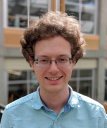
 Jan Buys
· 5 previous affiliations
- University of Cape TownSince 2019
- Senior Lecturer · Since 2024
- Assistant Professor · 2019–2023
- University of Washington2017–2019
- Postdoctoral Researcher · 2017–2019
- University of Oxford2013–2017
- Teaching Assistant · 2015–2017
- PhD student · 2013–2017
- Software Engineering Intern · 2015
- Stellenbosch University2008–2013
- MSc, Computer Science · 2012–2013
- Teaching Assistant · 2009–2012
- Undergrad student · 2008–2011
Research Overview
Jan Buys focuses on natural language processing, specifically semantic parsing, neural text generation, and sequence modeling. His earlier work developed transition-based architectures for syntactic and semantic graph parsing, alongside foundational decoding strategies for autoregressive language models. More recently, his research investigates reinforcement learning for interactive text environments and the application of state space models to molecular generation.
Research Trajectory
Buys’s early research focused on integrating syntactic structure into neural sequence models to improve scalability and performance. He developed a neural network architecture for scalable generative transition-based dependency parsing, parameterizing both sentence and transition sequence distributions with a feedforward network to improve upon traditional n-gram language models (Generative Incremental Dependency Parsing with Neural Networks). Following this, he participated in the development of online neural sequence-to-sequence models designed to alternate between encoding and decoding segments of input. This approach allowed for exact polynomial marginalization of latent segmentation during training and utilized beam search during decoding, directly addressing the bottleneck of standard encoder-decoders that must memorize entire input sequences in fixed-length hidden states (Online Segment to Segment Neural Transduction).
In 2017, his focus expanded to the broader area of Parsing Semantic Graphs with Reentrant Dependencies. He designed neural encoder-decoder architectures to map sentences to linguistically expressive semantic representations. This included work addressing the research direction of Token to Node Alignment in Semantic Parsing via pointer-augmented attention mechanisms for Abstract Meaning Representation (AMR) (Oxford at SemEval-2017 Task 9: Neural AMR Parsing with Pointer-Augmented Attention). Concurrently, he introduced a transition-based parser capable of full-coverage semantic graph parsing for Minimal Recursion Semantics (MRS). This work advanced the specific field of Incremental Transition-based Semantic Graph Parsing by using stack-based embedding features to jointly predict graphs, unlexicalized predicates, and token alignments, while leveraging GPU batch processing for efficiency (Robust Incremental Neural Semantic Graph Parsing).
Continuing to bridge syntax and deep learning, Buys investigated neural syntactic generative models. He addressed challenges in the area of Scaling Syntactic Parsing Beyond Cubic Complexity by developing models that support exact marginalization over latent hierarchical structures (Neural Syntactic Generative Models with Exact Marginalization). In parallel, he collaborated on methods to improve autoregressive text generation, exploring how mixtures of discriminative models could guide recurrent neural network decoding. This research aimed to satisfy communicative goals—such as Grice's Maxims—and reduce the overly generic or self-contradictory outputs typical of standard language models (Learning to Write with Cooperative Discriminators).
This interest in the failure modes of autoregressive generation led to fundamental contributions regarding decoding strategies. He co-authored research analyzing the tendency of language models to either devolve into generic loops or miscalibrate their stochasticity, a problem central to the area of Self-Reinforcing Repetition in Autoregressive Models. To resolve this, the work introduced Nucleus Sampling, a stochastic decoding method that dynamically truncates the unreliable tail of the probability distribution, contributing significantly to the direction of Adaptive Truncation for Neural Text Decoding (The Curious Case of Neural Text Degeneration).
In recent years, Buys has led research expanding the application and analysis of sequence models across diverse domains. Returning to semantic parsing, his group developed an open-source web tool to visualize and analyze complex meaning representation graphs across different frameworks, improving accessibility for researchers (RepGraph: Visualising and Analysing Meaning Representation Graphs). He also collaborated on reinforcement learning approaches for interactive text-based environments, demonstrating that policy-based methods (such as REINFORCE with a baseline) improve zero-shot generalization on unseen language-based games compared to traditional value-based methods (Policy-based Reinforcement Learning for Generalisation in Interactive Text-based Environments). Most recently, his lab has explored sub-quadratic architectures for scientific domains, specifically evaluating State Space Models (SSMs) like MAMBA for molecular generation to improve computational efficiency and scalability over standard Transformers in AI-driven drug discovery (Molecular Generation with State Space Sequence Models).
Current Directions
The most recent papers in the evidence indicate a dual focus on improving generalization in language-based reinforcement learning and scaling sequence models for scientific applications. Work in interactive text environments investigates how policy-based reinforcement learning can enable agents to generalize zero-shot to unseen games with unbounded natural language action spaces. Concurrently, research in molecular generation explores the adoption of linear-time sequence modeling, specifically State Space Models, to navigate chemical space more efficiently than traditional Transformer architectures, aiming to resolve the computational bottlenecks associated with long sequences in drug discovery.
Profile updated
Loading new papers…
Other researchers whose papers cluster into the same research directions — a proxy for overlapping technical interests and shared intellectual neighborhoods.
See something wrong? Report a mistake